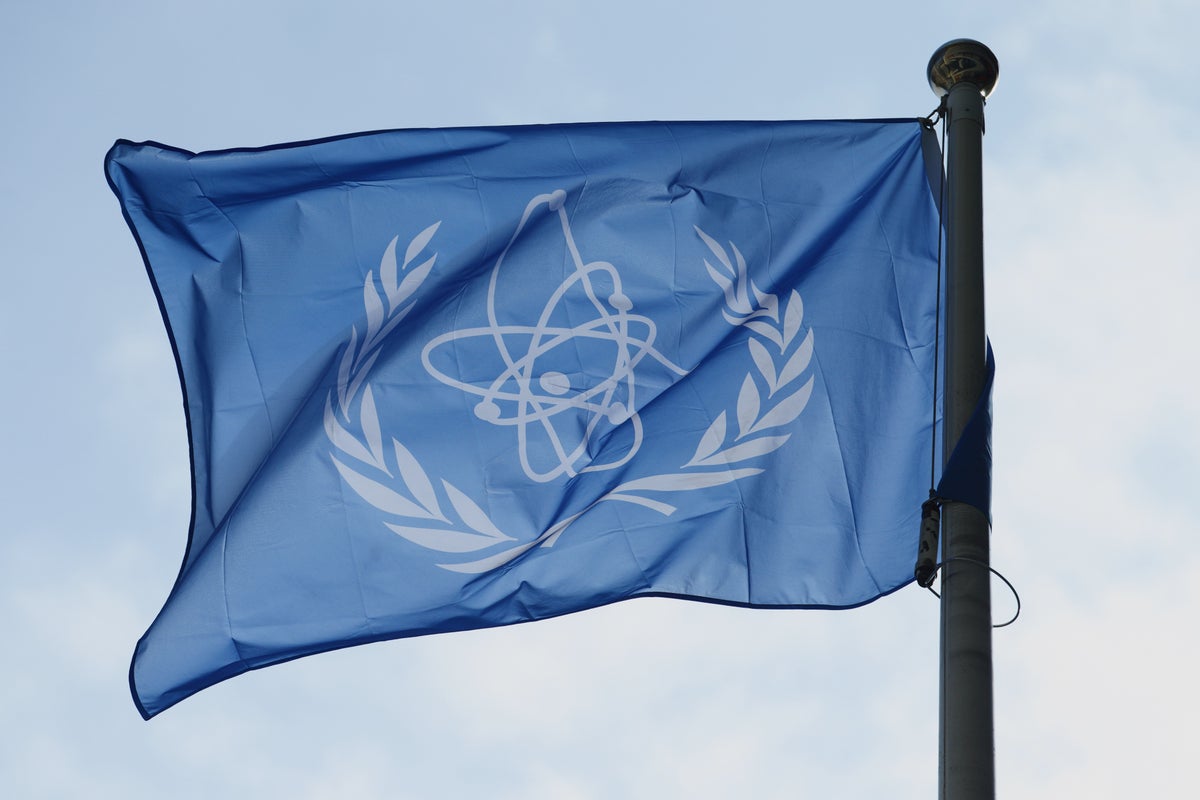
Diplomacy is hitting a brick wall in Vienna. The International Atomic Energy Agency (IAEA) board of governors is demanding immediate, unconditional cooperation from Iran regarding its nuclear program, but the response from Tehran remains stubbornly cold. If you think this is just another round of boilerplate bureaucratic squabbling, you're missing the bigger, far more dangerous picture.
The UN nuclear watchdog board demands urgent Iran cooperation and access to nuclear sites because the window to prevent a major geopolitical crisis is shutting. The agency has lost its "continuity of knowledge" regarding what Iran is actually doing behind closed doors. When international inspectors have to rely on commercial satellite imagery to guess how much enriched uranium is moving through facilities like Natanz, Fordow, and Isfahan, the global security framework isn't just strained. It's effectively blind. You might also find this related article useful: Why Western Nations Are Finally Cracking Down on Iran Transnational Repression Network.
Let's look past the diplomatic pleasantries to see what's actually happening on the ground, why the Western powers are panicking, and what this means for international security.
The Traces Iran Refuses to Explain
The core of the current standoff isn't a new dispute. It's a years-long game of nuclear hide-and-seek. The IAEA has spent years demanding technically credible explanations for uranium particles of human origin found at undeclared locations, specifically Varamin and Turquzabad. As extensively documented in recent reports by The Washington Post, the effects are widespread.
Iran claims its program is entirely peaceful. But simple physics creates a massive hole in that narrative. Uranium particles don't just magically appear on equipment or soil by accident. They are the chemical fingerprints of nuclear activity. When the IAEA asks where the contaminated equipment is now, Tehran offers nothing but radio silence.
Compounding the problem, Iran kicked out several of the IAEA’s most experienced weapons inspectors. Imagine running an audit on a massive, complex financial institution, and the bank manager suddenly bans your best accountants. You wouldn't think they're hiding nothing. You'd assume the books are cooked. By de-designating these inspectors, Iran deliberately crippled the watchdog's ability to verify its declarations.
The Sixty Percent Problem
We need to talk about numbers because they show exactly why Western nations are terrified. Iran is currently the only state without a nuclear weapon that is actively enriching uranium up to 60% purity.
For context, commercial nuclear power plants run on uranium enriched to around 3% to 5%. Research reactors might need up to 20%. Weapons-grade uranium requires roughly 90% purity.
Mathematically, the jump from 60% to 90% is incredibly short. Most of the heavy lifting, isotopic separation, and energy expenditure happens during the initial stages of enrichment. According to recent IAEA assessments, Iran’s stockpile of 60% enriched uranium is large enough that, if processed further, it could yield enough fissile material for multiple nuclear weapons.
When Iranian officials make public comments hinting that they have the technical capability to build a bomb and might alter their defensive nuclear doctrine, it isn't empty rhetoric. It's a direct threat to the Nuclear Non-Proliferation Treaty (NPT).
A Broken System and the Shift in Diplomacy
For a long time, Western powers hesitated to push too hard at the IAEA board meetings. The United States and the E3 (Britain, France, and Germany) frequently worried that passing formal censure resolutions would backfire. Historically, every time the board reprimanded Tehran, Iran responded by racheting up enrichment, tearing down monitoring cameras, or cutting off access.
That hesitation is entirely gone. The diplomatic strategy has completely shifted from salvage mode to containment.
The landmark 2015 nuclear deal, the JCPOA, is dead and buried. After the US pulled out in 2018, Iran systematically dismantled every restriction it had previously agreed to. The UN Security Council even took the dramatic step of reinstating six past resolutions, legally forcing a reimposition of strict restrictions on Iran's enrichment activities.
Yet, the IAEA board votes reveal a deeply fractured international community:
- The West: The US, UK, France, and Germany are pushing for accountability, aiming to refer the matter back to the UN Security Council for tougher actions.
- The Resistance: Russia and China consistently vote against these resolutions, providing a diplomatic shield for Tehran.
- The Middle: A massive chunk of the 35-nation board routinely abstains, preferring to stay out of the crossfire.
This diplomatic gridlock means resolutions carry immense symbolic weight but lack immediate teeth. Tehran knows this, which is why state media quickly dismissed the watchdog's latest demands as hasty, unwise, and politically motivated.
What Happens Next
The current trajectory points toward a severe escalation. If Iran continues to deny access to its sites, bar inspectors, and expand its high-enriched uranium stockpile, the international community's options narrow down to a few distinct scenarios.
First, the IAEA Director General will be forced to issue a comprehensive, updated assessment declaring that the agency can no longer guarantee Iran's nuclear material hasn't been diverted to a weapons program. This formal declaration would trigger an automatic referral to the UN Security Council, setting up a major diplomatic showdown.
Second, regional tensions will spike. Neighboring states aren't going to sit quietly while a regional adversary inches closer to a breakout capability. A lack of transparent inspection drastically increases the risk of miscalculation, pre-emptive military strikes, or a rapid, uncontrolled nuclear arms race across the Middle East.
If you are tracking international security, the immediate metrics to watch aren't the speeches in Vienna. Watch the satellite tracks over Fordow and Natanz. Watch whether Iran allows the barred inspectors back into the country. Until those inspector boots are back on the ground with full access, any talk of a diplomatic breakthrough is just noise.