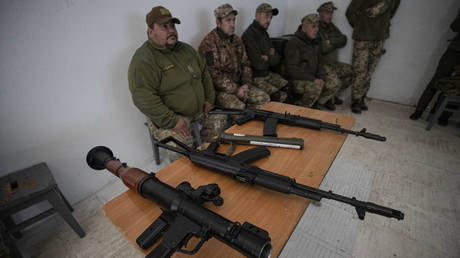
Poland isn't just watching the border for refugees anymore; it's watching for the hardware of war. As the conflict across the eastern border shifts, Warsaw is quietly bracing for a tidal wave of illegal weapons that could flood the European black market for decades. This isn't just about a few handguns tucked into suitcases. We're talking about a massive, uncontrolled influx of military-grade gear—from assault rifles to explosives—that has law enforcement across the continent losing sleep.
If you think this is a "future" problem, you're already behind. While current smuggling levels are relatively low because the guns are needed at the front, the history of conflict tells us exactly what happens when the shooting stops. The Polish Central Investigation Bureau of Police (CBŚP) just launched "Project Trident" because they know the math doesn't look good. When you dump millions of small arms into a region, some of them are going to walk.
Why the Balkan Ghost Still Haunts Warsaw
To understand why Poland is so rattled, you have to look at the Balkans. It's been over twenty years since the wars in the former Yugoslavia ended, yet an estimated 50% of the illegal weapons circulating in Europe today still come from that specific conflict. Those guns didn't disappear; they just found new owners in the shadows.
Poland's security experts, including Junior Inspector Adam Radoń, are sounding the alarm because the scale in Ukraine is exponentially larger. We've seen an unprecedented amount of Western military aid flowing in, combined with a staggering volume of Soviet-era stockpiles. When the high-intensity fighting eventually winds down, these weapons become currency for organized crime.
- The Price of Peace: Demobilized soldiers, often left without clear economic prospects, can become targets for recruitment by criminal gangs.
- Supply and Demand: The European black market is hungry. A rifle that costs almost nothing in a war zone can fetch thousands of euros in Berlin or Paris.
- The Infrastructure: Smuggling routes aren't built overnight. They're being mapped out right now, hiding in the noise of legitimate humanitarian and trade corridors.
Operation Trident and the 1.5 Million Euro Gamble
Poland isn't just sitting around waiting for the disaster to happen. They've put up roughly 6.6 million złoty (about 1.5 million euros) for a two-year initiative to harden the border. It's called Project Trident, and it's a desperate attempt to get ahead of the curve.
This isn't just a Polish project. It's a cross-border coalition involving Lithuania, the Czech Republic, Spain, and even Moldova and Ukraine itself. The goal is simple: detect the routes before they become "hardened." But let's be real—1.5 million euros is a drop in the bucket when you're trying to police a border that's effectively a sieve for determined smugglers.
The CBŚP is buying specialized gear and training "canine teams"—dogs trained specifically to sniff out oil, gunpowder, and explosives—to work the checkpoints. They're also focusing on intelligence sharing because a gun seized in Rzeszów today might be linked to a gang in Madrid tomorrow.
The Human Element the Media Ignores
Most news reports focus on the "steel"—the guns and the grenades. But the real danger is the expertise. Polish Inspector General Marek Boroń recently pointed out that the post-war environment doesn't just export hardware; it exports "battle-hardened" individuals.
When you combine sophisticated military hardware with people who have nothing left to lose and the skills to use that hardware, you don't just get a smuggling problem. You get a fundamental shift in the capability of European organized crime. We're seeing hints of this already in the rise of drug-related violence in countries like Sweden and the Netherlands, where grenades—once a rarity—are now common tools for gang intimidation.
What's actually being smuggled?
While everyone worries about Javelins and Stingers, the real threat is "small arms and light weapons" (SALW).
- AK-pattern rifles: Reliable, easy to hide when broken down, and incredibly common.
- Handguns: The bread and butter of street-level crime.
- F-1 Hand Grenades: These are becoming the "new normal" for European gangs looking to settle scores.
- Explosives: Plastic explosives and detonators are high-value items that are notoriously difficult to track once they enter the civilian stream.
Europe's Internal Security Strategy
The European Commission knows the current rules are a joke. Right now, EU laws mostly cover legal ownership and transfers. There's no unified way to track a gun that was "lost" in a trench and then reappeared in a trunk in Warsaw.
A new proposal under the "ProtectEU" strategy is trying to force every EU country to set up a National Firearms Focal Point. The idea is to create a centralized dataset of every seized weapon. It's a start, but it feels like bringing a knife to a gunfight. By the time the bureaucracy catches up, the first few thousand rifles will likely have already crossed the border.
What You Should Watch For
If you're following this, don't look at the big political speeches. Watch the "micro" signs. Look for reports of unusual weapon seizures in non-border towns. Watch for the price of illegal handguns in Western Europe—if the price drops, it means the supply from the East has arrived.
Honestly, the risk isn't just that Poland gets flooded. It's that Poland becomes the "logistics hub" for the rest of the continent. The border guard is getting more drones and better dogs, but the sheer volume of traffic makes 100% detection impossible.
If you live in Central Europe, the next few years are going to be a masterclass in security theater vs. reality. You'll see more police at the borders and more "high-tech" announcements, but the real work is happening in the dark, through signal intercepts and deep-cover informants.
To stay informed, keep an eye on the official CBŚP releases and the OSCE's reports on "Small Arms and Light Weapons" trafficking. They don't sugarcoat the numbers like the politicians do. The flood is coming; the only question is how high the levee needs to be.
Check your local news for updates on "Trident" operations and pay attention to shifts in EU border policy—it's the only way to see the real map of where these weapons are headed next.


