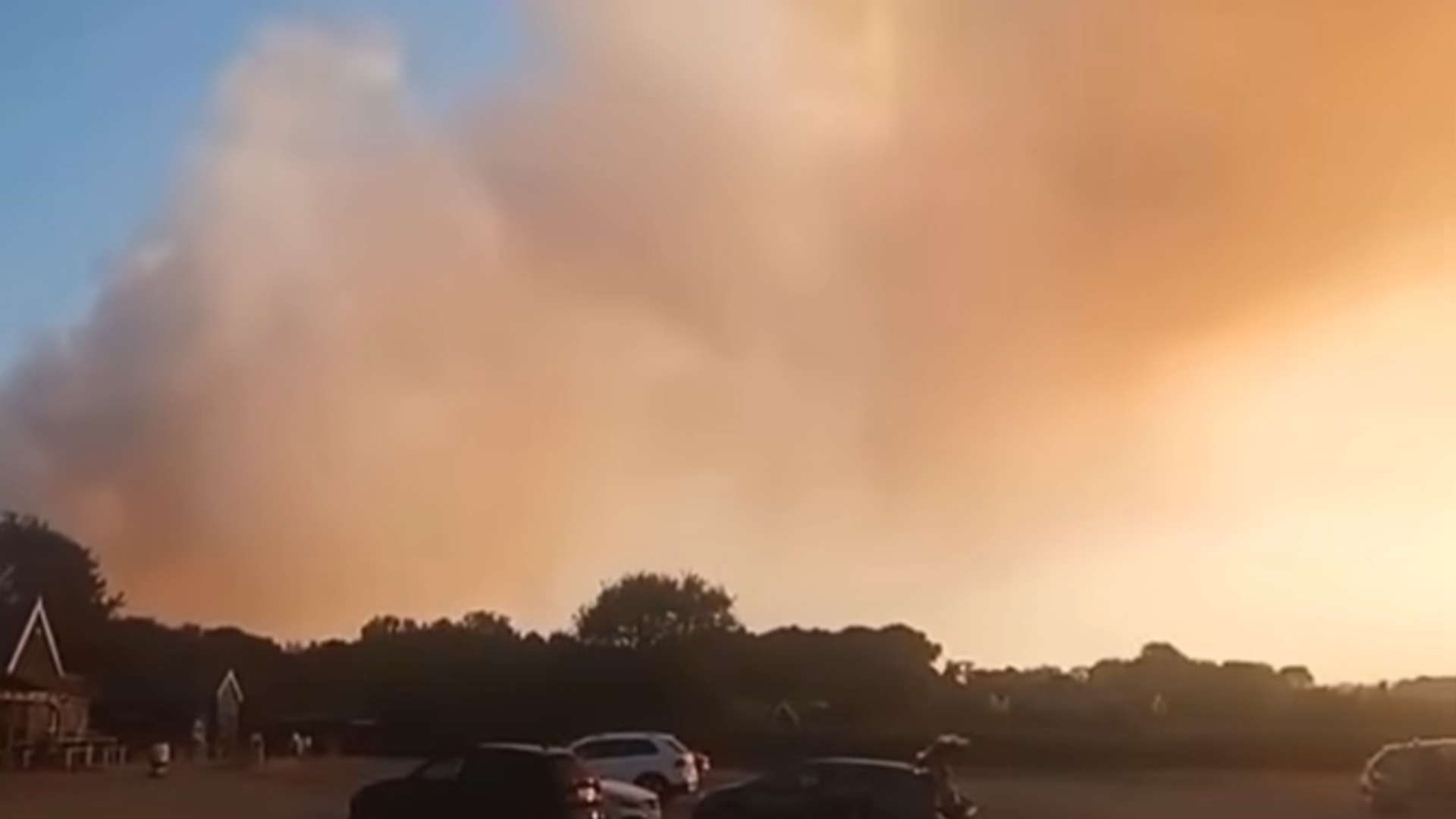
Smoke choked the horizon while emergency services stretched to their absolute breaking point. A major incident was officially declared after a massive wildfire tore through dry landscape, turning acres of green countryside into ash within hours. Firefighters fought walls of flame in scorching heat. This wasn't happening in southern Europe or California. This was happening right here in the United Kingdom.
We keep treating these ferocious blazes as freak weather events. They aren't. They are symptoms of a shifting climate that catches authorities flat-footed every single year. If you think the UK is immune to devastating crown fires just because we have a reputation for rain, you're living in a fantasy.
The Reality Behind the UK Wildfire Surge
Look at the data from recent years. According to reports tracked by environmental agencies and fire services, the frequency of intense moorland and grassland fires has spiked dramatically. Dry winters, parched spring soils, and sudden heatwaves turn rural terrain into literal tinderboxes. When a stray cigarette, a discarded glass bottle, or a rogue BBQ sparks a flame, it doesn't just smolder. It explodes.
The term "new normal" gets thrown around a lot. Usually, it's corporate jargon meant to soften bad news. In this context, it's a stark warning from meteorologists and emergency chiefs who are tired of fighting fires with outdated resources. Grasslands aren't supposed to burn this hot. Peat bogs, which normally act as natural carbon sinks, dry out completely and catch fire underground. Those subterranean fires burn for weeks, defying standard firefighting tactics.
Why Standard Preparation Fails
Most local councils and rural communities operate on old assumptions. They budget for seasonal rain and occasional minor brushfires. They don't budget for multi-agency disaster declarations, mandatory evacuations of rural villages, or weeks of continuous tactical deployments.
When a major incident gets declared, it triggers a massive resource shift. Fire engines travel from neighboring counties. Police close major roads. National health services prepare for respiratory emergency spikes from smoke inhalation. It costs millions of pounds and strains public coffers that are already stretched thin.
Common mistakes make matters worse. People assume fire breaks naturally occur in British woodlands, or that sudden rain showers will bail us out. They won't. When the humidity drops below critical thresholds and winds pick up, a small patch of gorse becomes an unstoppable wall of heat.
What You Can Actually Do
You don't have to sit back and watch your local countryside burn. Practical prevention starts on the ground, long before the temperature hits thirty degrees Celsius.
- Ditch disposable BBQs entirely on dry ground. If you're heading out to public parks, moors, or forests during a dry spell, leave the flames at home. Bring pre-cooked food.
- Report irresponsible behavior immediately. If you see someone lighting open fires or dropping cigarette butts near dry brush, call local authorities or park rangers.
- Clear defensible space if you live near rural margins. Keep dead leaves, dry timber, and overgrown brush away from your property boundaries. Embers travel hundreds of feet on strong wind gusts.
- Stay informed on local fire severity indexes. Weather apps and local council sites publish daily risk alerts. Treat a high-risk day with the same seriousness you would a severe flood warning.
We have to stop treating these disasters as surprises. The smoke clears, the news cycle moves on, but the dry ground remains. Prepare your property, change your outdoor habits, and stop pretending the rain will always save us.