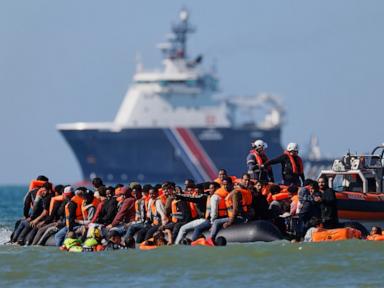
Millions of pounds spent. Countless political speeches delivered. And yet, the core agreement designed to stop small boats crossing the English Channel has quietly been scrapped.
If you're wondering how two nuclear-armed neighbors with centuries of shared history managed to stall out on immigration enforcement, you aren't alone. The breakdown of this bilateral pact isn't just a bureaucratic failure. It's a masterclass in political posturing colliding with the messy reality of maritime borders. Discover more on a similar subject: this related article.
Cross-Channel migration isn't slowing down because politicians signed a piece of paper. It's shifting. To understand why the UK France small boats deal fell apart, you have to look past the press releases and examine the raw mechanics of cross-border policing, local politics, and human desperation.
The Anatomy of a Broken Accord
Let's strip away the diplomatic fluff. The partnership was meant to be a straightforward transaction. London would hand over tens of millions of pounds to Paris. In exchange, French police would patrol northern beaches more aggressively, intercepting dinghoes before they ever touched the water. Further analysis by Associated Press delves into related perspectives on this issue.
Money changed hands. Officers patrolled. But the math never added up.
Smuggling networks are nimble. When French police beef up security on one stretch of coastline in Calais or Dunkirk, the gangs simply move fifty miles west toward Normandy. Coastlines are vast. Beaches are dark. Trying to lock down hundreds of kilometers of open European coastline with ground patrols is like trying to hold water in a sieve.
Frustration mounted on both sides of the Channel. British officials complained that French interception rates were too low relative to the funding provided. French officials, on the other hand, argued that British authorities expected miracles while ignoring the legal constraints of European human rights laws and maritime rescue obligations.
When boats hit international waters, maritime law dictates that rescuing human life takes precedence over border enforcement. Smuggling rings know this rule inside and out. They routinely puncture their own vessels or call distress lines immediately upon launch, forcing coastguards into rescue mode rather than interception mode.
The Political Theater of Border Control
Border policy plays well in election cycles. Few political strategies mobilize voters faster than promises to "stop the boats" or "take back control of our borders."
Both governments used these bilateral pacts as domestic shields. When numbers spiked, leaders pointed across the Channel and blamed the other side for lacking resolve. When numbers dipped momentarily due to bad weather, they rushed to claim credit for a strategy that was actually dictated by the wind speed and wave height in the Strait of Dover.
Relying on short-term funding agreements creates a toxic cycle of dependency and blame. Police forces in France treat British-funded patrols as temporary windfalls rather than structural solutions. Meanwhile, British taxpayers grow increasingly cynical watching millions vanish into border bureaucracy without a visible drop in arrivals.
Scrapping the deal was inevitable. Neither capital could justify continuing a program that failed its primary metric of success.
The Human Logistics Driving the Crisis
You can't solve a humanitarian and security challenge by treating it solely as a police problem. People do not risk freezing water and overcrowded rubber rafts on a whim.
The individuals paying thousands of euros to organized crime syndicates are fleeing conflict zones, state collapse, and extreme poverty in places like Sudan, Afghanistan, Eritrea, and Syria. As long as those push factors remain active, no amount of barbed wire or police overtime on a French beach will deter someone who feels they have nothing left to lose.
Smuggling rings operate like multinational logistics corporations. They source cheap, substandard dinghies from Turkish and Chinese manufacturers, truck them across Europe via hidden compartments, and cache them in rural French barns. They use encrypted messaging apps to coordinate launches within minutes of a favorable weather window.
Local French law enforcement officers are vastly outnumbered by these clandestine networks. Arresting a few low-level drivers or boat handlers does nothing to touch the kingpins living comfortably in other jurisdictions beyond extradition reach.
What Actually Works Moving Forward
Pretending that a single bilateral treaty can hermetically seal a maritime border is a delusion. Real progress requires a completely different playbook.
Processing claims closer to the source changes the economic calculation of smuggling. If people had legal, orderly pathways to have their cases evaluated before reaching the French coast, the multi-billion-dollar smuggling industry would lose its customer base overnight.
Intelligence sharing has to replace street-level whack-a-mole. Dismantling the financial infrastructure of smuggling syndicates—tracking cryptocurrency flows, seizing front-company assets, and targeting encrypted communication channels—causes far more damage to criminal operations than seizing a hundred plastic boats on a sandy beach.
True cooperation requires mutual trust, realistic expectations, and an acknowledgment that borders are shared responsibilities, not bargaining chips for domestic political wins.
The collapse of this agreement marks the end of an era of magical thinking in immigration policy. Pretending easy fixes exist only prolongs the crisis. The sooner policymakers face the messy, complex reality of global migration, the sooner actual solutions can take root.