Uganda just lost its remaining semblance of a free press over a series of social media posts. Early Sunday morning, heavily armed soldiers rolled into the Namuwongo neighborhood of Kampala, sealing off the offices of the Nation Media Group. By 5 am, NTV Uganda and Spark TV screens went completely dark, flashing a chilling "video unavailable" error message. Staff members working the night shift were booted out, and those arriving for work were blocked by standard-issue military rifles.
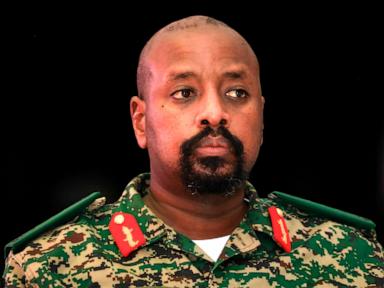
This isn't just a standard regulatory spat or a temporary bureaucratic suspension. It's an open military coup against journalism. General Muhoozi Kainerugaba, the head of the military and the eldest son of 81-year-old President Yoweri Museveni, didn't bother hiding behind a court order or an act of parliament. He took to X to declare that he doesn't believe in a free press, stating that journalists must be guided by "cadres of the revolution." Meanwhile, you can find similar events here: Why the India Seychelles Alliance Actually Matters Right Now.
If you want to understand how power works in East Africa, don't look at the official ministries. Look at who controls the guns and the internet.
The Shocking Scale of the Nation Media Group Raid
The military operation hit the Nation Media Group (NMG), which happens to be East Africa's largest independent media conglomerate. Headquartered across the border in Kenya and traded on the Nairobi stock exchange, NMG has long been the last line of defense for independent reporting in Uganda. To see the bigger picture, we recommend the recent report by NBC News.
The sweep systematically crippled six major outlets simultaneously. The list of casualties reads like a map of Uganda’s entire independent media landscape.
- Daily Monitor: The country's most influential independent daily newspaper.
- NTV Uganda: The largest private television broadcaster in the nation.
- Spark TV: A popular sister television station.
- The East African: A regional weekly covering cross-border politics and economy.
- 93.3 KFM and 90.4 Dembe FM: High-traffic radio stations that keep millions of Ugandans informed throughout the day.
This aggressive chokehold left the public completely blind overnight. While the National Association of Broadcasters expressed deep concern over the sudden destruction of the local media ecosystem, the military made it clear they aren't listening to trade unions or civil society.
The Real Power Shift Behind the X Posts
This media blackout isn't actually about a specific article or broadcast. It's about a raw display of succession politics. President Museveni was just sworn in for his seventh consecutive term. He has occupied the presidency for 40 years, ruling since 1986. But as the aging president relies more heavily on his son's raw military authority, Gen Muhoozi has started issuing sweeping directives that are typically reserved for a head of state.
Muhoozi brazenly announced on social media that he has held the power to shutter any media house since 2017, explicitly stating, "This power was given to me by my great father." He went on to assert that the closed platforms will not reopen without his direct permission.
This behavior highlights a deeper reality. Muhoozi is acting as the de facto ruler of Uganda, using his position as Chief of Defence Forces to bypass the entire legal framework of the country. Opposition leader Bobi Wine pointed out the obvious, stating that Muhoozi is acting with the full backing of his father to eliminate any critical voices before the eventual transition of power.
A History of Silencing the Daily Monitor
This isn't the first time the Museveni regime has targeted NMG outlets, but the method has shifted from legal intimidation to outright military dominance. Back in 2013, the government shut down the Daily Monitor for 13 days because the paper reported on a sensitive political story involving Museveni's succession plan. Back then, they at least attempted to use police procedures. Now, the military simply surrounds the building and pulls the plug on the transmitters.
Uganda currently ranks 143 out of 180 countries on the Reporters Without Borders press freedom index. Journalists face regular violence, arbitrary arrests, and systemic harassment from state actors. By completely disabling NTV and the Daily Monitor, the state has removed the primary platform where human rights violations, government corruption, and military overreach are documented.
What This Means for East African Stability
When the military chief of a major East African nation openly boasts about eliminating a free press, the shockwaves go far beyond Kampala. Because NMG is a Kenyan-owned corporate entity, this move creates severe diplomatic friction between Uganda and Kenya. It signals to international investors that property rights and corporate investments can be seized or dissolved on the whim of a general's social media post.
The immediate next steps for anyone tracking this crisis involve watching the regional diplomatic response. Watch the East African Community (EAC) to see if neighboring leaders call out this overreach, though historical precedent suggests they will stay quiet. For regular citizens and businesses operating inside Uganda, the immediate priority is shifting communication strategies toward encrypted networks and virtual private networks (VPNs) to access external coverage. Independent journalism inside Uganda is moving underground, and the international community needs to watch closely as military rule replaces constitutional law.