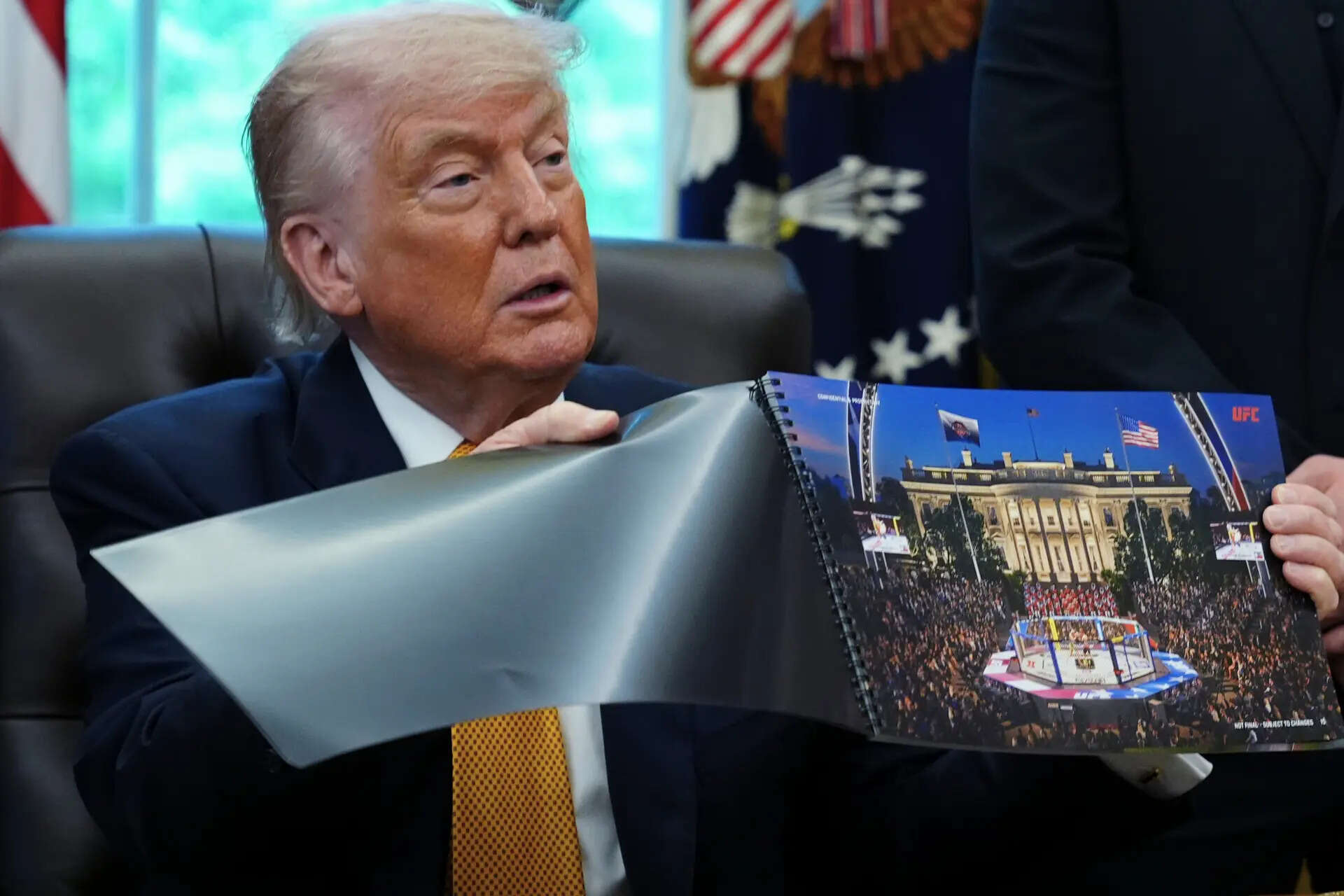
The Octagon is no longer just a cage. It is a storefront for the most expensive live entertainment product in the history of professional sports. With the announcement of $1.5 million "White House" ticket packages for Conor McGregor’s return at UFC 329, TKO Group Holdings has officially moved past the era of the pay-per-view fan and into the era of the sovereign wealth fund and the ultra-high-net-worth individual.
While the headline-grabbing price tag covers a weekend of luxury, the strategy behind it reveals a fundamental shift in how the UFC views its own inventory. They are no longer selling fights. They are selling proximity to power. For $1.5 million, a buyer isn't just watching McGregor trade leather; they are purchasing a seat at a table where the lines between professional athletics, venture capital, and global politics have completely blurred.
The Economics of Hyper Luxury
The "White House" package is not a ticket in any traditional sense. It is a private equity-style buy-in. To understand how the UFC reached a seven-figure price point, one must look at the scarcity of the McGregor brand. Despite his years of inactivity and diminishing returns in the cage, McGregor remains the only needle-mover in the sport capable of anchoring an economy this bloated.
This is a calculated risk by Endeavor and TKO. By pricing a single package at $1.5 million, they set a new floor for what "premium" means. These packages typically include private jet transfers, 24-hour concierge service, and behind-the-scenes access that was once reserved for the promotion’s internal executives. However, the true value lies in the networking. When you charge seven figures for a seat, you guarantee that everyone else in that section has at least eight figures in the bank.
The UFC is essentially hosting a private convention for the world’s financial elite, using a fistfight as the background noise. This isn't about the gate revenue in isolation. It’s about signaling to the market that the UFC is now a luxury brand on par with Formula 1 or the Masters.
Why McGregor is the Only Possible Catalyst
No other fighter on the roster could command this. Not Jon Jones, not Islam Makhachev, and certainly not the younger generation of stars currently climbing the ranks. McGregor represents the intersection of the "old" UFC—the gritty, underground sensation—and the "new" UFC, which is a global media powerhouse.
The McGregor Decay vs. The McGregor Brand
From a purely athletic standpoint, McGregor’s 329 comeback is a giant question mark. His leg injury was catastrophic. His lifestyle is a constant distraction. Yet, the UFC’s business department knows that his fighting ability is secondary to his aura. The "White House" tickets are selling the idea of McGregor—the swagger, the wealth, and the unpredictability.
Investors aren't paying $1.5 million to see a technical masterpiece. They are paying to be present for the spectacle. If McGregor wins, the room explodes, and they were there. If he loses, they witness the final collapse of an icon. Both outcomes provide the social currency that high-rollers crave.
The Institutionalization of the Front Row
Ten years ago, the front row of a UFC event was populated by B-list celebrities and local gym owners. Today, it is a parade of tech CEOs, Middle Eastern royalty, and institutional investors. This shift didn't happen by accident.
The UFC’s move to Las Vegas’s most exclusive venues and its partnership with companies like On Location—a premium hospitality firm—has turned live events into a tiered caste system. The $1.5 million ticket is the apex of this pyramid. It creates a "halo effect" where even the $5,000 "cheap" floor seats feel like a bargain by comparison.
Breaking Down the High Roller Tier
- The Access: Direct interaction with Dana White and the promotion's top brass.
- The Privacy: Secure entries and exits that bypass the general public entirely.
- The Aftermath: Guaranteed entry into private victory parties where the real business deals are struck.
This is the "Formula 1-ification" of MMA. For decades, F1 has used the Paddock Club to court sponsors and billionaires. The UFC is now perfecting that model, proving that the sport has matured enough to support a luxury ecosystem that operates independently of the actual sport's meritocracy.
The Risk of Pricing Out the Lifeblood
There is a danger here that the UFC’s leadership seems willing to ignore. The intensity of a live UFC crowd comes from the rabid, blue-collar fans who saved up for months to sit in the rafters. If you fill the lower bowl with people who are more interested in their networking than the action in the cage, the atmosphere dies.
We have already seen this at high-level boxing matches in Saudi Arabia. The crowds are often muted because the people in the most expensive seats aren't there because they love the sport; they are there because it is the place to be seen. A sterile Octagon is a less valuable product on television.
The UFC is betting that the McGregor noise will be loud enough to drown out the silence of the suits. But McGregor won't be around forever. When the "White House" packages become a standard fixture for cards headlined by less charismatic champions, the promotion may find that they have built a gold-plated house with no foundation.
The Global Geopolitics of UFC 329
The choice of the "White House" moniker is more than just a nod to American power. It reflects the UFC's deep ties to the political and financial centers of the world. From the deserts of Abu Dhabi to the halls of power in Washington, the promotion has positioned itself as a neutral ground for the world’s elite to congregate.
For a high-roller, spending $1.5 million on a weekend is a rounding error. It is a marketing expense. It is a way to tell the world that you have arrived. By facilitating this, the UFC has moved from being a sports league to being a high-end service provider for the billionaire class.
The true story of UFC 329 isn't about whether McGregor can still throw a left hand. It’s about whether the UFC can successfully transition into a permanent fixture of the global luxury market. They are testing the limits of what a fan—or an investor—is willing to pay for a piece of the action. If these tickets sell out, and they likely will, the price for the next mega-fight won't go down. It will go up.
The era of the "fan" is ending. The era of the "stakeholder" has begun. As the Octagon door closes for McGregor’s return, the real fight won't be happening on the canvas. It will be happening in the VIP lounges and private suites where the $1.5 million entry fee is just the cost of doing business.
The UFC has effectively built a wall around its greatest asset, and only those with the deepest pockets are being invited inside to see what’s left of the King.
Buy the ticket, take the ride, but don't expect to see the sport the same way ever again.