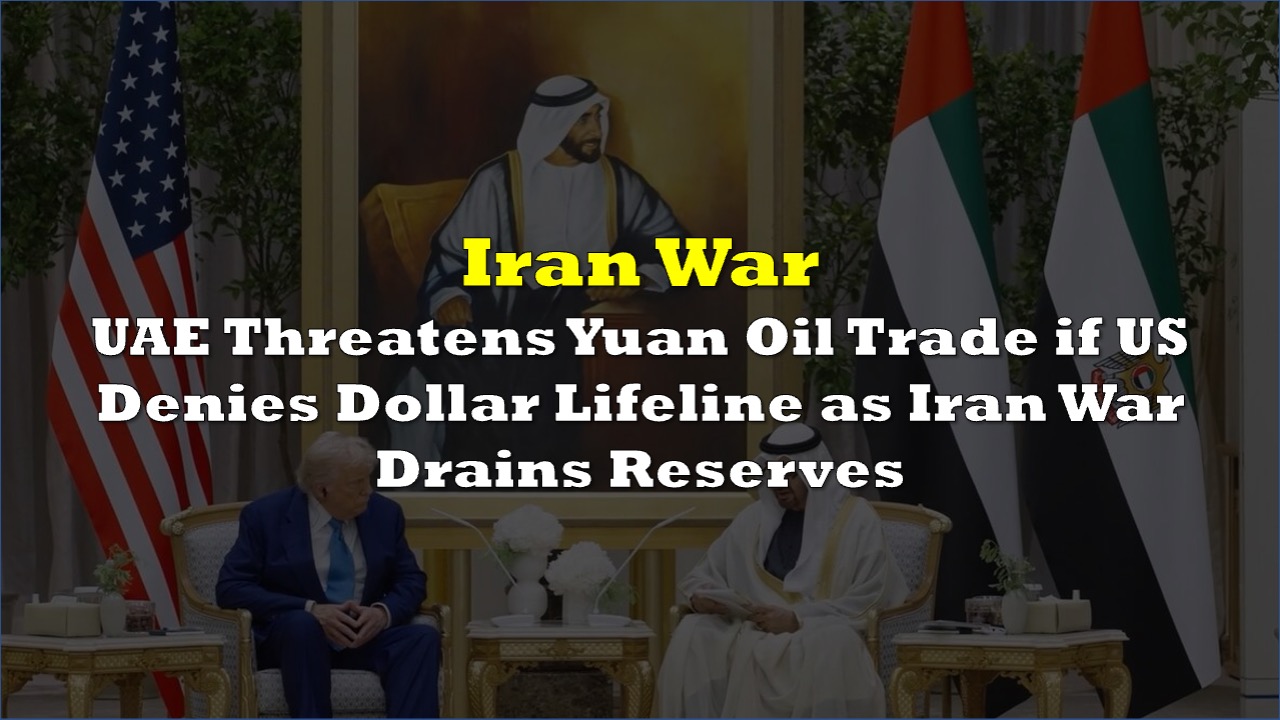
The United Arab Emirates has slammed the door on its commercial relationship with Iran, halting all trade, financial transactions, and commercial exchanges until further notice. This move, triggered by allegations of Iranian ballistic missile fire targeting maritime traffic near Emirati waters, is far more than a momentary diplomatic tantrum. It represents the potential permanent sealing of the primary economic artery that has kept Tehran’s regime afloat throughout years of intense international isolation. For decades, Dubai acted as the essential clearinghouse for Iranian commerce, a sanctioned-defying bypass that allowed global goods to reach Iranian markets through re-documentation and regional shipping hubs.
The economic gravity of this decision cannot be overstated. Historically, roughly 30 percent of Iran’s total non-oil imports flowed through Emirati ports. When global suppliers found it impossible to ship directly to ports like Bandar Abbas due to stringent Western secondary sanctions, they shipped to Jebel Ali instead. There, the cargo was rebranded, re-invoiced, and moved across the Gulf on smaller vessels. By pulling the plug on this, the UAE is effectively tightening a noose that Washington has been trying to construct for years.
Observers often mistake these periodic trade freezes for temporary escalations that will soften once the rhetoric dies down. They are often wrong. This is not just a disruption of commodity flows; it is a fundamental reordering of how money and goods move across the Persian Gulf. Iranian businesses rely on the UAE not only for physical goods but as a financial clearinghouse to gain access to foreign currency. Without the Dubai intermediary, the cost of importing basic industrial materials, pharmaceuticals, and consumer electronics will climb sharply. Inflation in Iran, already estimated to be hovering near 70 percent, will likely face renewed pressure as these new barriers take hold.
Consider a hypothetical scenario where an Iranian manufacturer needs specialized turbine parts to maintain a power plant. Under normal, pre-freeze conditions, this entity would purchase the parts through a shell company in Dubai, which would then facilitate a transshipment. With the current total halt, that transaction becomes impossible to execute through standard banking and shipping channels. The manufacturer is forced to either pay massive premiums to black-market brokers or face a complete operational shutdown. The efficiency of the "backdoor" is what made the Iranian economy durable; without it, the economy becomes brittle.
There is a historical pattern to these ruptures. In previous years, even during periods of extreme diplomatic hostility, the commercial connection remained remarkably resilient, functioning like a shadow economy that defied political narratives. The current directive, however, is notable for its bluntness. By framing the order as a total suspension of all financial and commercial dealings, the Emirati ministry has left little room for the usual workarounds.
The risk for the UAE is that this move invites a direct retaliatory strike against its own economic interests. Abu Dhabi has spent years positioning itself as a secure, neutral financial hub for the entire Middle East. If regional traders conclude that the UAE is no longer a safe place to hold assets or conduct transit, capital may shift toward other hubs like Oman or Qatar. The Emirati leadership clearly calculated that the threat of Iranian ballistic missiles toward their waters outweighs the benefit of keeping the commercial channel open. It is a high-stakes gamble on security at the expense of regional commerce.
The broader geopolitical context is equally grim. The collapse of the June interim arrangement between Tehran and Washington has left a power vacuum in the Gulf that is currently being filled by overt hostility. With the Strait of Hormuz increasingly treated as a contested zone rather than a neutral shipping lane, the insurance premiums on vessels operating in the region are skyrocketing. When insurers begin to price in the risk of state-on-state conflict, the trade volume naturally drops, even before formal government bans take effect.
We are seeing a convergence of pressures. On one side, the United States is pushing for a total blockade of Iranian industrial and financial nodes. On the other, the UAE—once the primary escape route for sanctioned entities—has decided that being an intermediary is too dangerous. This is not merely an embargo; it is an economic siege. If the enforcement holds, the impact on the Iranian consumer will be immediate and severe, but the long-term implications for Gulf trade security may be even more transformative.
The reality of this situation is that there are few alternatives for Tehran. Re-routing trade through Turkey or Central Asian land routes is significantly more expensive and logistically complex than the sea-based model centered on Dubai. The maritime route through the Persian Gulf was the only way to move high volumes of goods with the necessary speed to keep the domestic economy from stalling. The disappearance of this route removes the cushion that allowed the Iranian state to absorb the shocks of international sanctions for so long.
Market analysts watching the movement of the rial and the spot prices for imported goods in Tehran will soon have their answer on whether this is a performative gesture or a permanent severance. If the UAE begins to issue specific licenses for certain categories of goods, it suggests the move is a pressure tactic intended to force Tehran back to the negotiating table. If the silence from the Emirati ministries continues, it confirms that the bridge has been burned. The era of the Gulf as an open, porous marketplace is fading. In its place, a new, more rigid border is forming, one defined by clear lines of exclusion.
The economic machinery of the region is being dismantled, piece by piece, as the cost of doing business with an isolated state becomes too high to sustain. Every shipment that is now turned away at Jebel Ali is a signal that the tolerance for risk has finally evaporated. Iran now faces a future where its primary window to the global economy is not just obscured, but bricked over, leaving the regime to contend with the stark reality of total economic isolation. The consequences of this shift are only beginning to cascade through the regional markets.