Silence.
That is the first thing you notice when an entire neighborhood empties before sunrise, not the shouting or the rumble of armored engines, just the sudden, unnatural absence of morning coffee cups clinking against saucers and children arguing over misplaced shoes.
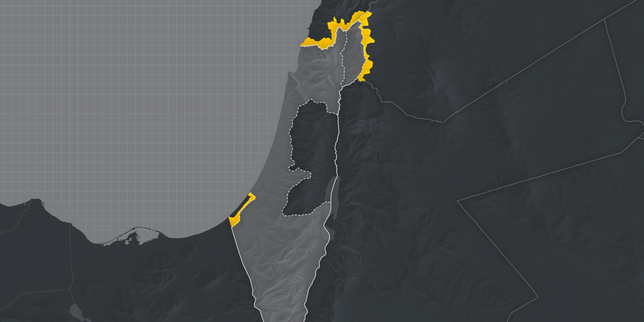
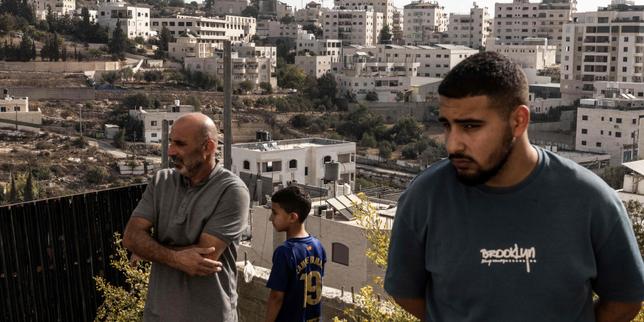
According to initial reports on the ground, roughly 2,000 Palestinians in the occupied West Bank were forced out of their homes by the Israeli military following the fatal shooting of two Israeli soldiers, an escalation accompanied by an official Israeli announcement of a sweeping territorial closure timed for Tuesday—the day Israel goes to the polls for legislative elections. On a wire service ticker, those details fit neatly into thirty-two words. Two deaths. Two thousand displaced. One border sealed for a ballot.
Numbers like that are designed to be skimmed over breakfast. They are clean, symmetrical, and bloodless.
But numbers do not pack a single plastic bag in the dark while a toddler cries because his favorite blanket was left on a mattress he may not see again for months. Numbers do not stand at a concrete checkpoint on a Tuesday morning holding a hospital referral slip that suddenly means nothing because an election is happening twenty miles away.
To understand what actually happened in those hours between the gunfire and the election decree, you have to step away from the diplomatic communiqués and walk down a dusty, uneven lane in the West Bank at three in the morning.
The Weight of a Key in Your Pocket
Consider a hypothetical family—let us call them the Mansours, though their story mirrors the documented reality of hundreds of households caught in military sweep zones across the territory.
Tariq Mansour is forty-two, a plasterer whose hands are permanently dusted white beneath the fingernails. His wife, Layla, teaches third-grade Arabic. They have three children and a lemon tree in a concrete courtyard that took Tariq seven summers to coax into bearing fruit. When the knocking begins on their metal gate—not the tentative tap of a neighbor, but the heavy, rhythmic percussion of rifle butts—there is no time for debate.
Israeli military commanders, operating under emergency security protocols triggered by the killing of two soldiers, have declared the surrounding sector a closed military zone. From the perspective of the Israel Defense Forces, the logic is immediate and tactical: two uniformed personnel are dead, the perpetrators may still be sheltered within the urban grid, and clearing the civilian population removes human shields, prevents crossfire, and denies assailants cover during house-to-house searches.
From the inside of the Mansour house, that tactical doctrine sounds like boots in the hallway and a voice shouting through a megaphone in accented Arabic: Out. Now. Take your IDs. Leave the doors open.
You have four minutes. What do you grab?
Not the photo albums stacked on the top shelf. Not the winter coats hanging in the hall. Layla grabs her diabetic father’s insulin vials from the refrigerator door, wrapping them in a damp dish towel because there is no ice pack. Tariq grabs the folder containing their property deeds and birth certificates—the paper proof that they exist—and stuffs it under his jacket. As they step over the threshold, Tariq reaches back out of pure muscle memory for his house keys, then stops. The soldiers have ordered the doors left unlocked for inspection.
Locking a door is an act of ownership. Leaving it open is an admission that your walls no longer belong to you.
Multiply that four-minute calculation by roughly three hundred and fifty households. That is how you arrive at 2,000 displaced human beings before the sun has even cleared the limestone ridges. Some find shelter in the cramped living rooms of cousins three villages over; others sleep on thin foam mats laid across the tiled floors of municipal schools and community halls, listening to the distant hum of drones overhead and wondering whether the plaster walls they spent twenty years paying for will still be standing when the cordon lifts.
How a Security Perimeter Becomes a Wall
If displacement is a sudden blow, a territorial closure is a slow suffocation.
The Israeli authorities’ announcement that the West Bank will be sealed off on Tuesday—the day Israeli citizens cast their ballots in legislative elections—is a routine measure in Israeli security playbook, yet its consequences are anything but ordinary. In security briefings, a "closure" (seger in Hebrew) sounds like an administrative pause, like closing a highway ramp for overnight paving.
In reality, it operates like a tourniquet tied around a limb.
Think of the West Bank not as a contiguous country, but as an archipelago of Palestinian towns and villages separated by Israeli-controlled roads, settlements, and military checkpoints. On an ordinary day, moving between one town and another requires navigating a web of permits, turnstiles, and inspections. When a general closure is imposed, the valves shut completely.
For the tens of thousands of Palestinian laborers who hold permits to work in construction, agriculture, and hospitality inside Israel, Tuesday means zero wages—a direct loss of food on the table in an economy where most families live week to week. For patients in Nablus or Hebron scheduled for chemotherapy or dialysis in East Jerusalem hospitals, a closure means desperate phone calls to humanitarian coordinators, praying that an ambulance transfer is approved before the blood sugar drops or the pain becomes unbearable. For university students, merchants, and teachers, the map simply shrinks to the radius of whatever village they happen to be standing in when the gates swing shut.
Why Tuesday? Because in Israeli politics, election day is both a civic ritual and a moment of acute vulnerability. Past election cycles have seen heightened security alerts, driven by the fear that militant factions might attempt an attack specifically timed to disrupt the vote or sway nervous electorate sentiment at the ballot box. After the fatal shooting of two soldiers, the political pressure on Israel's leadership to project absolute control is immense. No government facing voters wants to look hesitant; no opposition challenger wants to look soft.
So the border is drawn before dawn. Inside Israel, citizens walk to neighborhood schools and community centers to drop paper slips into blue ballot boxes, debating the economy, coalition math, and national security. Just across the Green Line, separated by concrete slabs and razor wire, millions of people whose daily lives are governed by the outcome of that very election sit behind closed gates, unable to vote in it and unable to cross the road to buy medicine.
The Architecture of Collective Memory
To understand why these events land with such volcanic force, you have to understand that nothing in this geography happens in a vacuum. Every evacuation order echoes another evacuation; every sealed checkpoint carries the weight of decades.
When an elderly grandmother in the West Bank watches her grandchildren ushered out of their home at gunpoint, she does not merely see a temporary military operation. She sees 1948, when her own parents walked out of Jaffa or Lydda with a key tied to a string around their necks, convinced they would be back in two weeks once the fighting cooled down. She sees 1967, when the tanks rolled across the Jordan River and a "temporary" military administration hardened into a half-century reality.
I have stood at the edge of these temporary cordons in past flare-ups, watching grown men sit on overturned plastic crates beside the road, staring at the roofs of their own homes two hundred yards away. What stays with you is not anger—anger is loud and burns itself out. What stays with you is the quiet, grinding exhaustion of impermanence. When you live under conditions where your front door can be ordered open at 3:00 AM and your freedom of movement can be canceled by a press release ahead of someone else’s election, you stop planning five years ahead. You stop planting trees that take a decade to bear fruit. You learn to pack lightly, even in your own living room.
At the same time, look across the divide at the Israeli families burying two young soldiers—twenty-year-old conscripts who, weeks earlier, were arguing about music or weekend leave before being posted to a volatile junction. For Israeli parents, the death of two soldiers is not an abstract geopolitical statistic; it is an empty chair at Friday night dinner and a military casualty notification team standing on their doorstep. To them, aggressive searches, neighborhood evacuations, and election-day closures are not instruments of cruelty—they are desperate, necessary shields meant to ensure their other children come home alive.
Here lies the cruelest symmetry of the conflict: one side’s sense of survival is experienced by the other side as erasure.
The Invisible Costs Nobody Tallies
The headlines will move on by Wednesday morning. Once the Israeli exit polls are broadcast, once the coalition negotiations begin in Jerusalem and the immediate manhunt in the West Bank winds down, the cameras will pack up their tripods. The closure will eventually be lifted, and many of the 2,000 displaced residents will be permitted to walk back down their lanes and push open their unlocked front doors.
What will they find?
In past operations documented by human rights monitors and local municipalities, returning families rarely find their homes as they left them. Doors have been breached off their hinges. Furniture is overturned from searches for hidden compartments. Water tanks on rooftops, punctured by stray rounds or shrapnel, sit empty. A plasterer like our hypothetical Tariq Mansour spends weeks repairing his own walls without pay instead of earning money on a job site.
And what of the invisible damage?
Consider Layla’s third-grade students. For three days, their school was either shuttered by the closure or turned into an emergency shelter housing displaced families. When they return to their desks, they are quieter. Psychologists who work with children in the occupied territories describe a distinct pattern after sudden displacements: regression in speech, bedwetting, an obsessive need to keep shoes on even in bed, just in case the knocking starts again. You cannot measure that in a military briefing, and it never appears in a ministry press release, yet it shapes the next generation far more decisively than any legislative vote.
Even the trust required for basic commerce frays. An Israeli contractor in Tel Aviv loses three days of framing work because his Palestinian crew cannot cross the checkpoint; a Palestinian farmer near Qalqilya watches crates of perishable tomatoes rot in the sun because the trucks cannot reach the market before the closure takes effect. Both men absorb the loss silently, each reminded that his livelihood hangs by a thread pulled by forces entirely beyond his reach.
Before the Next Siren Sounds
It is tempting, when reading about events like these, to throw up your hands and declare the situation intractable—an endless loop of attack, reprisal, displacement, and lockdown that has spun for generations and will spin forever.
That resignation is comfortable, especially from a distance. It absolves the observer from looking too closely at the mechanics of daily life under occupation or the human toll of security policies treated as routine maintenance.
Yet every number in that stark news dispatch represents a threshold crossed. Two soldiers who will never grow old. Two thousand civilians who learned overnight that their sanctuary is conditional. Millions locked inside an invisible perimeter so that an election can proceed undisturbed next door.
Somewhere in the West Bank tonight, a mother is checking the remaining insulin in a vial wrapped in a damp towel, counting the hours until Tuesday passes and the checkpoints reopen. Somewhere inside Israel, another mother is staring at a folded flag on a mantlepiece, wondering if any closure will ever make the border feel safe again. And on a dusty lane between them, a metal gate stands slightly ajar, swinging gently in the night wind, waiting for someone to come back and close it.