The salt spray off the Sabang coast doesn’t care about geopolitics. It hits the face of a local fisherman the same way it hits the hull of a grey naval destroyer. For generations, the waters stretching between the northernmost tip of Indonesia and the tropical outpost of India’s Andaman and Nicobar Islands were just a vast, blue backyard. Sailors traded stories, winds shifted, and life moved to the rhythm of the tides.
But geography has a way of waking up. Also making waves lately: The Real Reason Modis India Indonesia Alliance Faces Long Odds.
If you look at a map, the distance between India’s Indira Point and Indonesia’s Aceh province is barely eighty nautical miles. That is less than the distance between New York and Philadelphia. Yet, for decades, New Delhi and Jakarta looked past each other. One was consumed by the politics of the South Asian landmass; the other was anchored in the internal cohesion of its sprawling archipelago. They were neighbors who shared an ocean but forgot they shared a fence.
Now, the silence is over. Further information regarding the matter are covered by BBC News.
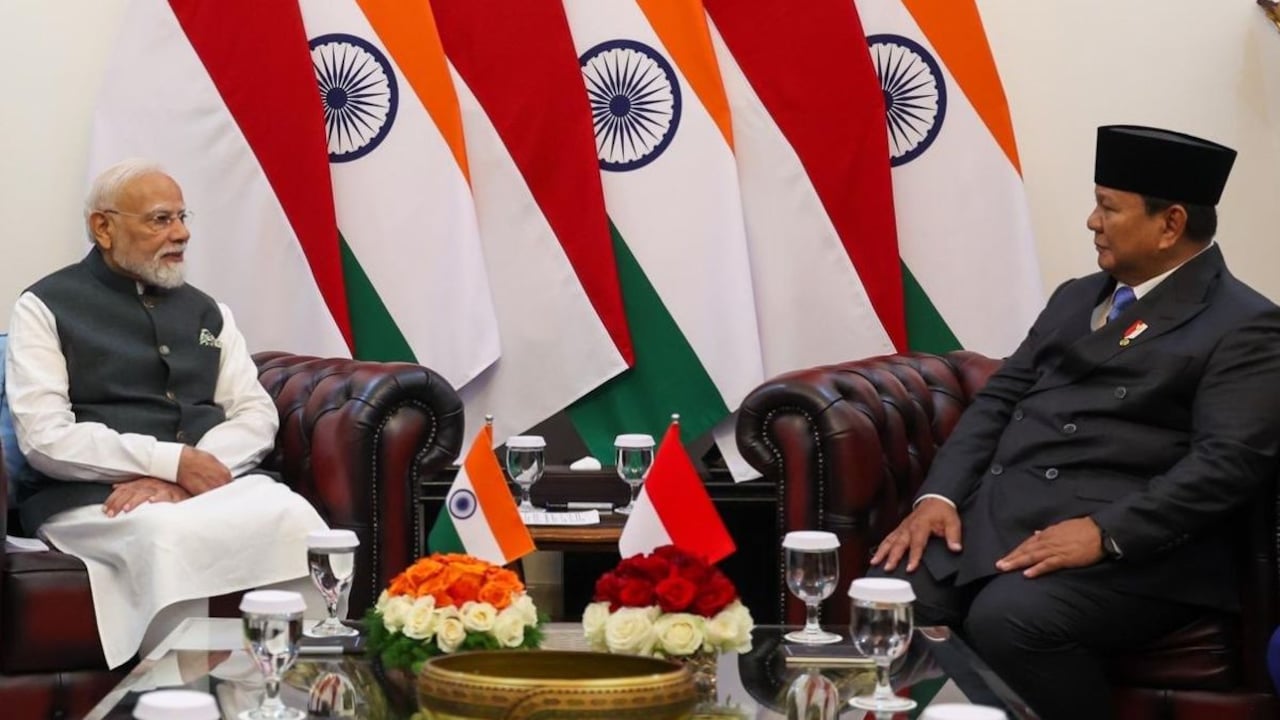
The two democratic giants of the Indo-Pacific are charting a massive, multi-layered roadmap to intertwine their defense forces, maritime security, and economic engines. To the casual observer reading a bureaucratic press release, it sounds like standard diplomatic boilerplate.
It isn't.
This is the quiet re-alignment of the world’s most critical trade corridor. When the Malacca Strait chokes, global energy stops. When the security of the eastern Indian Ocean fractures, consumer goods across three continents spike in price. The agreement signed between these two nations is not just a collection of signatures on heavy parchment. It is a calculated, urgent response to a changing geopolitical climate where small missteps carry devastating consequences.
The View from the Wheelhouse
To understand why this matters, look at a hypothetical merchant captain named Thomas. He is steering a three-hundred-meter container ship loaded with electronics from Shenzhen, heading toward Rotterdam. As he approaches the entry point of the Malacca Strait, he is entering one of the most congested maritime bottlenecks on Earth. Over a hundred thousand vessels navigate these waters every year.
Thomas doesn’t think about treaties. He thinks about piracy. He thinks about shifting sandbars. He thinks about the looming presence of unidentified foreign submarines cutting through the deep channels beneath his keel.
For years, if Thomas ran into trouble in the western approaches of the strait, the response mechanism was fragmented. India’s naval reach largely stopped where Indonesia’s coast guard jurisdiction began. Rogue actors and strategic rivals knew exactly how to exploit these grey zones between national boundaries.
The new roadmap changes the calculus entirely. By institutionalizing regular military exercises, sharing real-time maritime domain awareness, and opening up naval ports for mutual logistics support, India and Indonesia are essentially creating a shared neighborhood watch.
Consider the implications. When an Indian maritime patrol aircraft spots an anomaly in the deep waters of the Andaman Sea, that data now flashes instantly to an Indonesian operations center in Jakarta. Navy ships from both sides are no longer just passing each other with formal flag salutes. They are training to operate as a single, cohesive deterrent.
This is not about aggression. It is about transparency. In the language of modern strategy, an open ocean is a safe ocean. When two of the region's largest navies decide to synchronize their watches, the room for miscalculation shrinks dramatically.
Engines of the New Monsoon
The story of the eastern Indian Ocean has always been written by merchant ships following the trade winds. Centuries ago, the Chola dynasty of southern India sent fleets across these identical waves to trade textiles for spices in Sumatra and Java. The cultural DNA remains visible today in the architecture of Yogyakarta and the shared vocabulary of Hindi and Bahasa Indonesia.
But history cannot feed a combined population of nearly 1.7 billion people.
The economic pillar of this new roadmap addresses a glaring modern failure: despite their massive sizes and geographic proximity, bilateral trade between India and Indonesia has historically behaved like two distant strangers. They traded commodities—palm oil, coal, raw minerals—but missed the deeper integration that builds true economic resilience.
The new strategy shifts the focus toward high-value sectors. Think digital infrastructure, sustainable energy grids, and localized manufacturing supply chains.
Imagine a tech startup in Bangalore developing a low-bandwidth healthcare app designed for rural clinics. Under the old framework, expanding that technology to an isolated island community in Maluku required wading through a swamp of bureaucratic red tape, incompatible payment systems, and restrictive investment laws. By aligning their regulatory frameworks and digital payment ecosystems, the two nations are building a digital bridge across the sea.
The stakes extend far beyond software. The roadmap specifically highlights the development of port infrastructure, most notably the strategic harbor of Sabang in Indonesia. By connecting Sabang with the port system of the Andaman and Nicobar Islands, the two nations are creating a commercial economic zone right at the throat of global trade. It turns a remote outpost into a central hub.
The Uncertainty of the Deep
It is easy to paint a picture of flawless cooperation, but diplomacy is rarely a straight line. The path ahead contains genuine friction points.
Both nations pride themselves on fierce strategic autonomy. Indonesia is a founding leader of the Non-Aligned Movement and remains deeply wary of being dragged into a rigid superpower confrontation between Washington and Beijing. Jakarta's mantra has long been "rowing between two reefs"—navigating global rivalries without picking a side.
India, meanwhile, faces acute security pressures along its northern land borders and is steadily deepening its involvement in minilateral groupings like the Quad.
Can these two distinct worldviews truly coexist in a single maritime roadmap?
The answer lies in necessity. Neither country wants to see the Indo-Pacific dominated by a single, assertive power that dictates the rules of navigation and commerce. Their alignment is born not from a desire to build a formal military alliance, but from a shared recognition that if they do not secure their own backyard, someone else will do it for them.
It is an exercise in managed trust. There will be disagreements over fishing rights, domestic trade protections, and the pace of military integration. The success of this roadmap will not be measured by the grand statements made in capital cities, but by the quiet consistency of the joint patrols and the steady growth of cross-border investments over the next decade.
The Horizon at Dusk
Go back to the coastline of Aceh. As evening falls, the lights of massive container ships appear on the horizon, looking like a floating city drifting slowly toward the west.
For decades, those ships moved through a geopolitical vacuum, relying on a fragile status quo that everyone took for granted. That luxury is gone. The geopolitical waters are warming, the currents are becoming unpredictable, and old assumptions are washing away.
The roadmap drawn by India and Indonesia is an acknowledgment that the ocean connecting them is no longer a buffer. It is a shared responsibility. By binding their security and their economies together, they are drawing a new line on the map—one that suggests the future of the Indo-Pacific will not be decided solely by global superpowers, but by the maritime nations that actually live along its shores.
The fisherman cleaning his nets on the beach doesn't need to read the treaty to understand that the world is changing. He can see it in the grey hulls silhouetted against the setting sun, moving together toward the open sea.