The humidity in San Juan has a weight to it. It is a thick, floral curtain that clings to the skin the moment you step off a plane, a sensory reminder that you are no longer in the air-conditioned, high-stakes corridors of Washington D.C. or the sterile tech hubs of Ohio. In the world of political campaigning, every mile traveled is an investment. Every dollar spent is a vote of confidence from a donor who likely worked a forty-hour week to contribute fifty bucks to a cause they believe in.
But sometimes, the paper trail leads to a cabana instead of a podium.
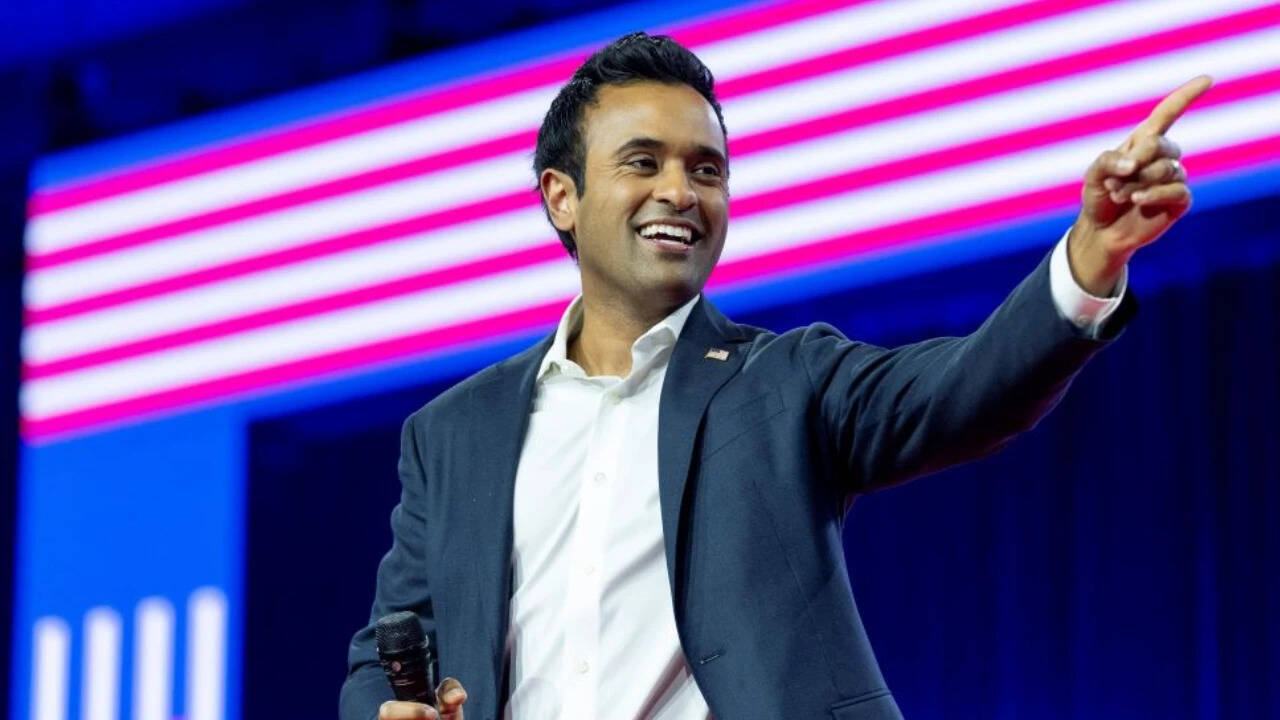
In the heat of a primary race, where the rhetoric often centers on the "forgotten man" and the structural rot of the "managerial class," optics aren't just part of the game. They are the game. When Vivek Ramaswamy’s campaign filed its financial disclosures, a specific line item stood out like a splash of neon on a gray suit: $12,000 for a stay at a luxury resort in Puerto Rico.
The timing was curious. The stay occurred just before a major conference regarding the H1-B visa program—a technical, bureaucratic, and deeply contentious pillar of American labor policy that Ramaswamy has frequently targeted in his stump speeches. To understand why this matters, you have to look past the receipt. You have to look at the tension between the message and the messenger.
The Cost of a Sunset
Imagine a donor in a small town in the Midwest. Let’s call him Elias. Elias works in manufacturing, a sector that has been hollowed out and then rebuilt with the promise that the next generation of leaders will finally respect the value of a dollar. When Elias sends $100 to a campaign, he isn't just buying a hat. He is buying a promise of stewardship. He expects that money to be turned into a megaphone, a TV ad, or a tank of gas for a bus traveling through a snowstorm in Iowa.
When that money transforms into a $12,000 bill at a high-end Caribbean destination, the narrative begins to fray.
The campaign defended the expense as a necessary logistics cost. They argued that the candidate needed a base of operations before the grueling schedule of the H1-B summit. In the logic of high-level consulting, this makes sense. Efficiency is expensive. If a candidate is well-rested and prepared, they perform better. If they perform better, the movement grows. It is a circular justification that treats campaign funds like corporate overhead.
But a political campaign is not a corporation. It is a secular ministry.
The H1-B visa program itself is a masterclass in complexity. It is the mechanism that allows American companies to hire foreign workers in "specialty occupations." To its critics, it is a loophole used to undercut American wages. To its proponents, it is the lifeblood of innovation, bringing the world's brightest minds to Silicon Valley. Ramaswamy has positioned himself as a wrecking ball against the program, calling it "indentured servitude" and promising to replace it with a merit-based system that doesn't favor big tech monopolies.
The contrast is striking. On one hand, you have the fiery rhetoric of a man demanding a return to meritocracy and fiscal sanity. On the other, you have the quiet luxury of a Puerto Rican retreat funded by the very people who feel the system has left them behind.
The Invisible Stakes of the H1-B Debate
The conference that followed the luxury stay was supposed to be the main event. In those rooms, policy experts and lobbyists gather to hammer out the future of who gets to work in America. It is a world of data points, labor statistics, and legal jargon. But for the people watching from home, the stakes are visceral.
The H1-B debate isn't about numbers. It is about the fear of being replaceable. It is about the software engineer in a cubicle in Plano who has to train their lower-cost replacement. It is about the immigrant who dreams of a green card but is tethered to a single employer, unable to leave for fear of deportation. It is a system that often feels like it was designed by people who have never had to worry about their next paycheck.
When a candidate speaks on this topic, they are stepping into a minefield of human emotion. To lead that conversation from the balcony of a five-star resort creates a distance that no amount of charisma can bridge.
The $12,000 spent in Puerto Rico is a tiny fraction of the millions poured into a national campaign. In the grand scheme of political spending, it is a rounding error. Campaigns routinely burn through eye-watering sums on private jets, "strategy sessions" at steakhouse dinners, and consultants who charge more per hour than a teacher makes in a month.
But voters don't think in rounding errors. They think in symbols.
The Language of the Ledger
Numbers tell stories that words try to hide. A ledger is a biography of priorities. If you want to know what someone actually values, don't listen to their speech. Look at their bank statement.
The $12,000 spend wasn't just for a room. It was for a specific kind of environment—one far removed from the grit of the campaign trail. It represents the "consultant-ification" of modern politics, where the candidate is treated like a luxury product that must be polished and protected. This is the very "managerial class" that Ramaswamy rails against in his books and on his podcasts.
The irony is thick enough to choke on.
Consider the mechanics of the trip. The flights, the security, the staff, the accommodations. Every layer adds a buffer between the candidate and the reality of the people he seeks to represent. When you spend that kind of money in a territory like Puerto Rico—itself a complex symbol of American administrative power and economic struggle—the optics become even more tangled.
Is it possible to fight for the common man while living like an autocrat? It is a question that has plagued populist movements since the dawn of the republic. From the estates of the founding fathers to the private islands of modern billionaires, the tension between elite status and populist messaging is a permanent feature of the American landscape.
The difference now is transparency. In the age of digital filings and instant journalism, the "quiet" trip is a thing of the past. Every receipt is a potential headline. Every luxury is a potential liability.
A Question of Stewardship
The H1-B conference came and went. Arguments were made, positions were staked, and the news cycle churned forward. But the $12,000 stays in the record. It remains a data point for those trying to figure out who the "real" Vivek is. Is he the insurgent outsider ready to burn down the system, or is he just another member of the elite who knows how to use the system’s perks while complaining about its flaws?
Trust is a fragile currency. It is earned in increments of cents and lost in increments of thousands.
For the person in the cubicle or the worker on the assembly line, the H1-B program is a source of anxiety. It is a shadow over their career path. They look to leaders to provide a way out, a vision of an America where their contribution is valued and their future is secure. They look for someone who understands what it means to sacrifice, because they sacrifice every single day.
When the leader takes the stage, the audience looks for more than just a good policy point. They look for a reflection of themselves. They look for the calluses. They look for the signs that the person at the microphone knows what it’s like to worry about a bill.
Luxury has a way of erasing those signs. It smooths out the edges. It makes the struggle feel theoretical.
The real cost of that Puerto Rico trip wasn't $12,000. It was the subtle erosion of the "outsider" brand. It was the moment when the champion of the "forgotten man" looked exactly like the people who forgot him.
The sun sets in San Juan just as it does in Des Moines or Youngstown. But the view from a luxury suite makes the horizon look a lot more comfortable than it does from a kitchen table where the math doesn't quite add up at the end of the month.
In the end, the paper trail always tells the truth, even when the narrator is busy telling a different story.
The ledger is still open.