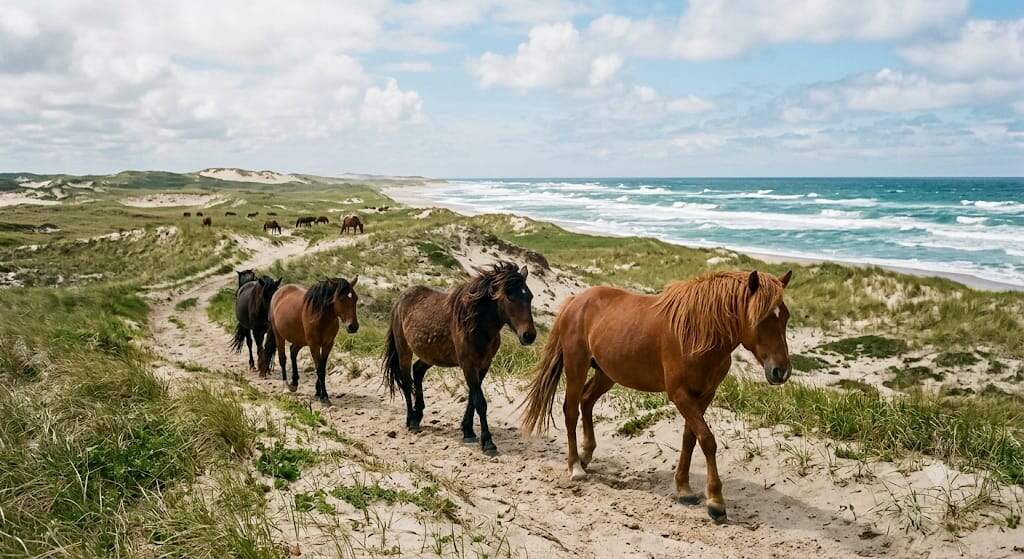
Most people look at photos of Sable Island and see a romantic paradise. They see a thin crescent of sand dropped into the North Atlantic, where hundreds of wild horses gallop through the fog with their manes flying in the wind. It looks like a fantasy novel.
It isn't.
Sable Island is a brutal, isolated sandbar off the coast of Nova Scotia. It's famous as the Graveyard of the Atlantic because over 350 ships have crashed into its shifting shores. There are no trees. No shelters. No permanent human residents. Just a handful of rotating researchers, weather station staff, and about 500 feral horses trying not to starve.
If you think these horses are living the dream, you've been misled by glossy travel brochures. The real story of the Sable Island wild horses is a gritty lesson in natural selection, human interference, and ecological balance.
The Shipwreck Myth That Everyone Buys Into
Let's clear up the biggest misconception right away. You'll often hear that these horses are the heroic survivors of historic shipwrecks. It's a great story. It makes for excellent television.
It's also completely made up.
Historical records from Parks Canada and genetic testing tell a much more mundane story. An dynamic Boston merchant named Thomas Hancock brought the ancestors of these horses to the island in the mid-18th century. This happened during the expulsion of the Acadians. Hancock transported Acadian livestock and decided to stash a bunch of horses on Sable Island, figuring they could graze for free until he needed them.
He basically used the island as a giant, unpaid pasture.
When Hancock died, the horses were left behind. Later, the government of Nova Scotia established a lifesaving station on the island in 1801 to help shipwrecked sailors. The staff used the horses for labor, hauling supplies and rescue boats across the heavy sand. To make the herd more useful, they introduced other breeds into the mix over the years, including Thoroughbreds, Morgans, and Clydesdales.
What you see today isn't a pure, ancient breed that swam ashore from a Spanish galleon. They're a tough, chaotic mix of domestic horses left to go feral. They're a living monument to human abandonment.
How to Survive on an Island Made Entirely of Sand
Living on Sable Island is hard work. The island is tiny, stretching about 42 kilometers long and just 1.5 kilometers wide at its thickest point. The weather is notoriously harsh. Thick fog wraps the island for a third of the year, and fierce winter storms pack winds that can easily knock a person flat.
With no trees for shelter, the horses have to adapt or die. They do this through a few specific, fascinating behaviors.
Eating Sand and Grinding Teeth
There are no sweet meadows here. The horses survive almost entirely on marram grass, beach pea, and wild rose. Marram grass is tough and coarse. Because the island is made of sand, every single bite the horses take is coated in fine, abrasive grit.
This sand grinds down their teeth over time. In fact, tooth wear is one of the leading causes of death for older horses on the island. Once their teeth are worn down to the gums, they can no longer chew the tough beach grass, and they starve.
Digging for Fresh Water
You won't find rivers or freshwater lakes on Sable Island. Instead, the island holds a lens of fresh water floating right beneath the sand, fed by rainfall.
The horses have learned to dig deep holes in the dunes using their hooves to reach this water. It's a grueling process, but it works. These watering holes often become crucial resources for other wildlife on the island too, like the massive colonies of grey seals that breed on the shores.
Shaggy Coats and Genetic Adaptation
Winters are punishing. To survive the freezing winds, the horses grow incredibly thick, shaggy coats that make them look twice their actual size. Their bodies have also changed over generations. They're shorter and stockier than standard domestic horses, with shorter legs that help them navigate the deep, unstable sand dunes without breaking bones.
The Dark Side of the Hands Off Policy
In 1961, the Canadian government stepped in to protect the herd. Before that, there were regular plans to round them up and sell them to coal mines or turn them into pet food. Public outcry, including letters from school children, forced the government to pass strict laws protecting them.
Today, the island is a National Park Reserve, managed by Parks Canada. The law states that humans cannot interfere with the horses in any way.
This sounds noble, but the reality is harsh.
"Hands-off" means exactly that. If a horse is starving during a brutal winter, nobody feeds it. If a stallion gets a massive, infected wound from a fight, nobody gives it antibiotics. If a foal is rejected by its mother, it dies.
Researchers watch this happen every year. During the winter of 2021-2022, an unusually harsh season combined with a parasite outbreak wiped out a significant portion of the herd. Starving horses were common sights. The weak died, and the strong survived.
It's pure, unedited natural selection. It can be incredibly difficult for visitors or even researchers to witness, but it's the price of keeping the herd truly wild.
The Hidden Environmental Crisis
Here's the topic that scientists debate behind closed doors, but tourism boards hate to talk about. Are the horses actually destroying the island?
Sable Island is a fragile ecosystem. The sand dunes are held together by the roots of marram grass. When the horses overgraze or trample the vegetation, they expose the raw sand underneath. High winds then blow that loose sand away, causing severe dune erosion.
Some biologists argue that the horses are an invasive, non-native species. They point out that the horses compete with native birds, like the endangered Ipswich sparrow, which nests almost exclusively on Sable Island. The horses step on nests, eat the vegetation the birds rely on, and alter the landscape.
On the flip side, supporters argue the horses have been there for nearly three centuries and have become part of the ecosystem. Their manure provides vital nutrients to the poor sandy soil, helping plants grow. Their water holes create micro-habitats for insects and birds.
There's no easy answer. For now, Parks Canada treats them as a naturalized species, meaning they belong there for cultural reasons, even if they cause ecological strain.
What It Actually Takes to Get There
If you're thinking about booking a trip to see these animals yourself, you need a reality check on the logistics. You can't just hop on a ferry.
Visiting Sable Island is a logistical nightmare and incredibly expensive.
- The Travel Options: You either fly in on a small chartered fixed-wing aircraft that lands directly on the sand beach at low tide, or you take an expedition cruise ship.
- The Cost: A single day-trip via charter flight will easily set you back several thousand dollars per person. Cruise slots are even more expensive.
- The Weather Risk: The weather rules everything. Fogs and high winds can cancel flights for days on end. You might spend a fortune only to have your trip rescheduled or canceled entirely.
- The Strict Rules: If you do make it ashore, you must stay at least 20 meters away from the horses at all times. You cannot feed them, pet them, or approach them. You pack out every single piece of trash you bring in.
Most people who want to see the horses are better off looking at the work of professional wildlife photographers who spend weeks on the island with special permits.
If you do decide to plan a trip, start by registering through the Parks Canada website months in advance. Spots are strictly limited to prevent human crowds from disrupting the fragile environment. Make sure you pack high-quality windproof gear, prepare your wallet for a massive hit, and accept the very real possibility that the North Atlantic weather might ruin your plans before you even leave the tarmac.