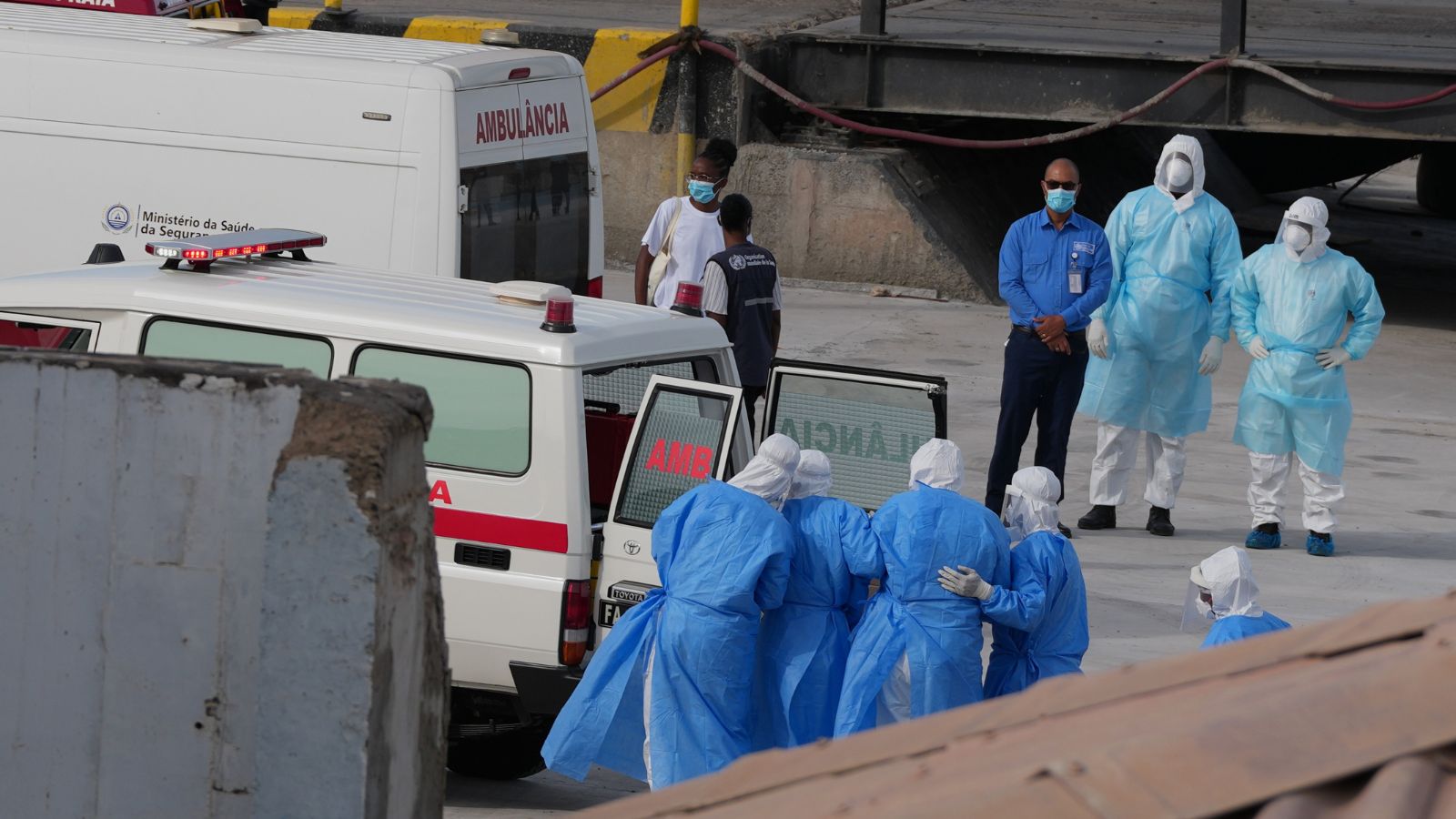
You’ve seen the maps. Bright red splotches creeping across South America, the United States, and parts of Europe and Asia. Headline writers love words like "terrifying" and "outbreak" because they get clicks, but they rarely explain what’s actually happening on the ground. If you’re worried about hantavirus because you saw a viral graphic, you need to understand that this isn’t COVID-2.0. It’s a localized, environmental threat that requires specific conditions to jump from a rodent to a human.
Hantavirus isn't new. We’ve known about it for decades, yet every few years, a cluster of cases makes the world panic. Recently, suspected cases in various regions have put public health officials on high alert. The reality is that while the virus is lethal—boasting a mortality rate that can hit 38% for certain strains—it’s also remarkably difficult to catch if you know what you’re doing.
Why Hantavirus Strains Differ Across the Globe
Not all hantaviruses are created equal. This is the first thing the "scary maps" get wrong. They lump everything together as if a case in Argentina is the same as a case in South Korea. It isn't.
In the Americas, we deal with "New World" hantaviruses. These cause Hantavirus Pulmonary Syndrome (HPS). It’s a respiratory nightmare. Your lungs fill with fluid, and you basically drown from the inside. The Sin Nombre virus is the big player here, primarily carried by the deer mouse.
Over in Europe and Asia, they deal with "Old World" hantaviruses. These usually cause Hemorrhagic Fever with Renal Syndrome (HFRS). Instead of your lungs, the virus attacks your kidneys. While still dangerous, the mortality rate for HFRS is generally much lower than the pulmonary version found in the Western Hemisphere.
The geographical spread you’re seeing on maps right now isn't necessarily a sign that the virus is "traveling." It’s a sign that we’re getting better at detecting it and that human encroachment into wild spaces is increasing. When you build a house in a previously untouched field, you’re moving into the rodent’s living room.
The Airborne Reality of Transmission
You don't get hantavirus from a mosquito bite or a tick. You don't get it from a cough in a crowded subway—with one extremely rare exception in South America involving the Andes virus.
You get it by breathing in "micro-dust."
Rodents, specifically deer mice, white-footed mice, and cotton rats, shed the virus in their urine, droppings, and saliva. When these waste products dry out and get stirred up into the air, they form aerosols. You walk into a dusty shed, start sweeping, and inhale the particles. That’s the moment of infection.
It’s an invisible trap. You might not even see a mouse. You just see the dust. This is why cases often spike in the spring and fall. People are opening up summer cabins or cleaning out garages that have been sealed up for months. If a colony of mice moved in over the winter, that garage is essentially a biohazard zone.
Behind the Recent Rise in Suspected Cases
Why are we seeing more reports now? Climate change is the obvious answer, but it's more nuanced than "it's getting hotter."
Ecological "pulses" drive these outbreaks. When a region has an unusually wet winter followed by a high-yield growing season, the rodent population explodes. More food means more mice. More mice mean more virus in the environment. This happened famously in the Four Corners region of the U.S. in the early 90s.
We’re seeing similar patterns in South America right now. Increased rainfall in certain Andean regions has led to a boom in the long-tailed pygmy rice rat population. More rodents mean more chances for human-rodent interaction. It’s a numbers game.
Urbanization plays a role too. As cities expand, we’re destroying the natural predators of these rodents. If you kill the snakes, hawks, and owls, the mice run the show. We’re creating the perfect environment for a zoonotic spillover.
Recognizing the Early Warning Signs
The tricky thing about hantavirus is that the early symptoms look like every other viral illness. It’s deceptive. You’ll feel like you have a bad case of the flu.
The Initial Phase
- Fever and chills.
- Deep muscle aches, especially in the thighs, hips, and back.
- Headaches and dizziness.
- Abdominal pain, which sometimes leads doctors to mistakenly suspect appendicitis.
This phase lasts about one to five days. Then, the "crash" happens. If it’s HPS, the lungs suddenly begin filling with fluid. You’ll experience shortness of breath that feels like someone is sitting on your chest. If you reach this stage, you need an ICU immediately. There is no "cure" or specific vaccine for hantavirus. Hospitals can only provide supportive care—intubation and oxygen—to keep you alive while your body tries to fight off the virus.
How to Actually Protect Yourself
Forget the panic and focus on practical prevention. If you live in an area where hantavirus is endemic, your behavior is your best defense.
Stop "dry sweeping" dusty areas. If you’re cleaning out a space that has signs of mice, you need to wet the area down first. Use a mixture of bleach and water (one part bleach to nine parts water). Soak the droppings and the nests for at least five minutes before you touch them. This "anchors" the virus to the floor so it can’t become airborne.
Wear gloves. Use a mask—ideally an N95 if you’re in a high-risk area. Throw away the cleaning materials in a sealed bag.
Mouse-proof your home. A mouse can squeeze through a hole the size of a dime. Use steel wool and caulking to seal every gap around pipes, vents, and doors. If they can’t get in, they can’t leave a toxic mess for you to find six months later.
Keep your food in airtight containers. This includes pet food and birdseed. If you leave a buffet out, the rodents will come. It’s that simple.
The Andes Virus Exception
I mentioned a "rare exception" regarding how this spreads. In Chile and Argentina, the Andes virus strain has shown the ability to spread from person to person. This is what keeps epidemiologists awake at night.
Most hantaviruses are "dead-end" infections in humans. We catch it from a mouse, but we don't give it to our neighbor. The Andes strain broke that rule during a few specific outbreaks. However, this is still the exception, not the rule. The vast majority of global cases remain tied directly to environmental exposure.
Don't Fall for the Hysteria
When you see a map showing the "spread" of hantavirus, look for the data behind the colors. Are the cases confirmed by a lab? Or are they just "suspected"? Suspected cases often turn out to be common pneumonia or even severe flu once the bloodwork comes back.
Public health surveillance is tighter than it used to be. We’re finding cases because we’re looking for them. That doesn't mean a plague is coming; it means our "radar" is finally tuned to the right frequency.
Take the threat seriously if you’re cleaning out old buildings or camping in the wilderness. Respect the dust. Seal your bins. Beyond that, don't let a scary graphic on social media ruin your day. Knowledge of how the virus actually moves is your strongest shield.
If you find rodent activity in your home, don't just grab a broom. Go get the bleach, put on a mask, and drench the area before you do anything else. Taking ten minutes to properly disinfect a space is the difference between a productive weekend and a life-threatening stay in the hospital. Stay proactive about your environment and stop treating every mouse as a monster—just treat their mess as a hazard.