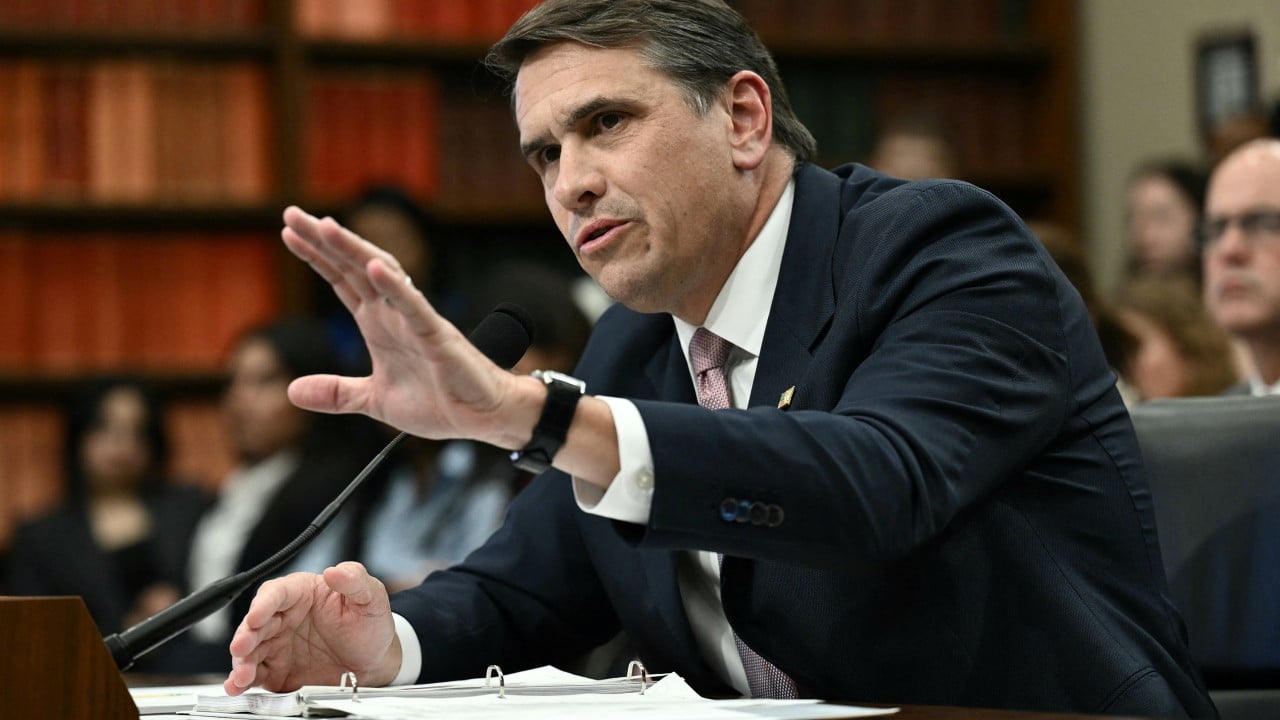
Todd Blanche nearly watched his nomination burn out over a billion-dollar dispute. The Senate Judiciary Committee just voted 12-10 along party lines to advance Donald Trump's former criminal defense lawyer toward a full floor vote for attorney general. But getting to this point required a frantic weekend deal that exposed deep fractures inside the Republican party.
If you are wondering why a routine nomination turned into a knife fight, you have to look at the intersection of executive power, personal loyalty, and a massive legal settlement regarding tax returns. Let's break down how Blanche pulled off this survival act and why the fight is far from over.
The Deal That Saved the Nomination
The entire confirmation process hit a brick wall over a controversial settlement. Earlier this year, the Justice Department resolved a massive legal claim involving Trump's IRS tax returns. Buried in that agreement was a provision creating a roughly $1.8 billion fund. The objective? To compensate Trump allies who felt they faced politically motivated prosecutions.
Two departing Republican senators, John Cornyn of Texas and Thom Tillis of North Carolina, drew a hard line. They made it clear they would tank Blanche's nomination in committee unless the Justice Department killed the payout pool in writing.
Blanche resisted at first. Then reality set in. Facing certain defeat, he caved late Sunday and issued a formal order stating that the fund was dead. His order stressed that no money had moved, no members were appointed, and no claims were paid.
Cornyn took the deal, citing the urgent need for stability at the Justice Department after months of leadership turnover following Pam Bondi's departure. But you could hear the hesitation in his voice. He admitted they basically had to take Blanche at his word, even though Trump himself never signed the rescission order.
The Independence Question
Critics aren't buying the sudden corporate-style compliance. Democrats and outside watchdogs point out a glaring conflict of interest. Blanche spent years defending Trump through multiple indictments. Moving straight from defense table to the nation's top law enforcement seat tests the limits of institutional norms.
Since taking over as acting attorney general in April, Blanche hasn't exactly tried to project neutral detachment. He moved quickly to accelerate investigations into political adversaries. That includes securing an indictment against former FBI Director James Comey over a social media post involving seashells arranged in a specific numerical pattern.
During the heated committee hearings, Senator Adam Schiff put it bluntly. He argued that Blanche's core problem isn't a lack of intelligence or experience. It is that he cannot physically shed his identity as Trump's personal criminal defense attorney.
Tax Audit Immunity and Lingering Loopholes
The $1.8 billion fund wasn't the only friction point. Cornyn and Tillis also demanded answers regarding a separate part of the IRS settlement. That clause granted sweeping tax audit immunity to Trump, two of his sons, and their associated businesses.
To satisfy the holdouts, the Justice Department clarified the boundaries in writing. The protection applies only retroactively to open claims at the time of the settlement. It does not grant a permanent hall pass shielding future tax filings from IRS scrutiny.
Even so, opponents argue the fixes are mostly cosmetic. Democrats note that nothing stops the administration from reviving similar compensation mechanisms down the road. Furthermore, Trump expressed active support for the fund even as negotiations unfolded, creating a weird public disconnect between the White House and its own nominee.
What Happens on the Senate Floor
Clearing the Judiciary Committee via a 12-10 party-line vote is only half the battle. The real war shifts to the full Senate.
The math is tight. Republicans hold a slim majority, but a few GOP members outside the committee—such as Lisa Murkowski, Susan Collins, and Bill Cassidy—have kept their cards close to their chest regarding whether they will vote yes.
If those moderate Republicans decide the concessions aren't ironclad, Blanche could still stumble on the floor. Yet, some pragmatists in Washington suggest that rejecting Blanche might backfire on critics. As Senator Peter Welch pointed out during the debate, voting down a loyalist often prompts an administration to find someone even more hardline to fill the vacancy.
The vote is expected later this week. Watch the floor closely because every single vote will determine if the former defense attorney officially secures the keys to the Justice Department.


