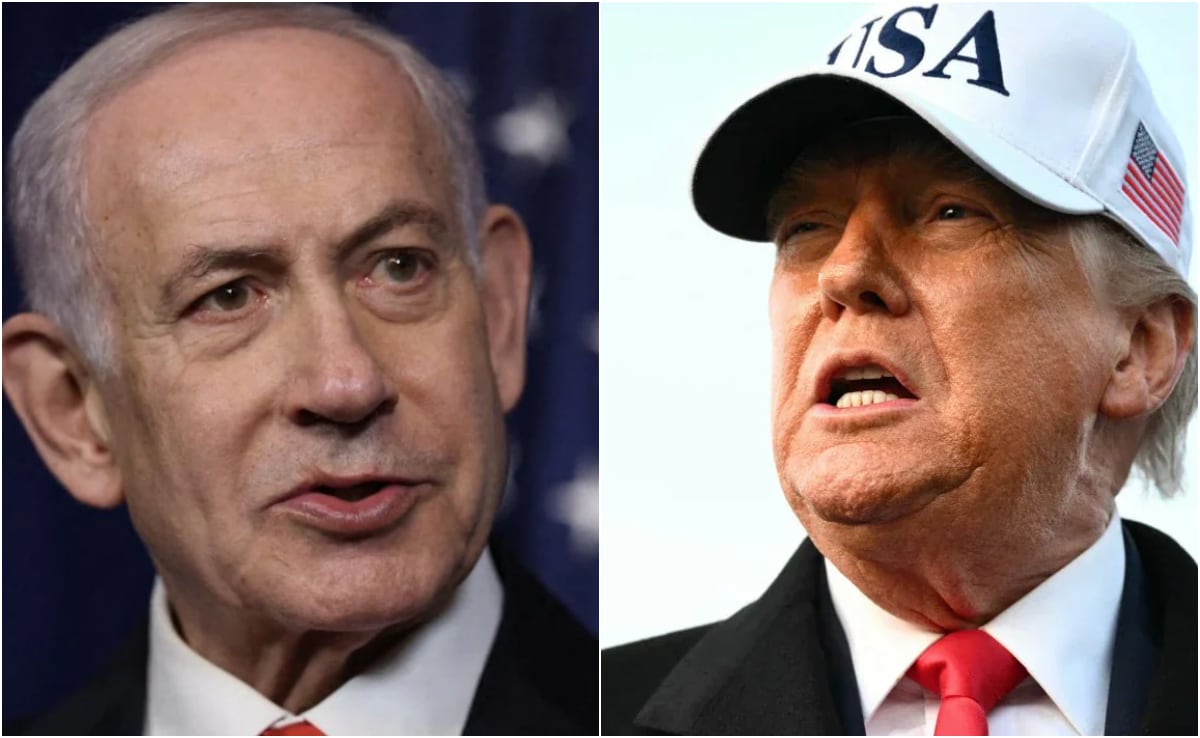
For over forty years, Donald Trump built his entire public identity around a single idea: he's the ultimate dealmaker. Long before he entered politics, he told The Washington Post back in 1984 that arms control negotiations with the Soviet Union would only take him an hour and a half to learn, boasting that "you either have it, or you don't" when it comes to high-stakes bargaining.
That narrative sold millions of books, powered a hit reality television show, and eventually carried him all the way to the White House.
Yet when you look closely at the trail of signed contracts, executive announcements, foreign policy pledges, and real estate partnerships spanning four decades, a very different picture emerges. The legendary master of negotiation repeatedly runs into a simple problem: the actual terms he delivers rarely match the hype he creates.
  +-------------------------------------------------------------+
  |              THE TWO FACES OF TRUMP DEALMAKING              |
  +-------------------------------------------------------------+
  |                                                             |
  |  THE PUBLIC BRAND               THE REAL-WORLD RECORD       |
  |  ----------------               ---------------------       |
  |  * "Art of the Deal" myth       * 6 corporate bankruptcies  |
  |  * Flashy announcement hype     * Leveraged casino collapses |
  |  * Quick, unilateral "wins"     * Shift to brand licensing  |
  |  * Heavy use of litigation      * High-tariff uncertainty   |
  |                                                             |
  +-------------------------------------------------------------+
The Real Estate Years Where Big Bets Met Heavy Leverage
To understand how Trump approaches negotiation in government, you have to look at how he built his empire in New York and Atlantic City. His early career wasn't defined by patient value creation; it was built on extreme leverage, aggressive posturing, and using the legal system as a sledgehammer.
Take the Plaza Hotel in Manhattan. Trump bought the iconic property in 1988 for $407 million, taking on massive debt loads to secure it. He publicly declared it a masterpiece acquisition. Just four years later, the hotel filed for Prepackaged Chapter 11 bankruptcy under a burden of over $500 million in debt.
The Atlantic City casinos followed a matching script:
- Trump Taj Mahal (1991): Opened with record-breaking junk bond debt at interest rates near 14 percent, collapsing into bankruptcy within fifteen months.
- Trump Plaza and Trump Castle (1992): Both swept into debt restructuring as revenue failed to cover borrowing costs.
- Trump Hotels & Casino Resorts (2004): Restructured with over $1.8 billion in debt, wiping out equity investors while Trump reduced his own stake.
In business, when direct development proved too risky, his firm quietly pivoted to a lower-risk model: licensing the family name. Instead of putting up equity, Trump leased his brand to third-party developers from Mumbai to Dubai. It was clever financial engineering that insulated him from debt, but it also revealed a core truth: he excelled at marketing the image of success far more than managing long-term operations.
   TRUMP CASINO & PROPERTY DEBT TIMELINE

   1988: Plaza Hotel Purchased ($407M)
     |
   1991: Trump Taj Mahal Chapter 11
     |
   1992: Plaza Hotel & Castle Bankruptcy
     |
   2004: Trump Hotels Restructuring ($1.8B Debt)
     |
   2009: Entertainment Resorts Filing
Foreign Policy Pledges and Disappearing Agreements
When Trump transitioned from private business to public office, he insisted that geopolitical rivalries were no different than commercial real estate disputes. He promised that personal relationships and hardball tactics would deliver historic breakthroughs where traditional diplomacy failed.
The results tell a far more complicated story:
The North Korea Summits
Trump held high-profile summits with Kim Jong Un in Singapore and Hanoi, complete with commemorative coins and broadcast praise. Yet despite the fanfare, no verifiable denuclearization agreement took effect. North Korea continued building up its ballistic missile arsenal throughout and after the talks.
Iran and the "Better Deal"
After pulling out of the 2015 Joint Comprehensive Plan of Action (JCPOA), Trump insisted that a "maximum pressure" campaign would force Tehran back to the table within weeks for a far stricter treaty. Instead, Iran escalated its uranium enrichment levels closer to weapons-grade purity while regional tensions soared.
The Russia-Ukraine Conflict
During his 2024 campaign and return to the presidency, Trump repeatedly asserted he could end the war in Ukraine within 24 hours. In practice, complex territorial disputes and security guarantees proved immune to rapid soundbite declarations, leaving structural conflicts unresolved.
                     GEOPOLITICAL PLEDGES VS. OUTCOMES

   REGION            PROMISED RESULT           ACTUAL OUTCOME
   ----------------  -----------------------   ----------------------------------
   North Korea       Full Denuclearization     Expanded nuclear & missile program
   Iran              "Far Better" JCPOA        Accelerated enrichment levels
   Ukraine           Resolved in 24 Hours      Ongoing war & complex stalemate
Trade Policy and the Tariff Hammer
In international trade, Trump discarded multi-decade free trade consensus in favor of unilateral tariffs under national security authorities like Section 232 and IEEPA. He framed every tariff threat as leverage to extract swift concessions.
Consider the United States-Mexico-Canada Agreement (USMCA), which replaced NAFTA. While Trump touted it as a massive victory, economic analyses from the International Trade Commission showed it was essentially a modernized, incremental update to NAFTA with stricter auto manufacturing rules, rather than a fundamental restructuring of North American trade.
   USMCA Auto Content Requirement Shift:
   [Old NAFTA: 62.5%] ====================> [USMCA: 75.0%]
In subsequent reciprocal tariff negotiations across Latin America and Southeast Asia, the outcome frequently produced short-term transactional framework agreements rather than durable market access. Partner nations often agreed to temporary purchasing pledges or narrow exemptions, but overall trade volatility increased, leaving American agricultural exporters dependent on federal subsidies to offset retaliatory actions.
Why the Dealmaker Strategy Keeps Stumbling
The disconnect between Trump's dealmaking reputation and his real-world record isn't random. It stems from specific structural habits he developed over decades in New York real estate:
- Short-Termism over Strategy: In corporate real estate, forcing a concession to close a press cycle works. In sovereign statecraft, forcing an asymmetric concession without building institutional trust guarantees the other side will undermine the agreement the second pressure eases.
- Preference for Personalities over Process: Trump relies heavily on one-on-one chemistry with foreign heads of state. But national interests, bureaucratic constraints, and parliamentary approval matter far more than private rapport.
- The Illusory Win-Win: True long-term dealmaking requires both sides to extract enough value to enforce the pact. Trump's brand demands that he be seen as the clear, indisputable winner, which often incentivizes counterparties to wait him out or sign symbolic agreements they have no intention of fully honoring.
Understanding this pattern matters because it reframes how we evaluate headlines. The announcement of an agreement is rarely the deal itself; the real test lies in the binding details and long-term enforcement.
When analyzing future policy moves or commercial ventures, look past the press release. Check the debt obligations, read the enforcement mechanisms, and track whether the partner counterparty actually fulfills their commitments six months down the road. That is where real dealmaking lives.
The video below shows how his personal diplomacy styles contrast across international regions.
This analysis breaks down the tactical difference between transactional foreign relations and long-term strategic bargaining.
Fareed's take: Trump's personal dealmaking worked in the Middle East. It won't with China.
This video is relevant because it evaluates the practical limits of Trump's personal negotiation tactics when applied to major geopolitical rivals like China.