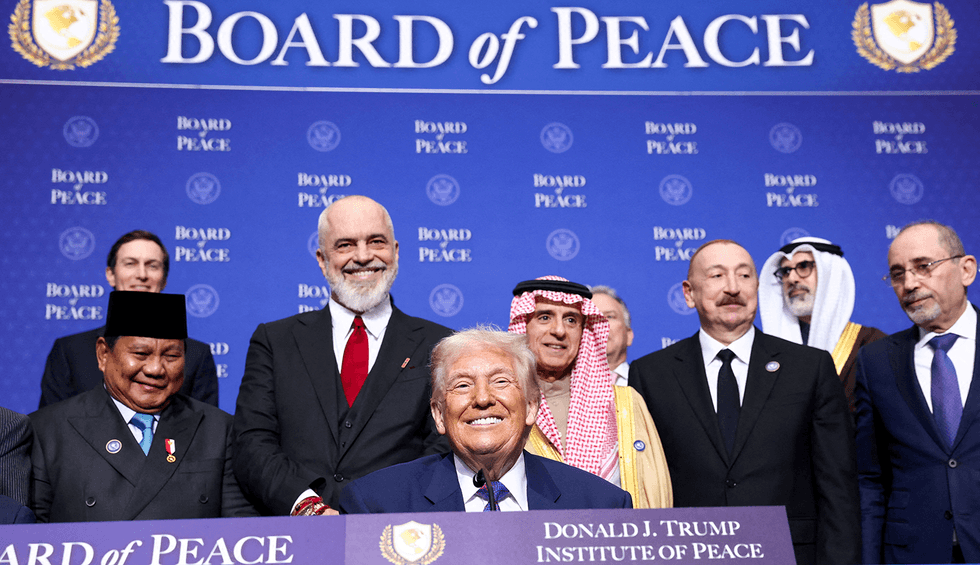
Donald Trump thought he could run international diplomacy like a high-stakes real estate development. You announce a massive project, grab the headlines, demand billions from wealthy partners, and sort out the details later.
It worked for luxury hotels. It isn't working for the Gaza Strip. Read more on a similar subject: this related article.
The Financial Times just dropped a bomb on the president's glitzy new initiative. The official fund for Trump’s Board of Peace, set up through the World Bank and backed by the United Nations, currently has exactly zero dollars in it. No cash. Completely dry. Despite grand promises of a $17 billion global package to rebuild the war-ravaged territory, international donors aren't cutting checks to the official account.
If you want to know why a heavily hyped international peace initiative stumbles out of the gate, you don't look at the press releases. You look at the bank statements. Further journalism by The Washington Post explores similar views on this issue.
The Mirage of the Seventeen Billion Dollar Pledge
When Trump launched the Board of Peace back in January, the numbers sounded massive. The United States committed $10 billion. Qatar, Saudi Arabia, and the United Arab Emirates lined up with promises of at least $1 billion each. The board’s own charter even established a steep barrier to entry, demanding a cool $1 billion just for a permanent seat at the table.
It looked like a financial juggernaut. It feels like a ghost town.
According to sources close to the operation, not a single cent of that pledged money has landed in the official World Bank vehicle. Why? Because the official fund was built to bankroll the actual reconstruction phase. Look around Gaza right now. We aren't anywhere near reconstruction.
The October ceasefire is basically a truce in name only. Over 800 Palestinians have died since the deal was signed. Israeli strikes keep hitting the strip, and Hamas refuses to completely disband its battalions. Since the board's high representative, Nickolay Mladenov, can't deploy workers into an active conflict zone where Hamas is still entrenched, the official money stays locked up.
The Stealth Account at JPMorgan
When the official channel is empty, you look for the side channels. The board’s spokesperson admits that some money has come in, but it didn't go to the World Bank. It went straight into a private account at JPMorgan.
This is where the structure gets incredibly messy.
Unlike the World Bank, a private JPMorgan account doesn't come with strict, independent transparency requirements. The board has no legal obligation to show contributors or the public exactly how that cash moves around. They've promised to report the financials to their own executive board eventually, but only "at a time deemed appropriate."
We do know about a couple of deposits tracking into this account:
- Morocco dropped around $20 million to keep the lights on at Mladenov’s office and pay salaries for a Palestinian technocratic committee.
- The UAE sent $100 million meant to train a brand-new Gaza police force.
But even that Emirati cash is totally frozen. The training program hasn't started because the political situation on the ground is a total stalemate.
The US State Department is playing a similar game of financial peek-a-boo. Officials say they want to reallocate $1.2 billion in existing aid for the board's goals, but congressional insiders confirm that none of that money is actually managed by the Board of Peace. Congress won't let the State Department hand over even a smaller $50 million direct chunk until the board sets up real tracking systems to handle US taxpayer cash.
A Private Club wrapped in a Peace Treaty
The real problem isn't just a lack of cash. It's that Trump built the Board of Peace to look like an exclusive corporate entity rather than a traditional diplomatic body.
He made himself the permanent chairman with total veto power, lasting even after his presidency ends. He packed the roster with close political loyalists, Gulf allies, and figures like former British Prime Minister Tony Blair. Meanwhile, major European powers like Britain and France took one look at the setup, noticed that Vladimir Putin was invited, and completely walked away.
Because the whole thing is run like a top-down corporation, the actual people supposed to do the work are stranded. Dr. Bishara Bahbah, a Palestinian-American scholar who helped negotiate with Hamas for the administration, pointed out that the technocratic governance committee can't even enter Gaza. If they show up without actual funding or tools to hand out aid, desperate locals will just flood them. They have zero means to execute anything on the ground.
An EU-UN assessment warns that Gaza needs upwards of $71 billion over the next ten years just to undo the catastrophic damage of the last two years of war. Trump's board can't even get its initial $17 billion out of limbo.
If you're tracking the reality of this situation, ignore the photo ops in Washington. Watch the US State Department's funding fights and watch whether Hamas actually disarms its fighters. Until those two things budge, the Board of Peace remains an expensive letterhead with an empty bank account.
This detailed breakdown from the Financial Times via the Jerusalem Post highlights the massive gap between the administration's public rhetoric and the stark reality of international diplomatic funding: Donald Trump Board of Peace official fund empty, separate account received donations. This report exposes how the lack of transparency structures has fundamentally stalled the flow of billions in reconstruction aid.


