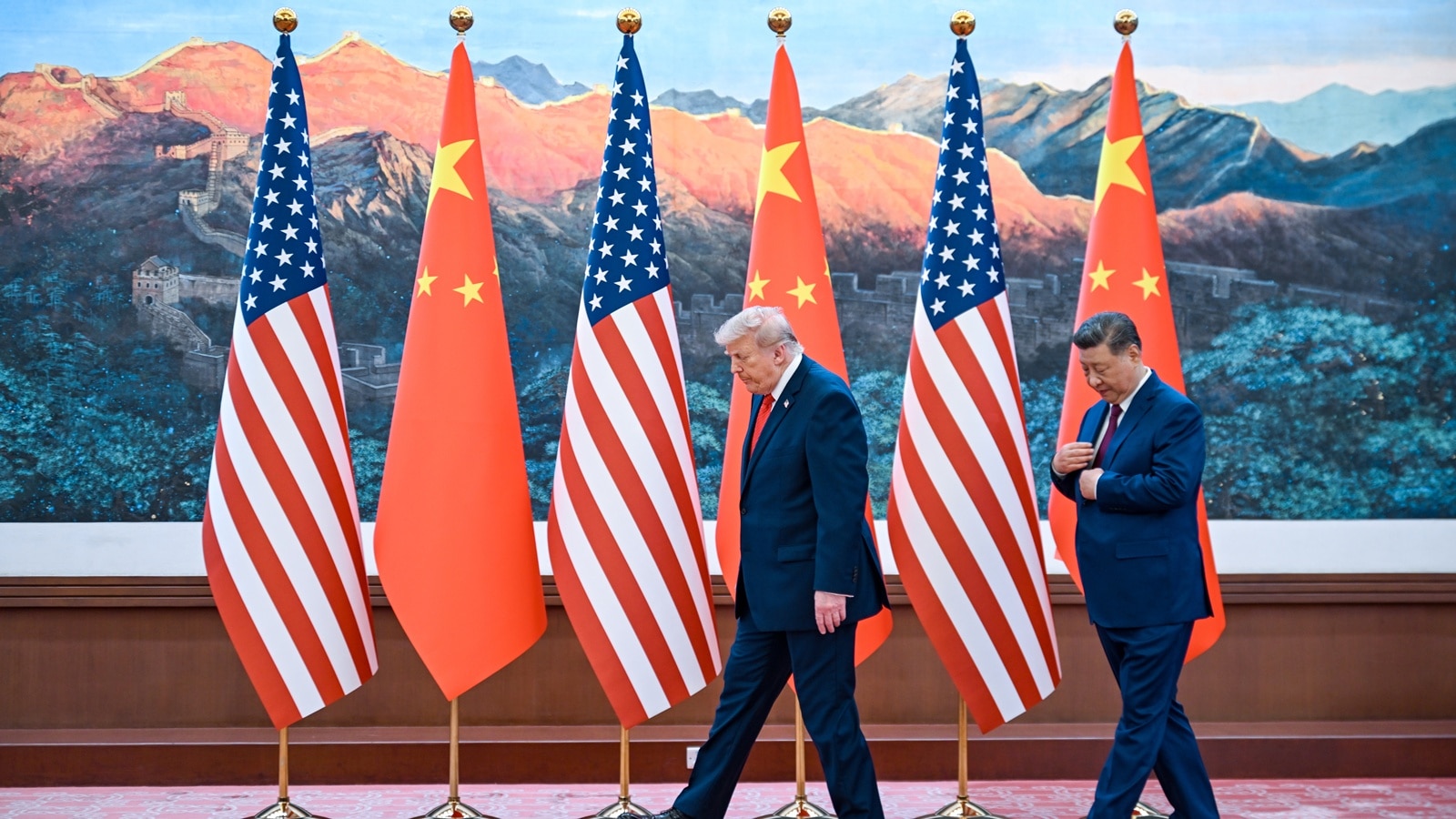
The mainstream media is fixated on the "clash of titans" narrative in Beijing this week. They paint a picture of two desperate leaders, Donald Trump and Xi Jinping, locked in a zero-sum struggle for survival while the world burns. They cite the 145% tariffs, the Iran war, and the shuttered Strait of Hormuz as evidence of an irreparable divorce.
They are dead wrong. Also making waves in related news: The Geopolitical Logistics of Sangley Point: A Strategic Deconstruction.
What the pundits miss is the secret, symbiotic utility of this conflict. Trump and Xi aren't trying to destroy each other; they are using each other to liquidate an old global order that neither of them wants anymore. This isn't a trade war. It's a joint venture in controlled demolition.
The Manufacturing Reshoring Myth
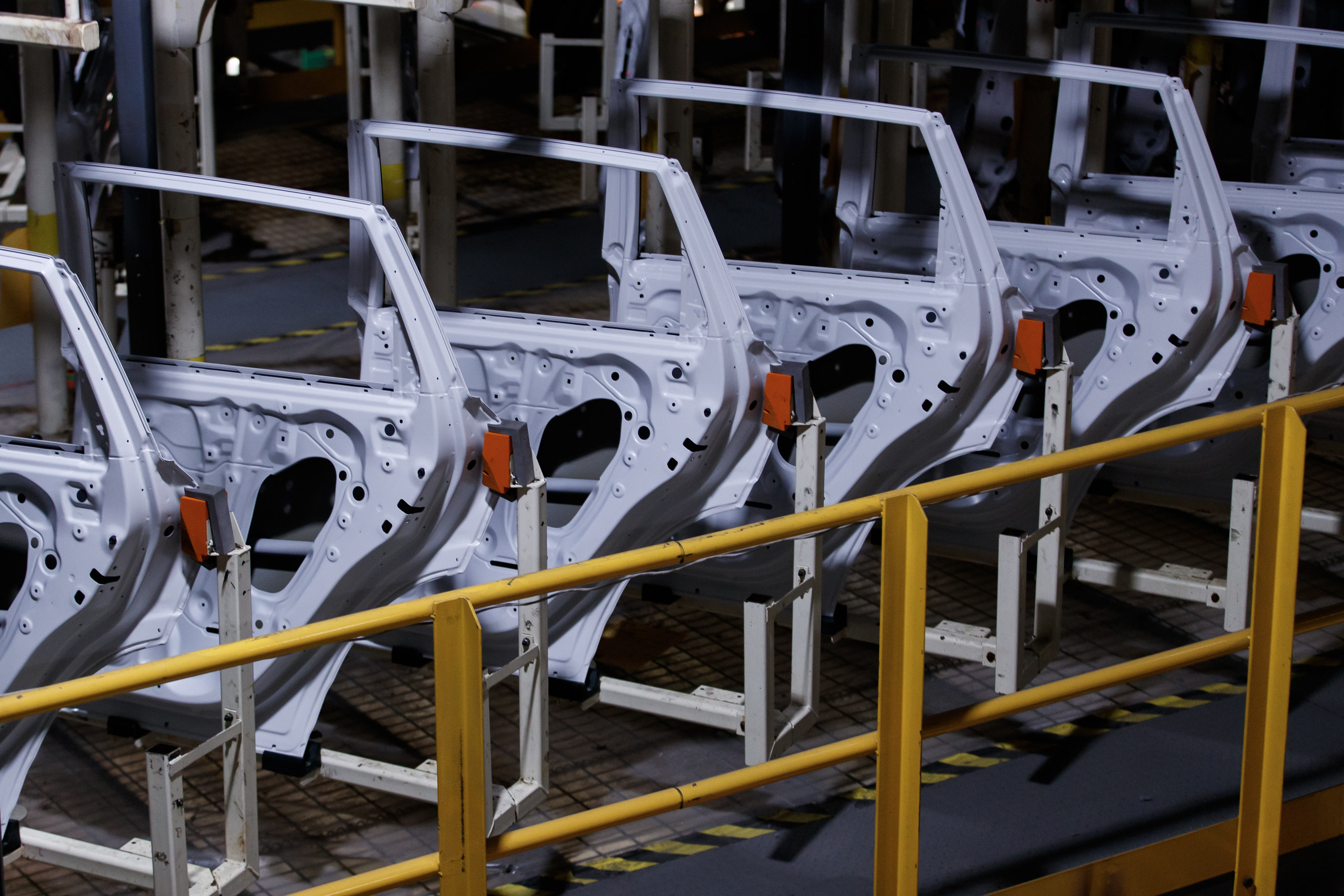
For years, the "lazy consensus" has been that Trump’s tariffs would bring factories back to Ohio and Pennsylvania. The data from early 2026 tells a different story. U.S. manufacturing construction spending has plummeted 44% since its mid-2024 peak. The "reshoring boom" is a ghost. Further insights on this are detailed by Harvard Business Review.
But here is the nuance: Trump doesn't actually care about the factories. He cares about the leverage. By pricing China out of the American consumer market, he isn't building a new Industrial Age; he is forcing a fire sale of Chinese compliance. He knows that China’s economy is currently a house of cards built on 14% export growth and a collapsed domestic real estate market.
I have seen CEOs blow millions trying to "wait out" these tariffs, thinking they are temporary political theater. They aren't. They are a permanent tax on the old way of doing business. If you are still looking for a "return to normal" after this Beijing summit, you are the mark.
China’s Export Weaponization
Xi Jinping is playing a parallel game. The West calls it "overcapacity" and "dumping." That is a fundamental misunderstanding of the CCP’s survival strategy. Xi isn't dumping goods because he has too many; he is flooding markets to ensure that when the global economy finally fragments, every emerging market in the Global South is physically dependent on Chinese hardware.
While the U.S. Supreme Court was busy striking down Trump’s emergency tariffs in February, China was busy signing rare-earth export controls that effectively crippled Western defense contractors. Xi knows he can’t win a direct consumer war with the U.S. right now, so he is winning the "ingredients war."
The "Phase One" purchase agreements—soybeans, planes, and energy—are a distraction. They are the "old wine" the Atlantic Council keeps talking about. The real movement is in the "Board of Trade" being discussed behind closed doors. This isn't about buying more corn; it's about partitioning the world into two distinct technological and financial operating systems.
The Iran War as a Convenient Smokescreen
The energy crisis sparked by the Iran conflict has pushed Trump’s approval ratings to a dismal 33%. Conventional wisdom says this makes him weak going into negotiations. In reality, it gives him the "madman" cover he needs to demand the unthinkable.
Imagine a scenario where Trump offers to ignore China’s military buildup in the South China Sea in exchange for Beijing forcing Iran to reopen the Strait of Hormuz. It sounds like a betrayal of allies. To Trump, it’s just a "deal" where the currency is regional stability instead of cash. He is trading away a "landscape" he doesn't value (overseas military footprints) for a metric he can sell at home (lower gas prices before the November midterms).
The Silicon Iron Curtain
The most dangerous misconception is that "de-risking" is a softer version of decoupling. It’s actually more surgical and more permanent. By ending the de minimis exception and forcing Nvidia to face anti-monopoly probes in Beijing, both sides are effectively building a Silicon Iron Curtain.
We are moving toward a world of "interdependence without overdependence," as the WTO calls it. I call it the end of the global consumer. If your supply chain relies on a single point of failure in Shenzhen or Silicon Valley, you are already obsolete.
- The Tariffs are the Base: The 30% and 10% rates established in late 2025 are the floor, not the ceiling.
- The Surplus is Irrelevant: China’s $1.1 trillion trade surplus doesn't mean they are winning; it means they are addicted to a market that is being systematically closed.
- The Midterms are the Trigger: Everything Trump does in Beijing is a commercial for the November 2026 elections. He needs a "win" that looks like a check, not a treaty.
Stop asking if the trade war will end. It won't. Ask instead how you can operate in a world where the two largest economies have decided that being "partners" is less profitable than being "managed enemies."
Trump and Xi are two sharks in a tank. They might bite each other, but they both hate the water. They are currently busy draining the tank to see who can breathe air the longest.
Diversify your sourcing to Mexico and Vietnam now, or prepare to pay the "Great Power" tax for the rest of the decade. The era of cheap, friction-less globalism is dead. Trump and Xi just finished digging the grave.