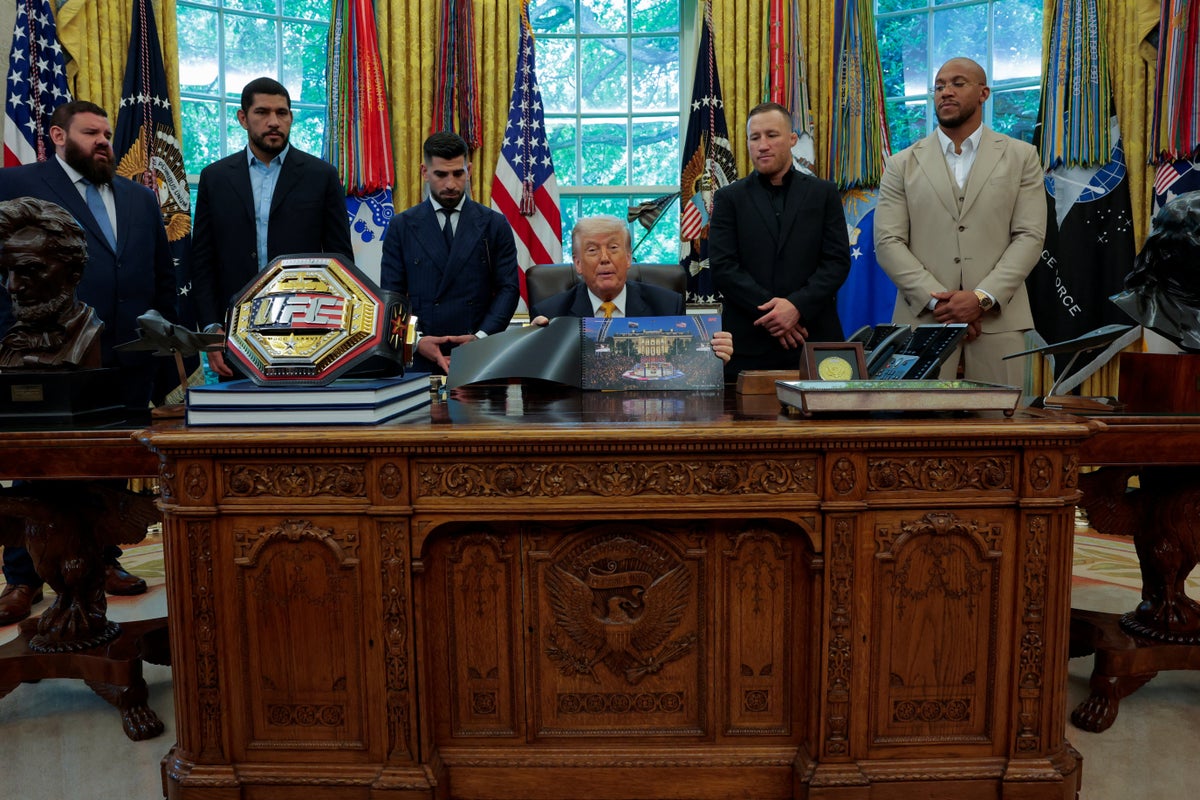
The media remains trapped in a 1990s fever dream of "diplomatic decorum." They see a former president leaning on a cage fighter to discuss Iran and they smell desperation. They call it a stunt. They call it a degradation of the office. They are fundamentally wrong. This isn't a circus act; it’s a masterclass in psychological warfare and high-level optics that the State Department couldn't replicate with a billion-dollar budget and a century of Ivy League pedigree.
While the "experts" are busy clutching their pearls over the lack of white papers and teleprompter-fed platitudes, they are missing the raw, visceral utility of the octagon as a tool for geopolitical signaling.
The Myth of the "Qualified" Diplomat
Let's kill the first sacred cow: the idea that a suit from the Council on Foreign Relations is inherently better at communicating national resolve than a man who bleeds for a living. The "lazy consensus" argues that foreign policy is a delicate game of chess played in hushed tones. History proves it’s a street fight disguised as a gala.
When Trump aligns himself with the UFC—and specifically with fighters who embody a "no-surrender" ethos—he is bypassing the bureaucratic filter. He isn’t talking to the Iranian Foreign Ministry. He’s talking to the Iranian people and the global "strongman" circuit. In a world where perception is reality, standing next to a physical specimen who has survived 25 minutes of combat carries more weight than a strongly worded memo from a career diplomat.
I have watched political campaigns burn through millions trying to manufacture "authenticity." You can’t buy the grit of a fighter. You can’t fake the resonance of the Octagon. By utilizing the UFC as a backdrop for a "hardline" stance on Iran, the message isn't "we have a plan." The message is "we have the stomach for it."
Cultural Hegemony Over Technical Policy
The competitor's piece focuses on the "war stance." They want to talk about sanctions, enrichment levels, and regional proxies. They are asking the wrong questions. The question isn't whether a fighter understands the nuances of the JCPOA (Joint Comprehensive Plan of Action). The question is: who commands the attention of the modern world?
The UFC is the fastest-growing sport on the planet. Its demographic is young, male, and increasingly skeptical of traditional institutions. By tethering an Iran strategy to this ecosystem, the policy moves from a dry C-SPAN segment to a viral cultural moment.
This is a "high-trust" move in a "low-trust" world. The public doesn't trust politicians. They trust people who do difficult things in public. If you want to signal that "we’re in good shape" regarding a potential conflict, you don't send a press secretary with a law degree. You stand next to the guy who just won a title fight. It is a primitive, yet effective, display of vitality.
The Cost of Decorum
The downside to this contrarian approach is obvious: it alienates the very institutions required to actually manage a war. You cannot run a carrier strike group via Instagram Live. However, the critics fail to realize that the threat of action is often more effective than the action itself.
Deterrence is 90% theater. If your opponent believes you are erratic, aggressive, and surrounded by people who view violence as a professional sport, they behave differently. The "rational actor" theory in international relations is a playground for academics. Real-world actors—especially those in Tehran—calculate based on the perceived "crazy" factor of their adversary.
Dismantling the "People Also Ask" Delusions
People often ask: "Does a fighter's opinion on Iran actually matter?"
Of course it doesn't, if you're looking for a logistical breakdown. But that is the wrong metric. Their presence matters because it changes the vibe of the administration. In the 21st century, "vibe" is a leading economic and political indicator.
Another common query: "Is this dangerous for democracy?"
The "dangerous" part isn't the fighter; it’s the fact that our traditional diplomatic channels have become so stagnant and untrusted that we have to resort to combat sports to find a baseline of national confidence. We are in an era of post-policy politics. If you are still looking for 40-page PDFs on regional stability, you aren't paying attention to how power actually shifts in 2026.
The Tactical Edge of the Unconventional
Think about the psychology of the negotiation table. If you are the Iranian leadership, who do you fear more? A president who quotes Kissinger, or a president who holds court at a UFC event and says, "We're in good shape," while the crowd roars for a knockout?
The former is predictable. The latter is a wildcard. In the theater of war, the wildcard wins.
We have spent decades trying to "democratize" the Middle East through "smart power." It failed. We tried "strategic patience." It failed. This shift toward raw, unapologetic strength—even if it's purely symbolic—is an admission that the old ways are dead.
The UFC isn't just a sport; it's a mirror of the new global reality: it’s loud, it’s violent, and there are no points for participation. You either win or you wake up on the canvas.
Stop looking for the policy in the fighter’s words. The policy is the fighter himself. The medium is the message, and the message is that the era of the "soft-handed diplomat" is over.
If you want to understand the future of American foreign policy, stop reading the New York Times and start watching the prelims. The octagon is the new Oval Office.
Build a bigger cage. The world is watching.