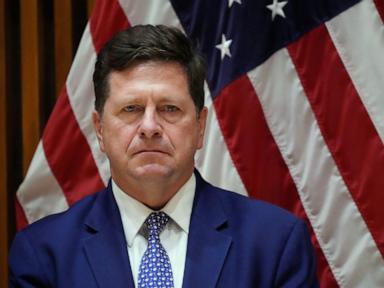
Donald Trump just threw a massive wrench into the Washington intelligence apparatus. By nominating current Manhattan U.S. Attorney Jay Clayton to serve as the Director of National Intelligence (DNI), the administration isn't just trying to fill a vacant seat. It's executing a calculated political escape hatch to resolve a furious Capitol Hill standoff that threatened to blind American spy agencies overnight.
If you're wondering why a corporate lawyer turned federal prosecutor is suddenly tapped to command 18 separate intelligence agencies, you have to look at the burning building Clayton is being asked to walk into.
The Pulte Disaster and the FISA Hostage Crisis
The real story starts with the collapse of the previous plan. After Tulsi Gabbard stepped down, Trump attempted to install Bill Pulte—the head of the Federal Housing Finance Agency and a fierce political loyalist—as the acting DNI. Pulte has zero intelligence experience. Congress revolted immediately.
Democrats and a significant faction of institutional Republicans viewed Pulte as an existential threat, fearing he would weaponize raw intelligence against domestic political enemies. They found the perfect leverage point to block him: Section 702 of the Foreign Intelligence Surveillance Act (FISA).
Section 702 is the crown jewel of the government’s surveillance capabilities, allowing warrantless tracking of foreign targets abroad. It was set to expire at midnight on Friday. Capitalizing on the moment, Senate Democrats flatly refused to renew the surveillance powers unless Pulte was pulled from the DNI role.
Enter Jay Clayton. CIA Director John Ratcliffe quietly pitched Clayton to Trump as a consensus builder who could break the logjam. He’s someone Washington insiders actually respect. Top House Intelligence Democrat Jim Himes immediately admitted he has respected Clayton for decades, noting that "lots of pain might have been avoided" if Trump had picked him sooner.
The Real Agenda Is a Scaled Back DNI
Don't mistake this for a standard institutional appointment. Trump isn't backing down; he's shifting his strategy.
While Clayton is the public face designed to sail through a Senate confirmation hearing, the administration's long-term plan for the Office of the Director of National Intelligence is radical downsizing. White House sources indicate that Trump still intends to let Pulte take over as acting director temporarily on June 19 to aggressively gut the agency’s budget, headcount, and operational footprint.
Once Pulte shears the agency down to the studs, Clayton will step in to manage a highly restricted, minimalist operation focused strictly on basic coordination among the 17 other spy components. It’s a classic corporate restructuring tactic masquerading as a national security appointment.
Wall Street, SDNY, and No National Security Experience
Let’s be completely blunt about Clayton's resume. He is completely unqualified in the traditional sense.
Under federal law, the Director of National Intelligence is required to possess extensive national security expertise. Clayton doesn't have it. He spent the vast majority of his elite legal career at Sullivan & Cromwell specializing in multi-billion-dollar mergers, acquisitions, and corporate capital-raising. He ran the Securities and Exchange Commission (SEC) during Trump’s first term, viewing the world through the lens of market liquidity, insider trading, and corporate compliance.
His only real exposure to the enforcement world came when he took over the Southern District of New York (SDNY) in 2025. Even then, he inherited a chaotic, politically radioactive office.
Clayton took the reins after interim U.S. Attorney Danielle Sassoon resigned in protest after refusing Main Justice orders to drop corruption charges against former New York City Mayor Eric Adams. Clayton walked that tightrope perfectly, navigating his 14-month tenure without publicly clashing with Manhattan’s notoriously independent federal judges. He handled high-profile files, including the public redaction and release of thousands of pages of Jeffrey Epstein documents and the ongoing drug trafficking prosecution of former Venezuelan leader Nicolás Maduro.
But prosecuting financial fraudsters, international drug cartels, and cleaning up bureaucratic messes in Manhattan is light-years away from interpreting raw signals intelligence from Beijing or managing clandestine human operations in the Middle East.
The Redactions and the Conspiracy Traps
Clayton isn't entering the confirmation process without baggage. His handling of the Epstein files will trigger intense questioning from both sides of the aisle.
When the Department of Justice released three million pages of Epstein records, Clayton led the team of 125 Manhattan attorneys managing the redactions. The execution was messy. Internet sleuths quickly realized that the digital redaction tools used by his office were faulty, allowing users to decode hidden text and inadvertently exposing the identities of multiple victims. Furthermore, critics will likely point to Clayton's past tenure as an independent director at Apollo Global Management—a position he took after founder Leon Black stepped down over massive financial ties to Epstein. While no evidence links Clayton to any wrongdoing, the optics in a hyper-partisan Senate are brutal.
Then there’s his recent rhetoric. Just days ago, Clayton appeared on CNBC and openly validated unproven conspiracy theories regarding the slow pace of vote counting in California's primary elections. He claimed the American people are right to question the integrity of the process, aligning himself closely with Trump's election skepticism. For intelligence community purists, a potential DNI signal-boosting election regularities is a massive red flag.
How the Confirmation Battle Plays Out
The Senate Select Committee on Intelligence scheduled Clayton's confirmation hearing for June 17. Expect a tense, fast-moving spectacle. Senate Majority Leader John Thune is already pushing to move the paperwork at breakneck speed, calling Clayton an "incredibly competent manager" who can save the FISA program.
Democrats find themselves in a tight corner. Senate Democratic Leader Chuck Schumer’s immediate reaction was a blunt "Pulte has to go". They hate the idea of Pulte holding the keys to the intelligence kingdom even for a few weeks. But because Clayton commands genuine bipartisan respect as an establishment figure, blocking him outright would make Democrats look like the ones sabotaging national security while FISA 702 hangs in limbo.
Keep an eye on three specific developments over the next 48 hours to see how this shakeup alters the landscape:
- Watch the language out of the Senate Intelligence Committee regarding a temporary, short-term extension of FISA to cover the gap before Clayton's June 17 hearing.
- Look for whether Trump softens his stance on allowing Bill Pulte to assume the acting DNI role on June 19, which remains the primary sticking point for Schumer.
- Monitor who the administration fields to replace Clayton at the SDNY, as that office handles critical financial and political corruption cases that the White House watches closely.