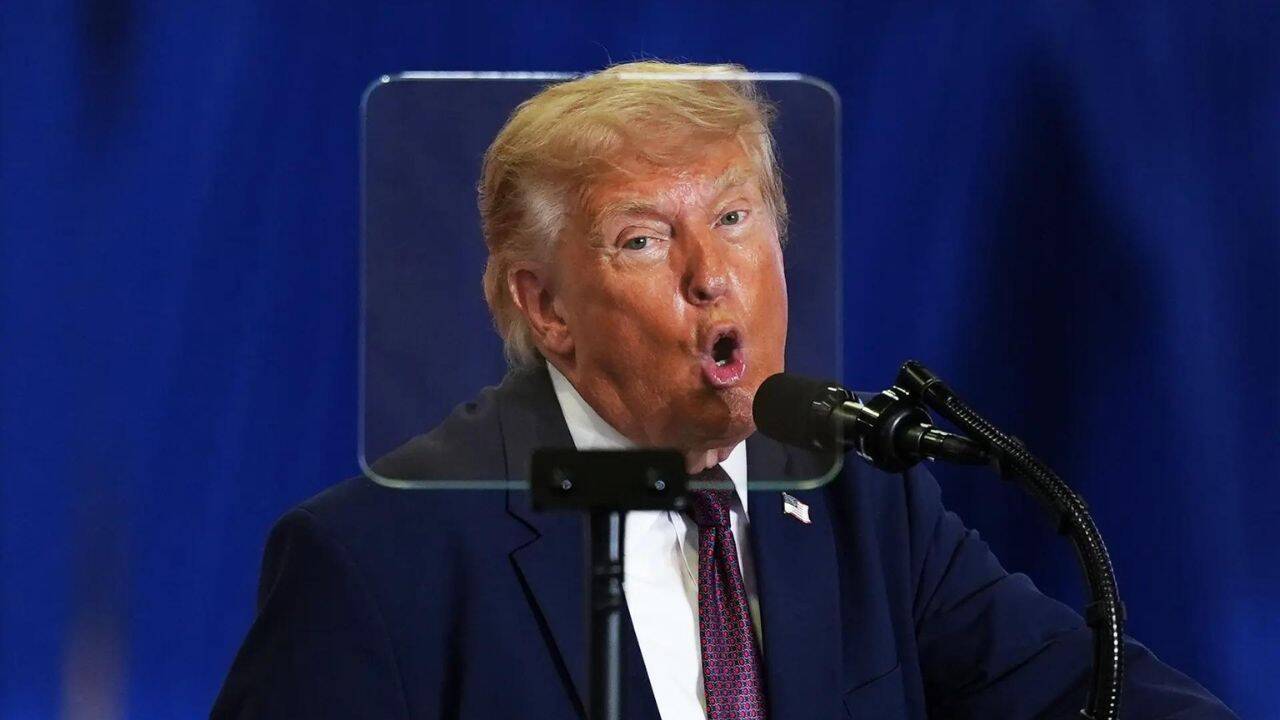
Closed-door meetings in Washington usually leak, but they rarely leak with this much raw noise attached. When Donald Trump stood before Senate Republicans in late June 2026, he expected a room full of allies ready to fall in line. Instead, he walked right into a shouting match that exposed the deep, structural fractures spreading through the GOP over his administration’s dragging military campaign in Iran.
The boiling point arrived when Louisiana Senator Bill Cassidy stood up to challenge the president directly. Trump wanted answers from the four Republican senators who crossed party lines a day earlier to vote for a war powers resolution aimed at curbing his executive military authority. Cassidy didn't back down. He demanded to know why a deployment pitched to the public as a quick four-week operation had stretched into a messy four-month conflict without hitting its core strategic targets.
Things went sideways fast. Trump lost his temper, raised his voice, and ordered Cassidy to sit down. The Louisiana senator refused, matching the president’s volume word for word. During the exchange, Trump reportedly called Cassidy a "lunatic." It took several quiet interventions from other lawmakers in the room to convince Cassidy to finally take his seat and de-escalate the confrontation.
The Core Dispute Over War Powers
This was not a minor personality clash. It was a direct consequence of a massive legislative rebuke that occurred just 24 hours prior, when the Senate passed a war powers resolution designed to check unilateral military action against Tehran. Trump had already vented his fury on Truth Social, branding the four defecting Republicans as "losers." Nebraska Senator John Kennedy noted that the president arrived at the Capitol "mad as a murder hornet."
The internal GOP panic stems from a clear reality: congressional majorities are incredibly thin, and the public is growing weary of an open-ended conflict. The administration’s aggressive rhetoric—including an Easter Sunday post demanding Iran open the Strait of Hormuz—has given Democrats plenty of ammunition to question the White House's strategic stability. For lawmakers facing tough re-election campaigns in the 2026 midterms, an unauthorized, expanding war in the Middle East is a massive political liability.
Strategic Confusion in the Persian Gulf
What frustrates lawmakers like Cassidy isn't just the length of the conflict, but the apparent lack of an exit ramp. The administration claimed major victories early on, even suggesting that Iran's military capabilities were largely neutralized. Yet, weeks later, American troops remain under regular fire, and civilian infrastructure targets like the B1 bridge between Tehran and Karaj have been struck without forcing a total diplomatic surrender.
The mixed messaging from the executive branch has left Capitol Hill completely in the dark. While loyalists like Senator Tommy Tuberville laughed off the shouting match as standard "halftime talk" where everyone got things off their chest, other senior figures were far more critical. Texas Senator John Cornyn dryly observed that the meeting was supposed to be a unity message, yet it accomplished the exact opposite.
Congressional Reality Check
If you look at how Congress handles foreign policy, party loyalty usually holds things together during the initial phase of a crisis. That buffer has officially expired. Rank-and-file Republicans are realizing that unconditional support for executive war-making is a dangerous gamble when the administration refuses to provide formal briefings to the committees that oversee national security.
The next tactical move belongs to the Senate leadership, who must decide whether to force regular, classified briefings from the Pentagon or continue letting members twist in the wind. For voters and policy analysts trying to gauge where the US goes from here, the strategy is simple: ignore the public unity press conferences. Watch the upcoming defense authorization votes and committee hearing schedules instead. That is where the actual boundaries of Trump's military authority will be drawn, regardless of who gets called a lunatic behind closed doors.
The sudden escalation within the party points toward an increasingly rocky path for the administration's foreign policy goals as the midterms approach. For a deeper breakdown of the initial legislative push that triggered this confrontation, you can watch this analysis of the House war powers resolution against Trump, which details how Capitol Hill reporters and political analysts viewed the rising constitutional tension over the conflict before it boiled over into the Senate cloakroom.