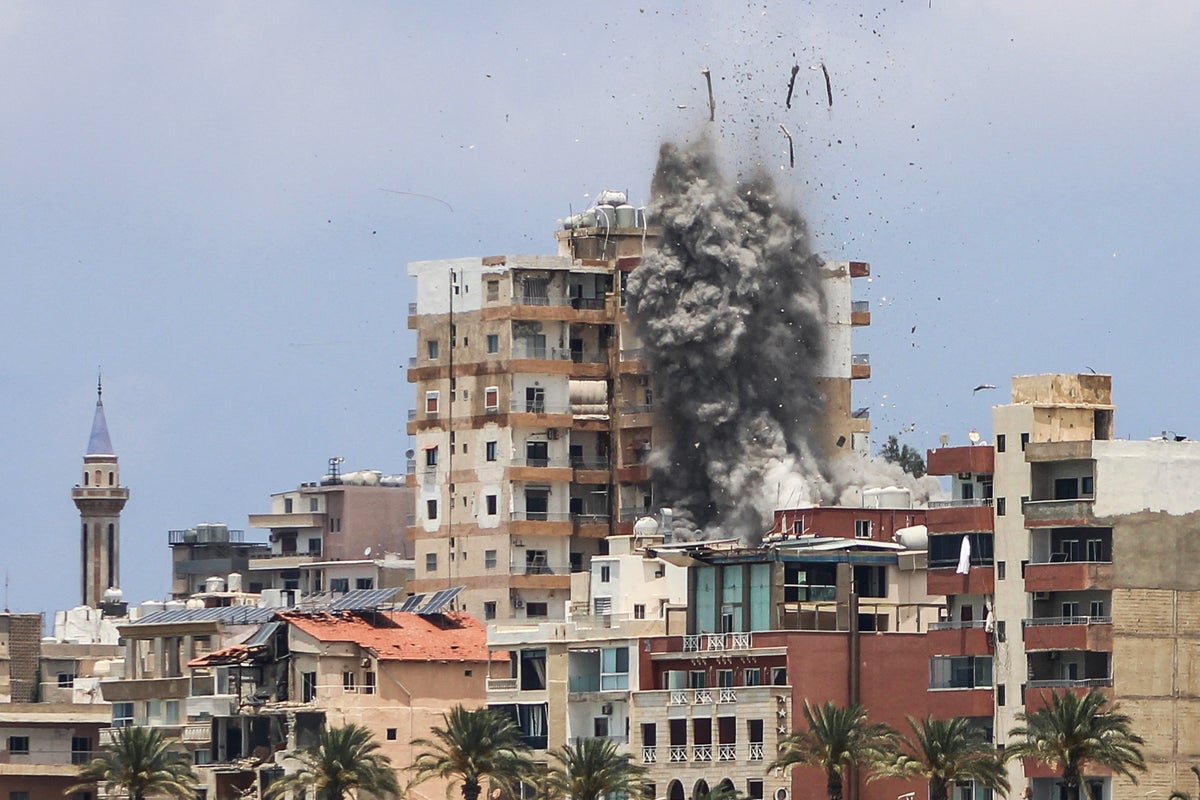
Donald Trump wants a grand diplomatic victory in the Middle East, but Benjamin Netanyahu isn't sticking to the script. Just hours after Trump publicly pressured both Israel and Iran to immediately stop shooting, Israeli warplanes launched a devastating strike on the ancient port city of Tyre. The attack killed at least eight people, wounded 32 others, and threw a massive wrench into Washington's high-stakes peace negotiations.
If you think this is just another routine cross-border skirmish, you're missing the bigger picture. This is a glaring public fracture between a U.S. president demanding an immediate regional ceasefire and an Israeli prime minister who refuses to let Washington dictate his military parameters. Trump is looking toward the upcoming midterm elections and desperately needs a foreign policy win. Netanyahu, conversely, is playing a completely different game, viewing the destruction of Hezbollah as an existential necessity that cannot be paused for American political expedience.
The Tyre Strike and the Red Line That Wasn't
The reality on the ground in southern Lebanon completely undercuts the optimistic narrative coming out of the White House. The single Israeli strike on Tyre's eastern edge on Tuesday didn't just leave a trail of blood and pulverized concrete. It signaled that Israel feels completely unconstrained by Washington's public rhetoric.
What makes this specific escalation deeply alarming is where the crosshairs are moving next. Shortly after the lethal bombing, the Israel Defense Forces issued unprecedented forced evacuation orders targeting Palestinian refugee camps and Tyre's historic Christian quarter.
"The old city is not merely a residential area. It is the historical and human heart of Tyre, home to thousands of civilians, including families, children and the elderly."
That desperate plea came from Christian religious leaders representing three different denominations in Tyre. They are begging the international community to step in before an absolute humanitarian catastrophe unfolds. Until now, the historic Christian quarter had been treated as a relative safe zone. Thousands of displaced Shia Muslims had packed into its narrow streets, betting that its religious status and the deployment of the Lebanese army would protect them from Israeli jets. They bet wrong. Israel claims Hezbollah operatives have infiltrated the neighborhood, effectively turning a historic sanctuary into the next potential free-fire zone.
The Trump Netanyahu Friction Is Now Public
We're witnessing a profound shift in the relationship between Trump and Netanyahu. They started this conflict in lockstep, but their strategic goals have fundamentally diverged.
Trump is bragging to reporters at JFK Airport about a looming peace deal, claiming he might have something solid within days. He's openly warning Netanyahu behind closed doors. In a recent interview, Trump recounted his blunt message to the Israeli premier: "Bibi, you better be careful, or you will be on your own very soon." Trump's frustration boiled over after Israel launched a surprise, uncoordinated airstrike on a residential building in Beirut, killing two people and nearly tanking a broader deal with Tehran.
Netanyahu isn't backing down. He essentially told Trump that if Hezbollah keeps launching rockets at northern Israeli towns, Beirut and the rest of Lebanon remain firmly on the target list. To drive the point home, Israeli military chief Eyal Zamir openly stated that recent operations are merely preparation for a much more significant and heavy blow.
This isn't just standard wartime posturing. It's a fundamental clash of priorities:
- The Washington View: Trump sees Lebanon as a secondary theater that must be stabilized to secure a broader regional truce with Iran. He's willing to accommodate Tehran's demands to include Lebanon in a comprehensive ceasefire package.
- The Jerusalem View: Netanyahu rejects any linkage between the U.S.-Iran negotiations and Israel's campaign against Hezbollah. Israel's defense establishment believes that treating Lebanon as a separate theater is the only way to permanently dismantle the rocket threat on their northern border.
Why a Regional Ceasefire Keeps Slipping Away
You can't understand the fragility of the current April ceasefire framework without looking at the impossible math of the negotiations. Trump is trying to stitch together a fragile truce while both combatants are actively raising the stakes. Iran explicitly warned that its willingness to pause direct missile strikes on Israel is entirely conditional on Israel stopping its operations in Lebanon.
It is a classic geopolitical trap. Iran uses its regional proxies, specifically Hezbollah, as strategic depth. If Israel continues to hammer Tyre, Nabatieh, and the Bekaa Valley, Iran feels compelled to retaliate to maintain its deterrence and protect its ultimate asset. When Israel ignores Trump's warnings and strikes deep into Lebanon, it triggers an inevitable chain reaction that forces Iran's hand, destroying whatever progress U.S. diplomats have made behind the scenes.
The markets are reading this instability perfectly. While oil prices dipped slightly on the news of a temporary pause in direct Israel-Iran salvos, the underlying tension remains incredibly high. No one in the region actually believes the shooting is over; they know it's just a transition into a more complex, unpredictable phase of regional warfare.
What Happens Next on the Ground
Forget the rosy proclamations of an imminent grand bargain coming out of Washington. If you want to know where this conflict is actually heading, keep your eyes on two specific indicators over the next 48 hours.
First, watch the civilian movement out of Tyre's Christian quarter. If the Lebanese army cannot guarantee that the area is clear of Hezbollah infrastructure, a major Israeli bombardment of the historic district is highly probable. Second, look for Hezbollah's rocket response threshold. If the group launches deep strikes into Haifa or Tel Aviv in retaliation for the Tyre deaths, Netanyahu will almost certainly greenlight the postponed massive airstrikes on Beirut, regardless of how angry it makes the White House.
The immediate next step for international observers and regional actors isn't waiting for a signed piece of paper from a White House press room. It's preparing for a localized intensification of the air campaign in southern Lebanon as Israel scrambles to maximize its military gains before American political pressure becomes genuinely untenable.
Ceasefire efforts stall as Israel strikes Lebanon clears up how the latest round of diplomacy fell apart almost immediately after it was announced.



:max_bytes(150000):strip_icc():focal(665x0:667x2)/gettyimages-50733149-2000-8b129a2475974982a915418ce92a73d8.jpg)