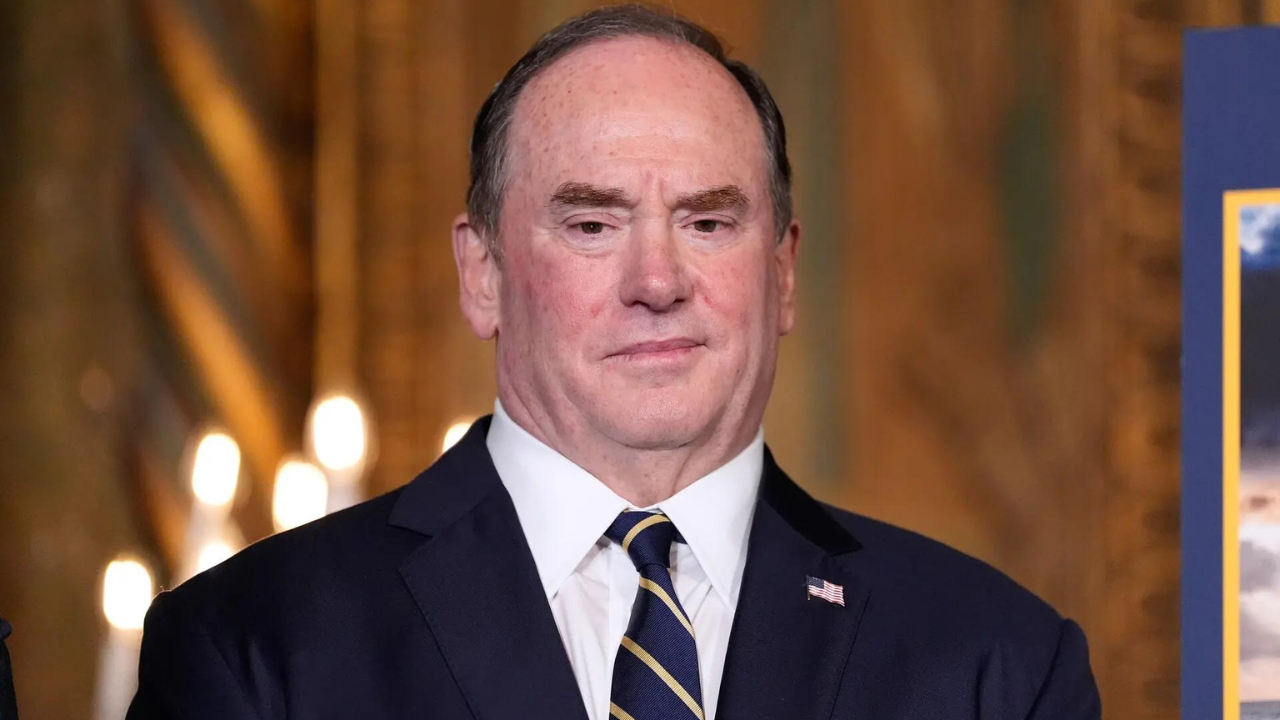
The Pentagon just dropped a bombshell that’s shaking the foundations of American military leadership. John Phelan, the civilian head of the U.S. Navy and a high-profile Trump donor, is out. The timing couldn't be worse. Right now, U.S. warships are maintaining a high-stakes blockade of Iranian ports, and the Strait of Hormuz is basically a powder keg waiting for a match.
If you’re wondering why a president would ditch his hand-picked Navy chief in the middle of a literal war, you’re not alone. This isn't just about a disagreement over paperwork. It’s a clash of egos, a fight over the future of naval warfare, and a sign that the "Loyalty First" policy at the White House has hit a breaking point. Meanwhile, you can explore similar events here: Why Iran is Flexing Muscle in the Strait of Hormuz Right Now.
The Official Story vs. The Messy Reality
On paper, the Pentagon is playing it cool. Secretary of Defense Pete Hegseth released a brief statement saying Phelan is leaving "effective immediately." No thank you for your service, no long-winded praise. Just a clean break. But if you look under the hood, the engine was already on fire.
Reports suggest Phelan was moving too slowly for Hegseth’s liking. The Trump administration is obsessed with "radical transparency" and "lightning-fast" shipbuilding reforms. Phelan, despite his background in private equity, was apparently getting bogged down in the very bureaucracy he was hired to destroy. To explore the complete picture, we recommend the recent analysis by NBC News.
But the real drama? It’s about the ships themselves.
The Battle of the Battleships
The Navy is currently divided into two camps. In one corner, you have the "Golden Fleet" traditionalists. Phelan was their guy. He spent months pushing for the "Trump-class" battleship—a massive, manned vessel meant to project old-school American power. He even showed off renderings of these giants at Mar-a-Lago.
In the other corner, you have Pete Hegseth and his deputy, Steve Feinberg. They want a "Ghost Fleet." Their vision is built on thousands of small, uncrewed, AI-driven drones that can swish through the Strait of Hormuz without risking American lives. Hegseth reportedly saw Phelan’s obsession with "Trump-class" ships as a massive distraction from the modern, tech-heavy strategy the war actually requires.
Why the Hormuz Blockade Made Him Expendable
We’re in the eighth week of a conflict with Iran. A naval blockade is an act of war, and it's a logistical nightmare. While U.S. forces are busy intercepting Iranian cargo ships, the leadership at the top was fractured.
You can't run a blockade when the Secretary of the Navy and the Secretary of Defense aren't on speaking terms. Reports indicate that Phelan had fallen out with Hegseth and his No. 2, Hung Cao. In a wartime environment, "falling out" usually ends in a pink slip.
The administration needs a Navy Secretary who will execute the drone-heavy "Economic Fury" campaign without asking questions about where the big battleships are. By firing Phelan, Trump is doubling down on Hegseth's vision of a lean, automated military.
The Ethics Shadow
There’s another layer to this that most people are missing. Phelan was reportedly under an internal ethics investigation. While the details are still fuzzy, being under the microscope while also fighting with your boss is a one-way ticket to unemployment.
It’s a classic Trump move. He hires outsiders to "shake things up," but if those outsiders don't shake things up exactly how the inner circle wants, they're gone before the ink on their business cards is dry.
What Happens Next
Hung Cao has already stepped in as acting Navy Secretary. He's a 25-year veteran and a hardcore loyalist who won't push back on the drone transition. For the sailors currently sitting in the Persian Gulf, this means the mission hasn't changed, but the technology they're using might start looking a lot different very soon.
Expect to see an immediate acceleration in the deployment of uncrewed surface vessels (USVs) in the Strait. The era of the "big ship" advocate is over at the Pentagon.
If you're following the markets or the military moves, watch the shipbuilding contracts. The money is moving away from traditional yards and toward tech firms capable of building autonomous swarms. The blockade isn't ending anytime soon, but the way the U.S. Navy fights it just changed forever.
Keep an eye on the Daily Defense briefing for updates on whether the Senate will fast-track Hung Cao's permanent appointment or if Trump has another donor waiting in the wings.