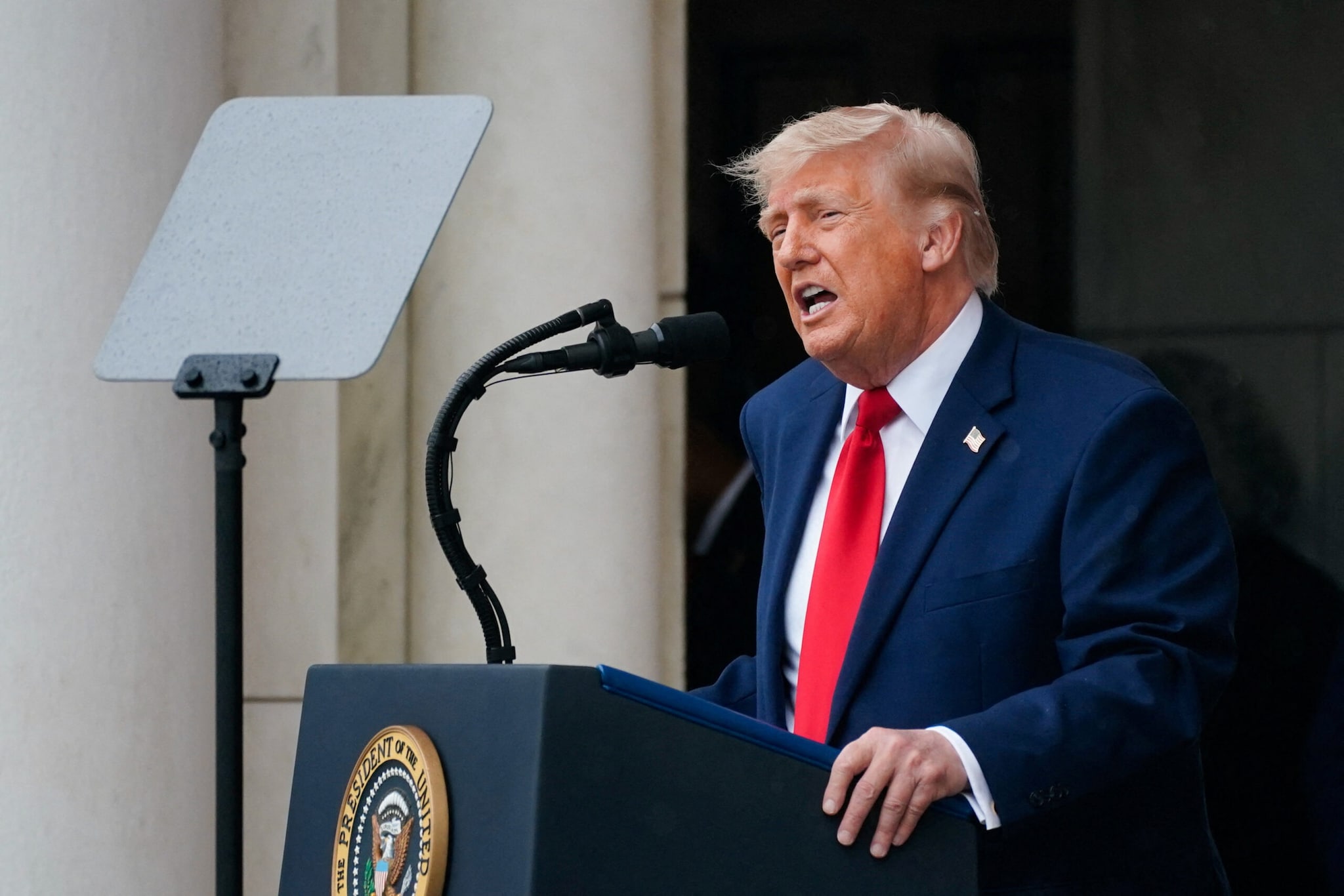
The media consensus surrounding Abelardo de la Espriella’s public celebration of Donald Trump’s endorsement follows a predictable, tired script. Mainstream political analysts are treating this as a traditional diplomatic coup—a golden ticket that solidifies de la Espriella’s standing as the definitive leader of Colombia's conservative opposition.
They are entirely wrong. Building on this theme, you can also read: The Changing Pulse of the American Ballot Box.
Chasing validation from Mar-a-Lago is not a masterstroke. It is a fundamental strategic miscalculation that misreads both American foreign policy and the shifting dynamics of the Colombian electorate. In the modern geopolitical arena, relying on a localized, transactional endorsement from a foreign leader does not project strength. It signals a lack of domestic leverage.
The Illusion of the Foreign Kingmaker
Political commentators love a simple narrative. The prevailing assumption is that a nod from the dominant figure of the American right automatically translates into institutional backing, funding, and ideological momentum in Bogotá. This viewpoint ignores how Washington actually operates. Analysts at USA Today have shared their thoughts on this trend.
American foreign policy toward Latin America is rarely driven by ideological purity or personal favors; it is dictated by institutional inertia and structural state interests. Over my years tracking bilateral relations and advising corporate interests on Andean political risk, I have watched Latin American campaigns burn millions of dollars trying to secure high-profile American endorsements. The return on investment is almost always zero.
When a candidate hitches their wagon to a polarizing foreign figure, they inherit all of that figure's domestic liabilities without gaining any of their institutional power. The U.S. State Department, Congress, and the intelligence community operate on long-term strategic priorities—counter-narcotics, migration management, and trade stability. They do not rewrite their playbooks because of a social media post or a Mar-a-Lago photo-op.
The Mechanism of Transferred Polarization
To understand why this strategy backfires, we have to look at the mechanics of voter psychology. In political marketing, there is a flawed assumption that popularity is fungible across borders. It isn't. Instead, candidates end up triggering a phenomenon known as transferred polarization.
[Foreign Endorsement] ──> [Imports External Culture Wars] ──> [Alienates Moderate Swing Voters]
By framing his platform around the approval of an American politician, de la Espriella imports a ready-made, highly divisive foreign culture war into a domestic landscape that already has its own deep fractures. He forces Colombian voters to view his platform through an American lens, alienating the vital centrist demographic needed to win a national election.
Dismantling the Consensus on Conservative Strategy
The conventional wisdom dictates that to defeat a leftist incumbency in Latin America, a conservative candidate must build a grand, global coalition of right-wing populists. Let’s examine the flaws in this premise.
- The Flaw of Outsourced Credibility: If a candidate requires external validation to prove their nationalist credentials, their nationalism is inherently hollow. True populist momentum is built from the ground up, rooted in local grievances, not handed down from Palm Beach.
- The Flaw of Geopolitical Blindness: The global geopolitical landscape is fragmented. Aligning too closely with a single faction in Washington strips a candidate of diplomatic flexibility. If the political winds shift in the United States, the candidate's foreign policy framework collapses overnight.
- The Flaw of Demographic Misalignment: The issues that resonate with the American working class—such as rust-belt industrial decline—do not align with the immediate realities of voters in Antioquia, Valle del Cauca, or the Caribbean coast, who are grappling with localized security crises and currency fluctuations.
The Reality of Bilateral Aid and Institutional Backing
Let's look at the hard data regarding U.S. assistance to Colombia over successive administrations. Whether under a Democrat or a Republican presidency, Plan Colombia and its subsequent iterations have maintained a remarkably steady baseline of funding.
The institutional framework of foreign aid is sticky. It is governed by congressional appropriations committees, not executive whims. A candidate who believes a personal endorsement will fundamentally alter the flow of security assistance or trade preferences is fundamentally misunderstanding the separation of powers in American governance.
| U.S. Administration Era | Average Annual Aid to Colombia | Primary Policy Focus |
|---|---|---|
| Mid-2010s | $300M - $400M | Peace Accord Implementation & Counter-Narcotics |
| Late 2010s / Early 2020s | $400M - $450M | Regional Migration Mitigation & Security |
| Mid-2020s (Current) | $400M - $430M | Supply Chain Integration & Border Control |
The data demonstrates that the bilateral relationship is institutional, not personal. The numbers barely budge based on who is sitting in the Casa de Nariño or the White House.
The Real Cost of the Mar-a-Lago Pilgrimage
There is an obvious downside to this contrarian view: ignoring international allies entirely can leave a candidate isolated on the global stage. Building relationships with foreign lawmakers and think tanks is essential for long-term governance. But there is a vast difference between quiet, institutional diplomacy and loud, performative campaign optics.
When a candidate prioritizes the optics of a foreign endorsement, they give their opponents an easy target. The incumbent left-wing apparatus does not even need to debate de la Espriella on economic policy or security infrastructure. They merely have to wrap him in the flag of American interventionism—a narrative that carries deep historical resonance across Latin America.
Instead of building a campaign centered on domestic sovereignty, the candidate inadvertently positions themselves as an agent of foreign interests. It is a textbook unforced error.
The Playbook for Genuine Sovereignty
Stop treating Washington as the supreme arbiter of Colombian domestic politics. If a conservative movement wants to regain power, it must abandon the lazy reliance on external saviors and execute a strategy based on local realities.
- Nationalize the Grievance: Focus exclusively on the failure of domestic policies. Security, infrastructure, and local economic deregulation matter to the voter; foreign validation does not.
- Build Institutional, Not Personal, Networks: Engage with staff on the U.S. Senate Foreign Relations Committee and Western Hemisphere subcommittees. These are the individuals who draft policy and control budgets long after individual politicians leave office.
- Reject Imported Culture Wars: Frame the campaign around Colombian civic pride and institutional stability rather than adapting foreign political slogans that carry no weight in the barrios of Bogotá or the rural sectors of the country.
The path to the presidency does not run through Florida. It runs through the ability to convince a cynical domestic electorate that you have a viable, sovereign plan for their security and prosperity. Everything else is just noise designed to generate clicks while losing elections.