The mainstream press just took the bait. Again.
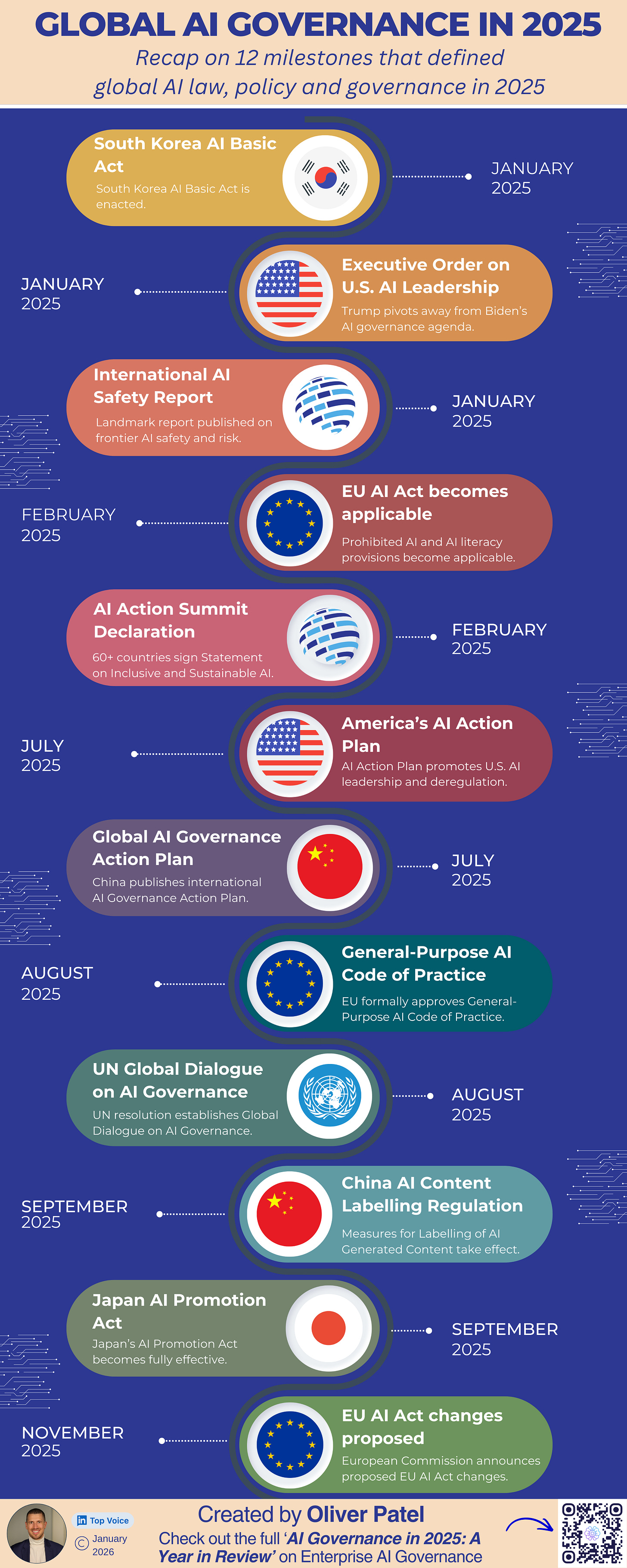
When Donald Trump stood at a podium and declared that artificial intelligence risks are a "hoax" driven by a "SICK conspiracy" against data centers, every legacy tech reporter in Washington ran the exact same script. They framed it as a reckless, anti-science tirade. They trotted out the usual roster of academic doomers to clutch their pearls about existential extinction, algorithmic bias, and runaway superintelligence.
They completely missed the point.
If you look past the bombastic phrasing, Trump isn’t actually making a philosophical argument about machine consciousness or alignment theory. He is executing a ruthless, blunt-force industrial policy move. And the "conspiracy" he is railing against isn’t a cabal of tin-foil-hatted Luddites—it is a very real, multi-billion-dollar regulatory moat being constructed in broad daylight by Silicon Valley incumbents and local zoning boards.
I have spent the last decade advising enterprise infrastructure teams and watching venture-backed startups get suffocated by compliance theater before they ever ship a product. When politicians talk about "AI safety" and "grid strain," they rarely mean what the headlines say they mean. Here is what is actually happening beneath the political theater, and why both the doom-mongers and the tech optimists are lying to you.
The Lazy Consensus Around AI Regulation
To understand why Trump’s rhetoric is resonating with Silicon Valley’s hawkish wing, you have to dismantle the lazy consensus pushed by legacy media. That consensus rests on two shaky pillars:
- Unchecked AI development will inevitably destroy jobs, spread misinformation, or kill humanity.
- Government oversight and strict permitting for data centers are the only things standing between us and digital armageddon.
Both premises are deeply flawed.
First, the people screaming loudest for federal AI regulation are the exact companies that already hold a near-monopoly on compute. When Sam Altman or Dario Amodei testify before Congress begging to be regulated, they aren't acting out of civic altruism. They are pulling up the ladder. If you are sitting on ten billion dollars of venture capital and clusters of Nvidia H100s and Blackwell chips, a federal licensing regime for frontier models is a gift from heaven. It guarantees that a scrappy three-person startup in Austin or a university lab in Michigan can never legally train a competing foundation model.
Regulatory capture is the oldest trick in the corporate playbook. Calling AI safety a "hoax" is crude, sure. Calling it an incumbent protection racket is mathematically accurate.
What the "Sick Conspiracy" Actually Looks Like on the Ground
Let’s talk about the second half of Trump’s rant—the attack on data centers.
If you want to build a modern hyperscale AI training cluster, you need roughly 100 megawatts to a gigawatt of continuous, uninterrupted baseload power. That is enough electricity to power a mid-sized American city. You also need millions of gallons of water for cooling, massive fiber-optic backbones, and thousands of acres of zoned industrial land.
Right now, building that infrastructure in the United States is a nightmare.
It isn’t because we lack the engineering talent or the capital. It is because a bizarre, unholy alliance of environmental NGOs, local NIMBY zoning boards, and legacy utility monopolies have weaponized permitting laws to stall grid expansion. In Northern Virginia—the literal beating heart of the global internet—local pushback and transmission bottlenecks have delayed power hookups for new data centers by up to seven years. In the Midwest and Southwest, environmental reviews under the National Environmental Policy Act (NEPA) routinely trap substation projects in litigation for half a decade.
Meanwhile, China is bringing new coal, nuclear, and hydroelectric plants online at a breakneck pace specifically to feed its state-backed compute clusters.
When Trump calls the opposition to data centers a "sick conspiracy," he is weaponizing populist anger against a very real geopolitical vulnerability. If the United States cannot permit a high-voltage transmission line in less than ten years, we lose the compute race. Period. You cannot run a frontier neural network on good intentions and solar panels that only generate peak load for four hours a day.
Why Both Sides Are Asking the Wrong Question
Every time this debate flares up, the public gets trapped in a binary trap. You are forced to choose between two equally stupid positions:
- Camp A (The Doomers): Freeze compute, tax data centers into oblivion, and treat every large language model like enriched uranium.
- Camp B (The Accelerationists): Burn all the fossil fuels, abolish every environmental check, and let tech billionaires build sovereign server farms without answering to a single local taxpayer.
Both camps are asking the wrong question. The real issue isn't whether AI is dangerous or whether data centers use too much power. The real question is: Who pays for the infrastructure, and who captures the economic rent?
Right now, the deal is terrible for the average American. Hyperscalers negotiate massive property tax abatements with desperate state governors, promising thousands of jobs. Once the concrete dries, a 500,000-square-foot facility employs about forty security guards and HVAC technicians. Meanwhile, the local electric utility spreads the cost of building new substations and peaker plants across the rate base—meaning residential customers see their monthly power bills spike to subsidize a trillion-dollar tech giant’s server farm.
That isn't a conspiracy. That is just bad municipal accounting. And it explains why regular voters in places like Georgia, Ohio, and Virginia are furious about data centers showing up in their backyards. They aren't worried about Skynet. They are worried about their electric bill jumping 20% while their well water dries up.
Dismantling the Top Myths About AI and the Grid
If you want to understand where this battle is actually heading, you have to clear away the garbage narratives dominating the search results.
Does AI actually pose an existential risk to humanity?
No. Not in the way Hollywood or San Francisco effective altruists describe it. Current generative AI architectures—transformers predicting the next token based on statistical probabilities—have zero agency, zero desire for self-preservation, and zero ability to act in the physical world without human API integrations.
The real risk of AI isn't a rogue superintelligence deciding to launch nuclear missiles. The real risk is mundane, brittle software failure. It is hospitals relying on hallucinating diagnostic tools, automated financial trading algorithms cascading into a flash crash, or critical infrastructure operators delegating cybersecurity to systems that can be tricked by a prompt injection attack. Calling existential extinction a "hoax" is entirely defensible. Pretending that unreliable, opaque software doesn't create massive operational hazards is naive.
Will data centers crash the U.S. power grid?
Only if regulators refuse to let utilities build generation capacity. The U.S. grid has handled massive industrial load growth before—during the post-WWII manufacturing boom and the rapid adoption of residential air conditioning in the 1960s and 70s.
The current crisis is entirely self-inflicted. Over the last fifteen years, state utility commissions incentivized the premature retirement of reliable baseload coal and nuclear plants before replacement generation and long-distance transmission lines were built. Now, AI load growth is exposing a deficit that grid operators like PJM Interconnection and ERCOT have been warning about for years. Data centers didn't break the grid; they just turned the lights on in a room that was already falling apart.
Can renewable energy alone power AI data centers?
Anyone telling you that wind and solar can independently run a gigawatt-scale AI training cluster is selling you a press release, not engineering. Training runs for frontier models require 99.999% uptime over months of continuous operation. If power fluctuates or drops, the training run crashes, wasting millions of dollars in compute time.
Batteries can bridge a four-hour gap, not a four-day cloudy, windless stretch in January. Until modular nuclear reactors (SMRs) or enhanced geothermal reach commercial scale in the 2030s, every megawatt of AI compute requires either existing nuclear baseload or new natural gas turbines spinning behind the meter. Microsoft didn't sign a deal to restart Three Mile Island because they love nostalgia. They did it because physics doesn't care about corporate ESG pledges.
The Hidden Downsides of Unchecked Acceleration
I have spent this entire piece tearing apart the regulatory hysteria surrounding AI. Now, let me be brutally honest about the fatal flaw in Trump’s pure-accelerationist stance.
If you eliminate all guardrails and allow tech giants to build unchecked without structural reforms, you don't get a free market. You get a cartel.
Look at the capital expenditure numbers. In 2026 alone, the top four hyperscalers—Microsoft, Alphabet, Meta, and Amazon—are pouring hundreds of billions of dollars into physical infrastructure. No startup can match that capex. No university can match it. Not even mid-sized enterprise tech companies can compete at the infrastructure layer.
If the federal government strips away environmental reviews and fast-tracks grid connections without enforcing strict rules on grid cost allocation and open compute access, we will simply hand the keys of the 21st-century economy to four monopolies. Worse, if a major AI-driven infrastructure failure occurs—say, an automated trading collapse or a massive biometric data breach—and there are zero federal liability standards in place, the public backlash will be so severe that Congress will pass panic-driven legislation ten times worse than anything on the table today.
History proves this. Every time an industry successfully argues against basic safety and liability standards—from subprime mortgages in 2007 to social media algorithms in the 2010s—they enjoy a massive short-term sugar high followed by a decade of catastrophic political blowback.
What Smart Operators Should Do Right Now
If you are a founder, an enterprise CIO, or an investor watching this political circus unfold, stop reacting to cable news soundbites. Politicians trade in outrage; you need to trade in physical bottlenecks.
Here is how you actually position yourself while Washington screams about hoaxes and conspiracies:
- Follow the power, not the chips. Nvidia’s silicon is no longer the primary constraint on AI scaling; transformers, switchgear, and grid interconnects are. Companies manufacturing high-voltage electrical equipment, industrial cooling systems, and behind-the-meter natural gas microgrids have pricing power for the next decade.
- Ignore federal AI safety theater, prepare for state-level liability. Washington is gridlocked, which means Trump’s anti-regulation rhetoric will likely block sweeping federal AI laws. Do not mistake that for a free-for-all. State attorneys general in California, New York, and Texas are already using existing consumer protection, fraud, and data privacy laws to hammer companies deploying broken AI tools. If your model hallucinates a defamatory statement or denies a legitimate insurance claim, "there was no federal AI law" will not save you in court.
- Demand "bring-your-own-power" structures in enterprise contracts. If you are negotiating cloud or colocation agreements for heavy compute workloads, look closely at the utility pass-through clauses. Facilities that rely on congested public grids will face severe curtailment risks and sudden rate hikes over the next 36 months. Prioritize data center operators with dedicated behind-the-meter generation or long-term nuclear power purchase agreements.
- Treat open-source models as your ultimate hedge. The biggest winners of a deregulated environment aren't the closed-model giants; they are the enterprises running fine-tuned open-weights models on private infrastructure. Every time Washington threatens to regulate frontier models, closed-source API providers quietly raise prices or tighten usage filters. Owning your weights and controlling your inference stack insulates you from both political swings and vendor lock-in.
The media wants you to believe this fight is about whether machines will take over the world or whether politicians understand science. It isn't. It is a bare-knuckle brawl over energy, land, and monopoly control. Stop listening to the speeches and watch who gets the power permits.