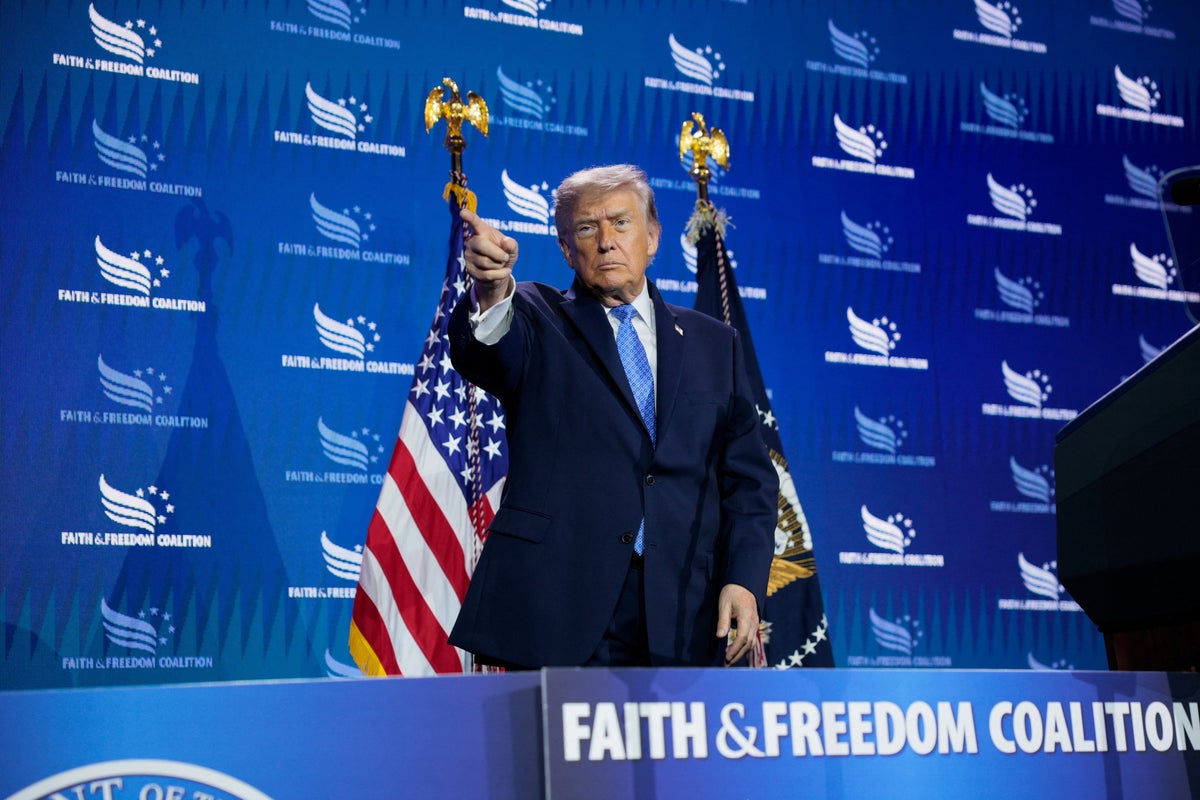
Donald Trump stepped back onto the exact stage in Butler, Pennsylvania, where an assassin’s bullet grazed his ear. He didn't just give a speech. He staged a massive political spectacle designed to cement his image as an unbreakable survivor. Standing behind heavy bulletproof glass, he looked out at a crowd of tens of thousands and immediately chose defiance over a quiet memorial.
Many analysts expected a somber, unifying tone. Instead, Trump used his return to Butler to deliver an incredibly sharp, aggressive attack on his political opponents, branding them as the ultimate threat to the country. It was loud, theatrical, and deeply polarizing. If you want to understand where American political rhetoric is heading right now, you have to look at what actually happened on that stage. Learn more on a connected subject: this related article.
The Theater of Defiance Behind Bulletproof Glass
The atmosphere felt part political rally, part rock concert, and part religious revival. Before Trump even opened his mouth, the message was clear. Four special forces skydivers dropped out of the sky. Trump Force One did a dramatic flypast to the theme music of Top Gun.
When Trump walked out, he started with a joke that immediately broke the tension. He looked at the crowd and said, "As I was saying," while gesturing toward the immigration chart he was looking at when the gunfire began weeks earlier. The crowd went wild. More analysis by The New York Times highlights similar perspectives on this issue.
But behind the showmanship lay an intense security operation. Armed law enforcement personnel in camouflage lined the perimeters. Tractor-trailers blocked the view from the nearby rooftops where the shooter, Thomas Matthew Crooks, had fired his shots. The open-air freedom of previous rallies was gone, replaced by a literal wall of ballistic glass.
Musk on Stage and the Shift in Rhetoric
Trump didn't command the stage alone. He brought out massive reinforcements, most notably tech billionaire Elon Musk. Wearing a black cap and an "Occupy Mars" shirt, Musk jumped onto the stage, pumping his fists in the air.
Musk's speech was short but incredibly dark. He claimed that if people didn't vote, this would be the last election in American history. He contrasted Trump’s reaction to getting shot with Joe Biden’s physical frailty. This marked a massive shift in how the tech elite interacts with presidential politics, turning a rally into a unified front of populist energy and elite financial backing.
Trump's own language shifted toward what he calls the "enemy from within." He explicitly lashed out at his political foes, calling them "vicious monsters" and "communists" who want to ruin the nation. He pushed the idea that his opponents had spent years trying to stop him through court cases, impeachments, and eventually, through physical violence.
The Framing of the Ultimate Threat
Trump argued that the greatest danger to America isn't a foreign power. It's the people running the current system domestically. By framing his political enemies as radical communists, he simplifies a massive, complex governing system into a clear battle of good versus evil for his base.
He told the crowd that they had all taken a bullet for the country together. This shared trauma creates an incredibly tight bond between a candidate and his followers. It moves the conversation away from standard policy debates about inflation or taxes and turns it into a struggle for survival.
Critics point out that this kind of rhetoric is incredibly dangerous. It turns political opponents into mortal enemies, making compromise completely impossible. But from a purely strategic standpoint, it ensures absolute loyalty from his base.
Security Failures and the Left Wing Machine
JD Vance also took the microphone to blast the media and political opponents. He argued that the language used by Democrats—constantly calling Trump a threat to democracy—directly led to the assassination attempt.
Vance and Trump both hammered the current administration for security failures. They argued that the White House deliberately made things difficult for their campaign by withholding proper security resources despite the massive crowd sizes. This adds another layer to the conspiracy theories floating around the event, reinforcing the belief among attendees that the entire establishment is actively working to destroy their movement.
How to Navigate the Flood of Campaign Rhetoric
With political speeches becoming more intense, it's easy to get overwhelmed by the noise. You need a clear strategy to parse through the theater and find the actual facts.
First, always separate the stagecraft from the policy. The skydivers, the music, and the glass are designed to make you feel an emotion. Look past that and read the actual transcript of what's being promised.
Second, look at the security changes objectively. The implementation of bulletproof glass and massive physical barriers shows that political violence has fundamentally changed how leaders interact with the public. It means smaller, more controlled events are likely the future.
Third, track the money and the endorsements. When figures like Musk openly join a campaign stage, it tells you exactly where corporate and technological influence is shifting. Pay attention to those alliances rather than just the words spoken on the mic.
The Butler rally wasn't just a return to a scene of a crime. It was a complete blueprint for the future of political campaigning, where survival is the ultimate qualification and the opposition is framed as a threat that must be entirely defeated.