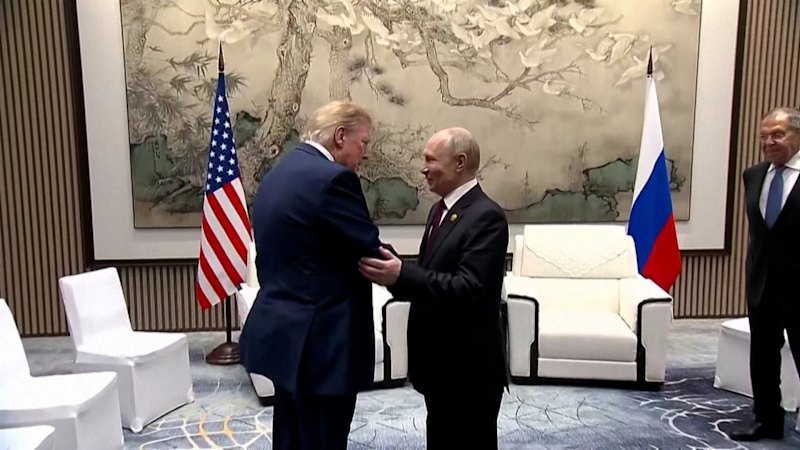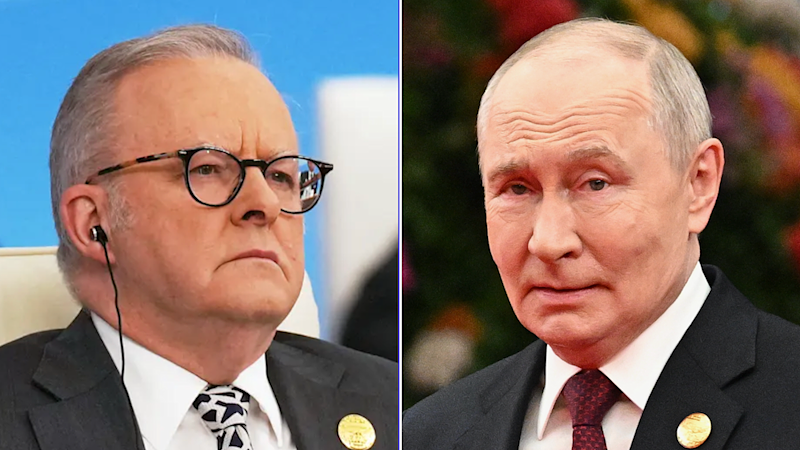
Ending the nuclear age requires dismantling the structural incentives that compel sovereign states to maintain second-strike capabilities, not merely orchestrating a summit between Donald Trump, Vladimir Putin, and Xi Jinping. The premise that three leaders can negotiate global denuclearization ignores the fundamental mathematics of tripolar deterrence. For seventy years, strategic stability relied on a bilateral equilibrium between Washington and Moscow. Today, Beijing’s rapid nuclear modernization has transformed a two-body problem into an unstable three-body problem, where any unilateral or bilateral reduction by two powers immediately creates an asymmetric advantage for the third.
The Mathematics of the Tripolar Security Dilemma
In international relations theory, the security dilemma dictates that actions taken by one state to increase its security decrease the security of others. Under the Cold War's bilateral architecture, the United States and the Soviet Union managed this dilemma through the doctrine of Mutually Assured Destruction (MAD). Stability was achieved through parity: both sides maintained roughly equal numbers of warheads and delivery systems, verifiable through rigorous inspection regimes.
Introducing a third peer competitor shatters this equilibrium. In a tripolar system, a state no longer calculates deterrence against a single adversary; it must maintain a force posture capable of surviving a first strike from one opponent while retaining enough residual warheads to deter a second opponent from opportunistic aggression.
Consider the baseline arithmetic of force sizing:
- Bilateral Parity Model: State A requires enough surviving warheads to inflict unacceptable damage on State B. If State A and State B both hold 1,500 deployed strategic warheads, each can absorb a counterforce strike and still retaliate effectively.
- Tripolar Deterrence Model: State A must now account for a simultaneous or sequential conflict involving both State B and State C. If State A reduces its arsenal to 1,000 warheads to match State B, and State C expands its arsenal to 1,000 warheads, State A faces a combined adversarial pool of 2,000 warheads.
This dynamic creates an upward ratchet effect. According to analysts at the Stockholm International Peace Research Institute (SIPRI) and the Federation of American Scientists (FAS), China has expanded its operational nuclear stockpile from the low hundreds to over 500 warheads, with Pentagon projections estimating a trajectory toward 1,000 to 1,500 warheads by the mid-2030s. Consequently, the United States faces a doctrinal requirement to deter two nuclear peers simultaneously for the first time in history. Neither Washington nor Moscow will accept deep cuts while Beijing builds upward to achieve parity, and Beijing refuses to enter reduction talks while its arsenal remains numerically inferior to the combined or individual stockpiles of the other two powers.
Asymmetric Force Postures and the Verification Bottleneck
Even if political will existed among Trump, Putin, and Xi to freeze or reduce arsenals, the technical mechanics of arms control present severe structural barriers. Legacy treaties like New START relied on symmetrical definitions of strategic delivery vehicles—intercontinental ballistic missiles (ICBMs), submarine-launched ballistic missiles (SLBMs), and heavy bombers—and intrusive on-site inspections. The current tripolar environment lacks both structural symmetry and verification mechanisms.
The Tactical vs. Strategic Divide
Russia maintains a massive advantage in non-strategic (tactical) nuclear weapons, estimated by Western intelligence agencies to be between 1,000 and 2,000 warheads. These weapons are designed for battlefield use and are not covered by New START, which expired in February 2026. Moscow views its tactical stockpile as an essential offset to NATO’s conventional military superiority. Any comprehensive treaty proposed by Washington must capture these non-strategic systems, yet Moscow refuses to negotiate them unless the United States restricts its missile defense architectures and conventional precision-strike capabilities.
The Opacity of Chinese Modernization
China’s nuclear posture has historically relied on ambiguity and concealment—often referred to as the "underground Great Wall," a network of deep tunnels used to hide mobile launchers and warheads. Unlike the United States and Russia, which have spent decades developing bilateral transparency protocols, Beijing views transparency as a direct threat to the survivability of its smaller force. Accepting the intrusive telemetry sharing, satellite monitoring rules, and physical base inspections required to verify a trilateral treaty would expose China's command-and-control nodes to potential American counterforce targeting.
Dual-Use Delivery Systems
Modern delivery platforms blur the line between conventional and nuclear warfare, creating acute crisis instability. China’s DF-26 intermediate-range ballistic missile, for example, is capable of swapping conventional and nuclear warheads rapidly in the field. Similarly, Russia’s deployment of hypersonic glide vehicles and nuclear-powered cruise missiles complicates early warning assessments. In a crisis, an adversary detecting the launch of a dual-use missile cannot determine whether the incoming payload is conventional or nuclear, forcing leadership to assume the worst-case scenario. Arms control treaties cannot easily verify limits on warheads when the delivery systems themselves are dual-capable and integrated into conventional military units.
Leadership Motivations and Domestic Political Constraints
Evaluating the likelihood of a grand bargain requires analyzing the specific operational incentives driving each of the three leaders, rather than assuming shared humanitarian goals.
Donald Trump’s Transactional Framework
Donald Trump’s approach to statecraft prioritizes bilateral deal-making, cost reduction, and visible political victories over complex, multi-year multilateral treaties. During his first administration, Trump withdrew the United States from the Intermediate-Range Nuclear Forces (INF) Treaty due to Russian non-compliance and insisted that any extension of New START include China. His strategic calculus views arms control through a financial and competitive lens: avoiding an expensive, multi-trillion-dollar modernization of the U.S. nuclear triad while preventing China from achieving a free ride in nuclear expansion. However, domestic political constraints in Washington—specifically the requirement for a two-thirds Senate majority to ratify any formal treaty—make binding legal agreements nearly impossible in a polarized legislature. Any arrangement negotiated by Trump would likely take the form of a non-binding executive agreement, which lacks permanence and can be discarded by a subsequent administration.
Vladimir Putin’s Coercive Leverage
For Vladimir Putin, Russia’s nuclear arsenal is the ultimate guarantor of regime survival and great-power status. Following the degradation of Russia’s conventional military capabilities in Ukraine, Moscow’s reliance on nuclear coercion has intensified. In late 2024, Russia formally revised its nuclear doctrine, lowering the threshold for nuclear use to include aggression against Russia by a non-nuclear state supported by a nuclear power. Putin uses nuclear signaling to deter Western intervention in Russia's near-abroad and to extract political concessions. Entering a process that leads to total denuclearization would strip Moscow of its primary geopolitical asset, reducing Russia to a secondary regional power constrained by demographic decline and an energy-dependent economy.
Xi Jinping’s Strategic Parity Objective
Xi Jinping views a modern, survivable nuclear force as a prerequisite for achieving China’s broader geopolitical goals, particularly regarding Taiwan and the South China Sea. From Beijing’s perspective, decades of maintaining a "minimum deterrence" posture left China vulnerable to American nuclear blackmail. Expanding the nuclear triad—by constructing hundreds of new solid-fuel ICBM silos in western China, deploying the JL-3 submarine-launched missile, and developing the H-20 stealth bomber—is designed to ensure that the United States cannot use nuclear threats to deter Chinese conventional operations in the Indo-Pacific. Xi will not freeze this expansion until Beijing believes it has achieved a secure, unassailable second-strike capability capable of surviving an American first strike.
The Fallacy of Global Zero
The concept of "ending the nuclear age" rests on the assumption that nuclear weapons can be un-invented or permanently banned through diplomatic consensus. This ignores the physics and economics of proliferation. The knowledge required to build fissile material—enriching uranium or reprocessing plutonium—is nearly a century old and widely dispersed across civilian nuclear power industries.
If Washington, Moscow, and Beijing were to dismantle their entire arsenals, the world would not revert to a stable, pre-1945 baseline. Instead, it would enter a state of latent proliferation characterized by extreme instability:
- The Breakout Incentive: In a disarmed world, the first state to secretly assemble even twenty nuclear warheads achieves an absolute monopoly on coercion. The incentive to cheat becomes existential.
- Regional Cascade Effects: The United States currently extends its "nuclear umbrella" over dozens of allies, including Japan, South Korea, and NATO member states. These nations refrain from building independent nuclear arsenals because they rely on American extended deterrence. If the United States eliminated its nuclear weapons, non-nuclear threshold states with advanced technological bases—such as Japan, South Korea, and Germany—would face immediate pressure to develop indigenous nuclear capabilities to counter regional conventional threats from China, North Korea, and Russia.
- The Secondary Tier: Global zero cannot be achieved by three actors alone. The United Kingdom, France, India, Pakistan, Israel, and North Korea collectively hold over 1,000 warheads. Pyongyang views its nuclear arsenal as the sole deterrent preventing regime change, while India and Pakistan remain locked in a regional security dilemma that precludes disarmament.
Operationalizing Stability: Realistic Strategic Objectives
Because complete denuclearization is structurally impossible under current geopolitical conditions, strategic planners must abandon utopian goals in favor of risk reduction and crisis management. The objective is not to end the nuclear age, but to prevent deterrence failure through specific, compartmentalized agreements.
Establishing Crisis Communication Architecture
The most urgent vulnerability in the tripolar system is the absence of reliable, direct crisis communication channels between Washington and Beijing, as well as the erosion of established protocols between Washington and Moscow. During the Cold War, dedicated hotlines and nuclear risk reduction centers allowed military leaders to de-escalate miscalculations in real time. Today, the People's Liberation Army (PLA) frequently ignores American military-to-military communication requests during regional crises. A viable diplomatic initiative must prioritize establishing automated, redundant communication links among the strategic rocket forces of all three nations to prevent accidental escalation triggered by cyberattacks, satellite malfunctions, or misinterpreted missile tests.
Regulating Artificial Intelligence in Command and Control
As all three powers integrate artificial intelligence and autonomous systems into their early warning and battle management networks, the decision-making window during a crisis compresses from minutes to seconds. Algorithmic bias, spoofing, or sensor errors could trigger automated launch protocols before human operators can verify the threat. Washington, Moscow, and Beijing share a mutual interest in preserving human-in-the-loop authority over nuclear launch decisions. A targeted agreement banning fully autonomous nuclear command-and-control systems requires minimal intrusive verification and directly reduces the risk of inadvertent war.
Implementing Non-Binding Transparency Measures
Rather than pursuing comprehensive, legally binding warhead caps that will stall in domestic legislatures or fail over verification disputes, negotiators should pursue reciprocal, politically binding transparency measures. This includes mandatory pre-launch notifications for all ballistic missile and space-launch vehicle tests, data exchanges on strategic force posture changes, and agreements to refrain from targeting each other's space-based early warning satellites. Preserving the integrity of orbital surveillance assets ensures that leadership in all three capitals retains clear visibility during a crisis, reducing the pressure to launch on warning.
The Strategic Play
Policymakers and analysts must stop framing tripolar nuclear diplomacy around total disarmament or comprehensive replacement treaties modeled on New START. The structural asymmetries among the United States, Russia, and China make numerical parity and intrusive on-site verification unachievable in the near term. Instead, Western strategic planning must execute a dual-track posture: maintain a modernized, survivable nuclear triad capable of deterring simultaneous aggression from two nuclear peers, while pursuing narrow, asymmetric risk-reduction agreements focused strictly on missile launch notifications, space-based early warning protection, and human-in-the-loop guarantees for command-and-control systems.