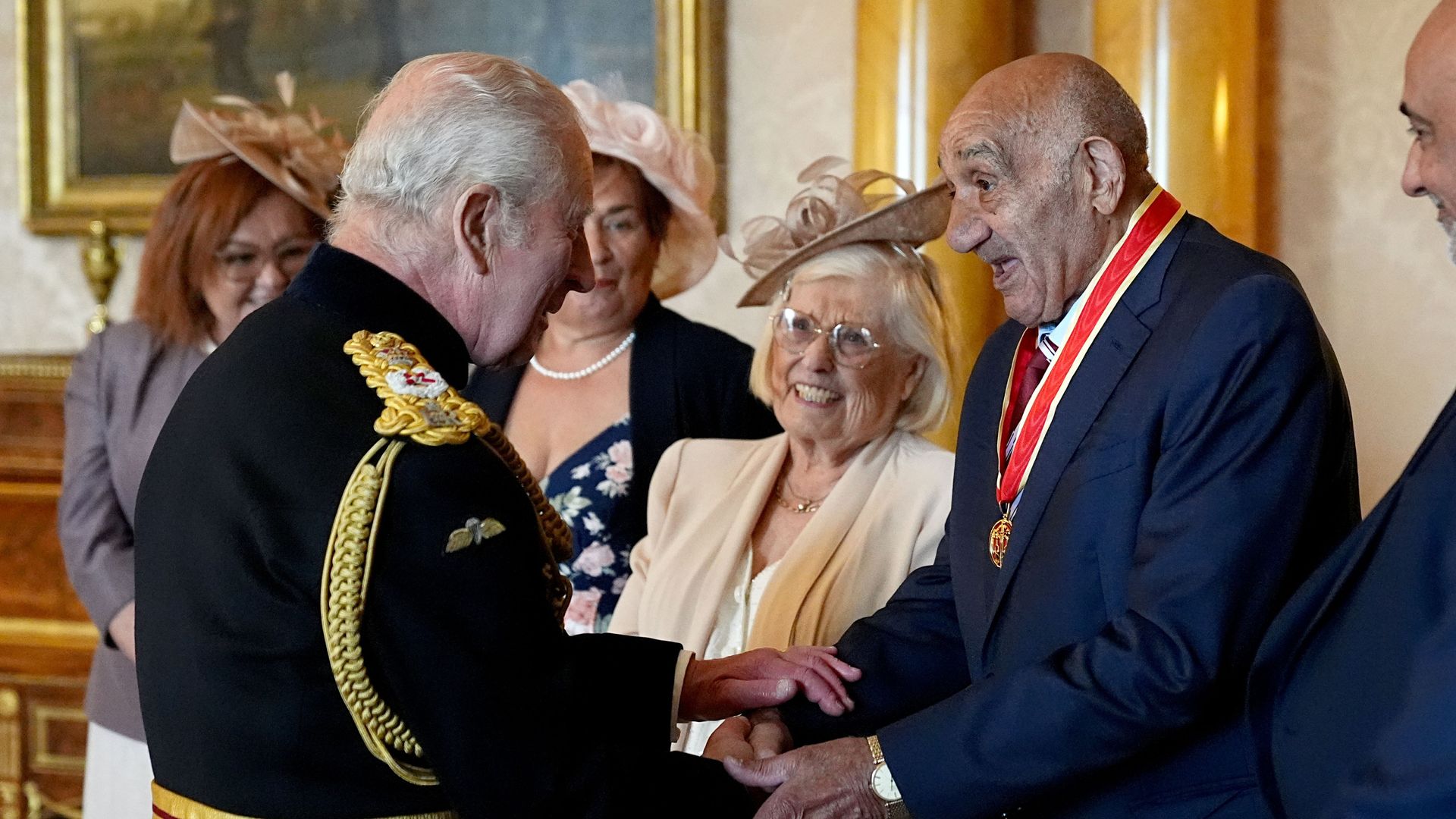
The lazy consensus following the passing of Sir Billy Boston at age ninety-two is a comforting exercise in safe hagiography. Newspapers recount the numbers: 478 tries in 488 games for Wigan, the 571 career total, the 1960 World Cup victory with Great Britain, the long-overdue knighthood handed down in his final years. Tributes paint a picture of a humble gentleman from Tiger Bay who crossed the border in 1953, mastered the thirteen-man code, and quietly became a statue outside Wembley and the DW Stadium.
Every single obituary gets the statistics right and the historical impact completely wrong.
By framing Boston merely as an exceptional try-scorer who overcame the rigid class bigotry of mid-century British sport, mainstream commentary sanitizes his footprint. They reduce a structural anomaly to a feel-good story about hard work and northern grit. The truth is much more inconvenient. Boston did not just succeed despite the system; his career exposed the total bankruptcy of British sport's amateur obsession and forced a reluctant establishment to reckon with a brand of athleticism it could neither replicate nor control.
The Myth of the Code-Switch Miracle
The standard narrative dictates that Boston’s move from rugby union in Cardiff to rugby league in Wigan was a romantic leap into the unknown. Commentators love to talk about how he traded the amateur purity of union for the industrial meat-grinder of Northern professional rugby league.
This is a sanitized fairy tale.
Union in the 1950s was not pure; it was protectionist. It was an exclusionary playground designed to keep working-class athletes out of administrative power while exploiting their physical labor under the table. When Boston signed for Wigan for three thousand pounds as a nineteen-year-old, he wasn't abandoning a sport; he was escaping an economic trap. Rugby league scouts knew precisely what union authorities were desperately trying to ignore: that the athletic standard in places like Tiger Bay far outstripped the ivory towers of the establishment.
Boston’s scoring record—478 tries for a single club—is treated as an anomaly of individual genius. It was actually a mathematical inevitability of putting a world-class athlete into a sport that valued forward momentum over defensive blanket-tackling schemes. Defenders simply could not cope with his combination of raw acceleration, brutal hand-offs, and an unshakeable low center of gravity. To label him merely a great winger is to misunderstand his tactical function. He was a structural mismatch walking onto a muddy pitch.
Why the Knighthood Was an Institutional Admission of Guilt
When Boston finally received his knighthood, politicians and sport administrators lined up to call it a long-overdue celebration. Former Prime Minister Keir Starmer famously termed the decades-long oversight a "historic wrong".
Let us drop the polite diplomatic language. It was not an oversight. It was a deliberate, institutional withholding of recognition.
For the better part of fifty years, rugby league was treated by the British establishment as a regional, working-class anomaly unworthy of the highest national honors. Cricket, rugby union, and association football hoarded knighthoods while league pioneers were handed token MBEs late in life. Waiting until Boston was ninety years old and battling dementia before finally bestowing a knighthood is not a heartwarming conclusion; it is an administrative embarrassment. The establishment waited until the threat of his disruptive athletic legacy had safely faded into history before putting a sword on his shoulder.
What Modern Sport Fails to Learn From Tiger Bay
The modern sports industry loves to congratulate itself on diversity initiatives, pathway programs, and inclusion metrics. Executives sit in air-conditioned boardrooms drafting strategies to unearth raw talent from underprivileged backgrounds.
They should look at how the game treated Boston’s generation and weep.
Imagine a scenario where a modern Premier League or Super League club unearths a talent of Boston's magnitude today. He would be smothered in academy red tape, subjected to sports-science micro-management, and forced into a tactical straitjacket designed to minimize risk. Boston thrived because he played with an instinctive, explosive freedom that modern coaching manuals try coached out of players before they turn fourteen.
He didn't need a multi-million-pound data analytics department to tell him how to beat an outside shoulder. He possessed a functional understanding of space, leverage, and acceleration born from unstructured play and ruthless competition.
The Uncomfortable Final Reality
Tributes this week will focus on his infectious smile, his seventy-year marriage to Lady Joan, and the quiet dignity with which he carried his records. These things are true, but they serve as a convenient distraction from what Boston actually represented.
He was a Black Welshman from a multi-cultural dockland who walked into the heart of industrial Lancashire and completely conquered a hyper-local, fiercely parochial sporting culture by sheer, undeniable force of talent. He did not ask for permission to dominate, and he did not wait for the establishment to validate his brilliance.
Sir Billy Boston did not need the honors that took a lifetime to arrive. The honors needed him to lend them a shred of credibility.