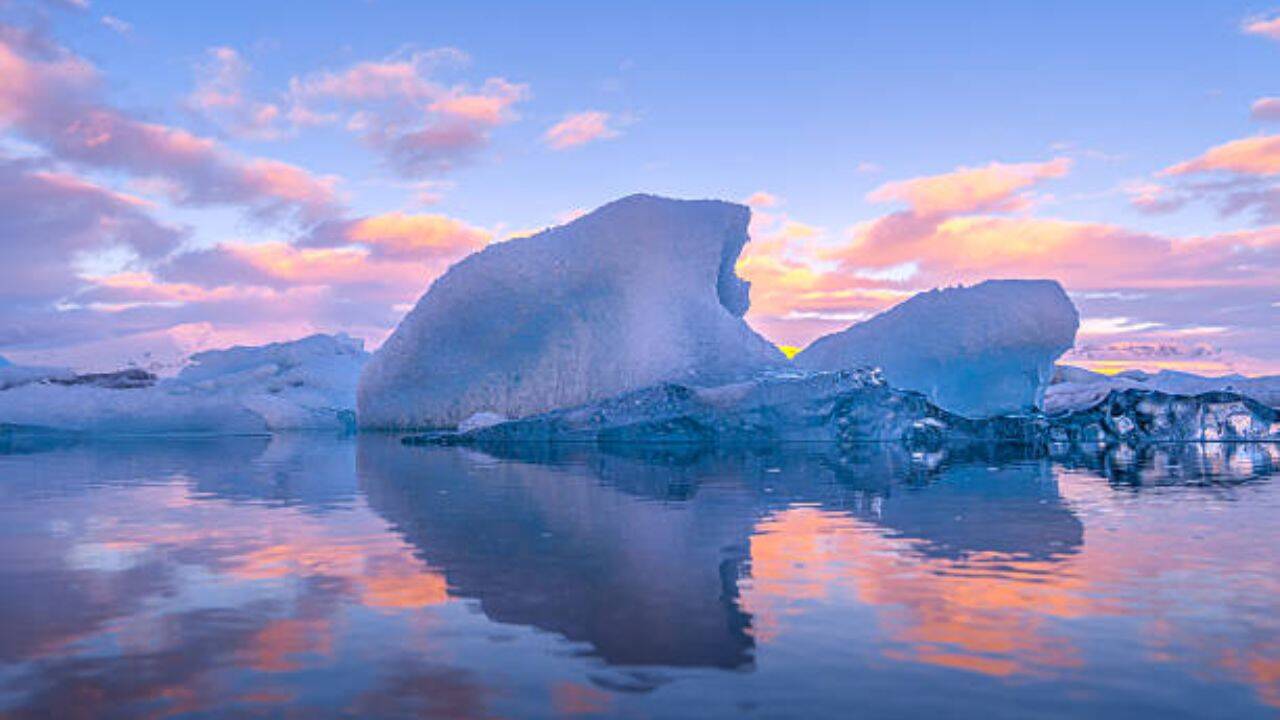
Every few years, a headline pops up about hauling Arctic icebergs down to thirsty coastal cities. The internet goes wild. Commentators point back to 1977, when a Saudi prince funded a wildly impractical feasibility study on towing an Antarctic block to the Arabian Peninsula, as proof that ancient dreams are finally coming true. Engineers dust off old sketches. Venture capitalists salivate over fresh water scarcity plays.
It is a fairy tale for people who prefer grand theater over basic physics. Meanwhile, you can read other events here: Why the RBA Is Keeping Interest Rates Steady and What It Means for Your Money.
I have watched companies burn millions chasing exotic infrastructure fantasies while ignoring the leaking pipes right beneath their feet. The iceberg fixation relies on a fundamental misunderstanding of thermodynamics, logistics, and cost accounting. You are not looking at an ingenious solution to global drought. You are looking at a masterclass in economic illiteracy.
The Thermodynamic Nightmare Nobody Mentions
Let us start with the core argument of the ice-hauling crowd: pristine water is floating around the poles, completely free, just waiting for someone to lasso it. To see the complete picture, check out the excellent article by Bloomberg.
This ignores how phase changes and thermal energy work. Icebergs are not floating cubes of pure convenience. They are massive, unstable, porous structures made of compressed snow, air bubbles, and trapped debris. The moment you hook a tugboat to an iceberg and drag it north toward warmer latitudes, thermal physics begins executing a slow-motion execution of your business model.
You are attempting to haul thousands of tons of frozen freshwater across thousands of miles of warm ocean water. Solar radiation hits the surface. Ambient air temperature goes to work. Ocean currents create abrasive friction. By the time your million-dollar convoy reaches the equator or the arid coastlines of the Middle East or California, you are not delivering an iceberg. You are delivering a wet pile of slush, assuming it hasn't completely capsized and fragmented into useless mush along the way.
The latent heat of fusion requires an astronomical amount of energy to melt ice, but simple ambient heat requires very little energy to start chipping away at structural integrity. To offset melt rates, proponents suggest wrapping icebergs in giant plastic skirts or insulated fabrics. Imagine manufacturing, shipping, and deploying millions of square meters of specialized petrochemical sheeting across the open ocean, securing it around a rolling, calving mountain of ice, and expecting it to survive oceanic swells. It is absurd.
The Cost Per Gallon Fallacy
When engineers pitch mega-projects, they love to talk about scale. If we move a hundred billion gallons at once, the unit economics drop, right?
Wrong. Let us look at the numbers. Towing a single multi-million-ton iceberg requires heavy-duty marine assets operating for months. Fuel consumption for specialized tugs fighting oceanic drag is astronomical. Insurance underwriters would look at a floating ice mountain colliding with commercial shipping lanes, offshore oil rigs, or marine sanctuaries and demand premiums that would bankrupt a small nation.
Compare this to the alternative that environmentalists and municipal planners love to hate: seawater desalination.
Desalination plants are boring. They do not make for sexy headlines or romantic nostalgia about Saudi princes and polar expeditions. But reverse osmosis plants sit right on the coast. They draw in local saltwater, push it through semi-permeable membranes, and pump clean water directly into municipal grids. No oceanic transit. No catastrophic melting loss. No international maritime law disputes over who owns international ice.
Critics of desalination point to energy consumption and brine disposal. Fair points. Desalination is energy-intensive. But powering a plant with modern solar or nuclear energy is a localized, controllable variable. Hauling an iceberg across thousands of miles of open sea introduces supply chain dependencies and environmental variables that you cannot engineer around.
The Lazy Consensus of Scarcity
The deeper issue with the iceberg obsession is how it frames the global water crisis.
The media loves to run stories about absolute physical scarcity. We are running out of water, they scream. The wells are dry. The rivers are dust. Therefore, we must look to the ends of the earth for salvation.
This is a lazy narrative designed for clicks. We do not have a global water shortage. We have a systemic infrastructure and pricing failure.
In many agricultural regions, flood irrigation is subsidized, meaning farmers grow water-intensive crops like alfalfa in the desert for pennies on the dollar. In major metropolitan areas, aging municipal distribution networks lose thirty to forty percent of treated water through cracked, subterranean pipes before it ever reaches a kitchen tap.
Throwing capital at polar ice harvesting while ignoring leaky municipal pipes is like trying to cool a fever by painting your forehead blue. It treats the symptom while ignoring the systemic rot.
What the Data Actually Tells Us
Look at how successful drought-resilient regions operate. Israel does not tow icebergs from Antarctica. They achieved water security through aggressive wastewater recycling, high-efficiency drip irrigation, and large-scale, energy-optimized desalination. Over eighty-five percent of their domestic wastewater is treated and reused for agriculture.
That is not romantic. There is no epic documentary to be made about smart-valve drip emitters and tertiary wastewater treatment plants. But it works. It is boring, scalable, and economically sustainable.
When you hear venture capitalists or tech visionaries hyping up exotic geoengineering projects like iceberg towing, look at their incentives. They are selling spectacle. They want attention, government grants, or early-stage funding for ideas that sound like science fiction because science fiction sells better than fixing a municipal pipe replacement backlog.
Stop looking toward the poles for your water policy. Fix the leaks in your own backyard, price water accurately so consumption matches reality, and build the boring, reliable infrastructure that keeps cities alive without requiring a fleet of tugboats to fight the laws of thermodynamics.