A neighborhood street festival is supposed to be the safest place in America. It is where communities gather to look at historic homes, listen to local bands, and eat street food under the late afternoon sun. On Saturday, that illusion of safety shattered in Toledo, Ohio, when multiple shooters opened fire near the Old West End Festival, sending crowds diving for cover and leaving at least five people wounded. This is not just another statistic in a violent summer. It is the continuation of a devastating trend where the friction of private disputes increasingly bleeds into, and destroys, our shared civic life.
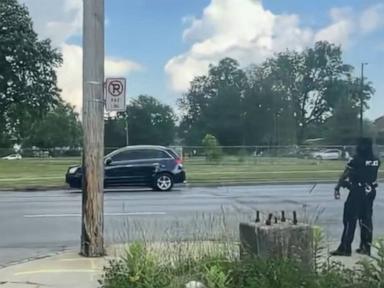
The Toledo Police Department confirmed that officers rushed to the area near the arboretum around 5:37 p.m. following reports of gunfire. What they found was chaos. Multiple victims lay bleeding on the ground while hundreds of festival-goers fled down historic, tree-lined streets. Witnesses reported hearing a rapid succession of gunshots before the crowd panicked.
Kevin Berry, a U.S. Navy veteran with medical training who was sitting in the neighborhood arboretum, described hitting the deck as bullets flew. When he looked up, he saw a firearm discarded on the grass less than 50 feet away. Berry immediately began searching the grounds to render aid, discovering at least five victims scattered across the park. Local emergency services scrambled to transport the wounded to nearby medical facilities, while a massive perimeter was established to hunt for the perpetrators.
The Micro-Urban Violence Epidemic
Mainstream media routinely classifies these events using a standard, surface-level playbook. They count the casings, tally the injuries, and wait for a police spokesperson to provide a sterile update. But treating this strictly as an isolated criminal act misses the broader crisis happening across mid-sized American cities.
We are witnessing the death of the neutral zone. Historically, even in cities struggling with elevated crime rates, public celebrations, neighborhood block parties, and cultural festivals maintained an unwritten status of immunity. They were spaces where local grievances were paused.
That immunity has expired. The mechanism driving this shift is rarely an ideological plot or a planned mass tragedy. Instead, it is the hyper-availability of firearms combined with a complete breakdown in conflict resolution among young demographics. When private animosities can no longer be contained, the modern response is immediate, lethal escalation, regardless of who is standing in the crossfire.
The Anatomy of Public Panic
When gunfire erupts in a dense, outdoor crowd, the geometry of the space turns against the public. Streets lined with vendor booths, food trucks, and historic architecture offer plenty of visual cover but very little ballistic protection.
Consider the logistical nightmare facing law enforcement during an event like the Old West End Festival.
- Permitted Chaos: Festivals are intentionally designed to maximize foot traffic and encourage wandering, making traditional access control or security screening impossible without turning a community event into a militarized checkpoint.
- The Dispersion Factor: Once shots are fired, the crowd does not run in a single direction. They scatter radially, complicating emergency medical access and altering the crime scene within seconds.
- The Discarded Weapon: As witnessed by bystanders in Toledo, suspects frequently drop their firearms immediately after a shooting to blend back into the fleeing crowd, turning a hot pursuit into a complex forensic puzzle.
This structural vulnerability means that traditional policing cannot prevent these incidents. You cannot station a police officer at every tree in a public arboretum. The solution requires looking at how local intelligence is gathered and how municipal governments manage high-density summer programming.
The Cost to Municipal Survival
For mid-sized Midwestern hubs like Toledo, the damage inflicted by an afternoon of gunfire extends far beyond the physical trauma of the victims. It attacks the economic and psychological viability of the city itself.
The Old West End Festival is widely recognized as the traditional kickoff to Toledo’s summer season. It draws visitors from surrounding suburbs and neighboring counties, pumping vital revenue into local businesses and historic preservation efforts. When violence punctuates these events, the immediate reaction from the public is withdrawal. Suburban visitors stop coming. Local vendors lose their livelihoods. The neighborhood develops a reputation that takes a decade to erase.
When a city loses its public squares to fear, it loses its tax base, its social cohesion, and its future. The immediate focus in Toledo remains on tracking down the suspects who turned a historic neighborhood into a crime scene on a warm Saturday afternoon. But the larger, more painful task for city leaders across the country will be figuring out how to rebuild a society where people can listen to music in a park without looking for the nearest exit.