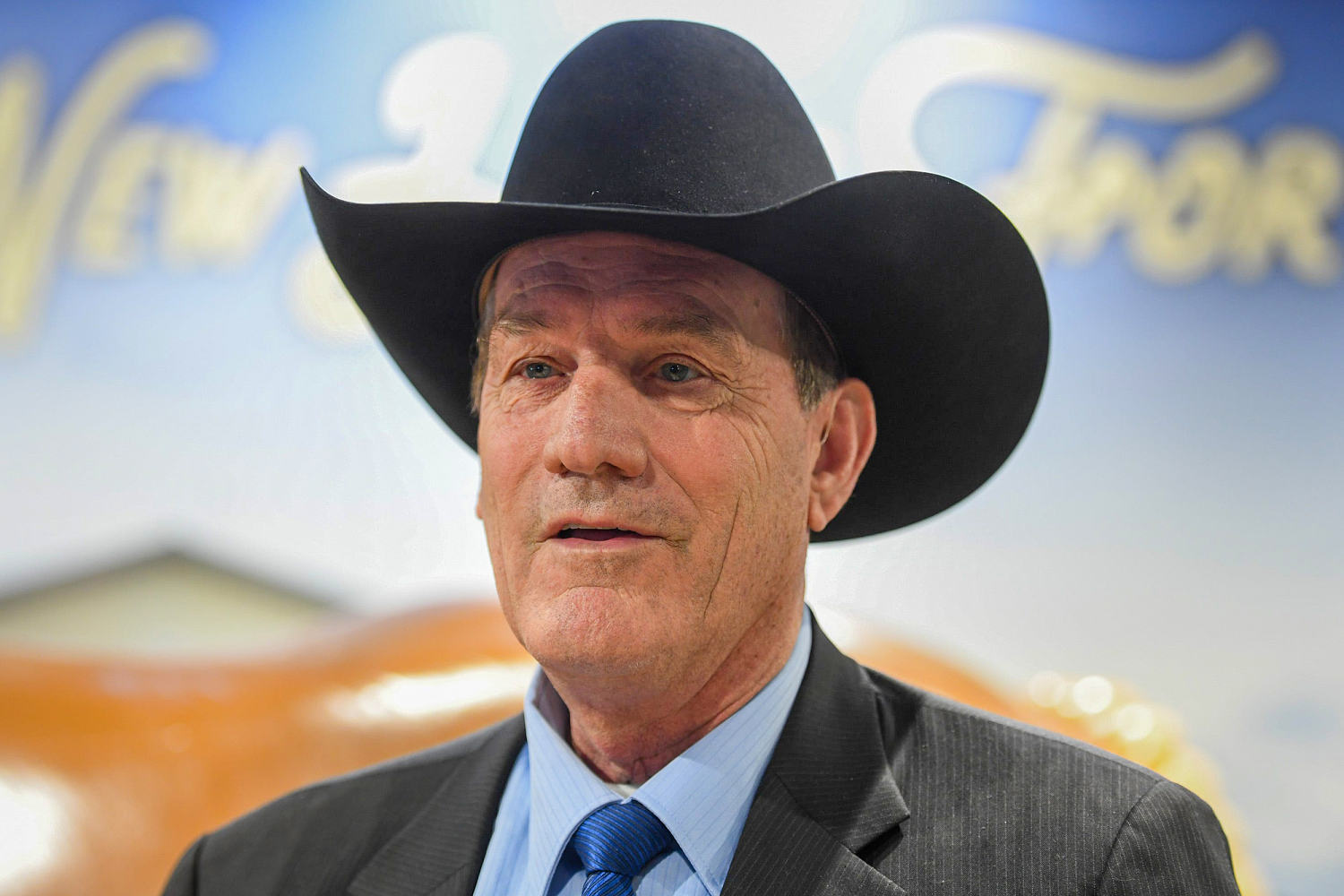
Political reporters are treating the South Dakota Republican gubernatorial primary like a classic underdog story. The narrative is neat, predictable, and entirely superficial. Toby Doeden, a wealthy car dealership kingpin and real estate executive, pours over $2 million of his own cash into a scorched-earth campaign, grabs roughly 30% of the vote in a fractured four-way primary, and forces a July 28 runoff against the political establishment. The headlines practically write themselves: Outsider businessman shakes up the system, outpaces the incumbents, and positions himself to take Pierre by storm.
It is a beautiful story. It is also completely wrong. For a closer look into this area, we recommend: this related article.
The media’s lazy consensus relies on a tired premise: that running a state is just like running a mid-sized retail enterprise, and that leading a primary field with less than a third of the vote equals broad-based political momentum. I have watched wealthy executives dump millions of their own fortunes into political races for decades, convinced that a high-octane marketing budget and a spreadsheet can replace deep institutional infrastructure. Most of them flame out. The ones who do win discover that a state legislature does not operate like a network of subordinate car lots.
Doeden’s narrow lead in the June primary is not the start of a populist revolution. It is the absolute ceiling of a hyper-funded vanity project that is about to collide with reality in a head-to-head runoff. For further details on this topic, in-depth reporting is available on The Guardian.
The Myth of the Outsider Businessman
The core argument driving the pro-Doeden narrative is that South Dakota needs a private-sector titan to dismantle government waste. His campaign materials read like a checklist of corporate optimization: slash spending, eliminate property taxes, and treat the state budget like a corporate balance sheet.
This is where the fundamental misunderstanding of public finance lies. A state is not a business. A business exists to maximize profit for its shareholders by eliminating non-performing assets. A government exists to provide public goods—roads, law enforcement, courts, and basic infrastructure—that are inherently unprofitable. When a businessman promises to "meticulously cut all wasteful spending" while simultaneously vowing to entirely eliminate property taxes, they are pitching a mathematical impossibility.
Property taxes in South Dakota are the bedrock of local government funding, specifically for public schools and county infrastructure. If you eliminate them without a highly complex, alternative revenue-generating mechanism, you do not just cut fat; you amputate the limbs of local communities. Doeden's corporate playbook treats tax policy like a retail discount strategy. You cannot slash prices to zero and expect the store to stay open.
The Mirage of the June Primary Numbers
Let's look at the cold, hard data from the June 2 primary. The mainstream press looks at the board and sees Doeden at the top with 30%, followed by Governor Larry Rhoden at 26%, Representative Dusty Johnson at 24%, and Speaker Jon Hansen at 21%. They call this a victory for the outsider.
They are failing basic math.
South Dakota electoral law states that a candidate needs 35% to secure the nomination outright. Doeden spent a staggering $2.1 million—mostly out of his own pocket—to achieve 30%. That means 70% of Republican primary voters actively chose someone else. More importantly, the remaining 70% of the electorate split their votes among three deeply entrenched, traditional conservative figures: an incumbent governor, a sitting U.S. congressman, and the Speaker of the state House.
Imagine a scenario where a company launches a massive, multi-million dollar marketing blitz for a new product line, only to capture 30% of their target market, while three older, established brands split the remaining 70%. No serious executive would call that a successful market conquest. They would call it an incredibly expensive failure to convert the majority.
In a head-to-head runoff on July 28, the dynamic shifts completely. The anti-Doeden vote, which is currently fragmented across three traditional camps, now has a single rallying point. Voters who backed Dusty Johnson’s federal experience or Jon Hansen’s legislative leadership are far more likely to consolidate behind a known governing entity than they are to jump ship to an unpredictable retail executive who built his platform on burning down the party infrastructure. Doeden did not win the primary; he merely survived the first phase of an elimination contest where the math is now heavily stacked against him.
The Illusion of the Trump Coattails
Doeden has tethered his entire political identity to the America First platform, claiming he will be the ultimate ally to the Trump administration in Pierre. He is betting that federal populist energy can be seamlessly transplanted into a state-level executive race.
This strategy ignores the hyper-local reality of South Dakota politics. The state’s political identity is deeply conservative, but it is also fiercely pragmatic. Voters here care immensely about tangible local issues: eminent domain, carbon pipelines, agricultural land rights, and local school funding. Wrapping yourself in national political slogans is an effective way to secure a passionate 25% to 30% base of hyper-ideological primary voters. It is a terrible way to build a governing coalition.
When you look at the successful governors in South Dakota’s recent history, they did not win by acting like national cable news pundits. They won by demonstrating a mastery of state-level mechanics. Larry Rhoden, whatever his electoral shortcomings in a crowded field, possesses decades of deep agricultural ties and legislative relationships. Dusty Johnson has a proven track record of navigating complex federal-state partnerships. Doeden’s platform is heavy on national rhetoric but light on the grueling, unglamorous work of state administration. National populism does not fix a washed-out rural county bridge or settle a complex water rights dispute between ranchers and tribal nations.
The Cost of the Burned-Bridge Strategy
There is a distinct downside to my contrarian view. If Doeden does manage to pull off an upset in July through sheer financial force and a massive voter turnout operation, he will enter the governor's mansion having completely alienated the very people he needs to pass legislation.
Unlike a CEO, a governor cannot fire the legislature. Jon Hansen remains a powerhouse in the state House. The institutional Republicans who backed Rhoden and Johnson control the committee chairs and the purse strings in Pierre. Doeden’s campaign has been built on mocking "career politicians and corrupt bureaucrats." While that language makes for great talk-radio audio clips, it makes for a disastrous legislative session.
A governor who enters office with zero legislative allies and a hostile supermajority in his own party is a lame duck from day one. Every single budget proposal will be dead on arrival. Every executive appointment will face a brutal confirmation battle in the Senate. The corporate outsider model quickly devolves into total executive paralysis.
The media will continue to hype the July runoff as a thrilling showdown between an insurgent businessman and the political machine. Do not believe the hype. The primary results did not prove that Toby Doeden is the future of South Dakota politics. They proved that even with a multi-million dollar bankroll, an aggressive corporate outsider can still only convince less than a third of his own party to buy what he is selling. The real race starts now, and the math is not on the businessman's side.