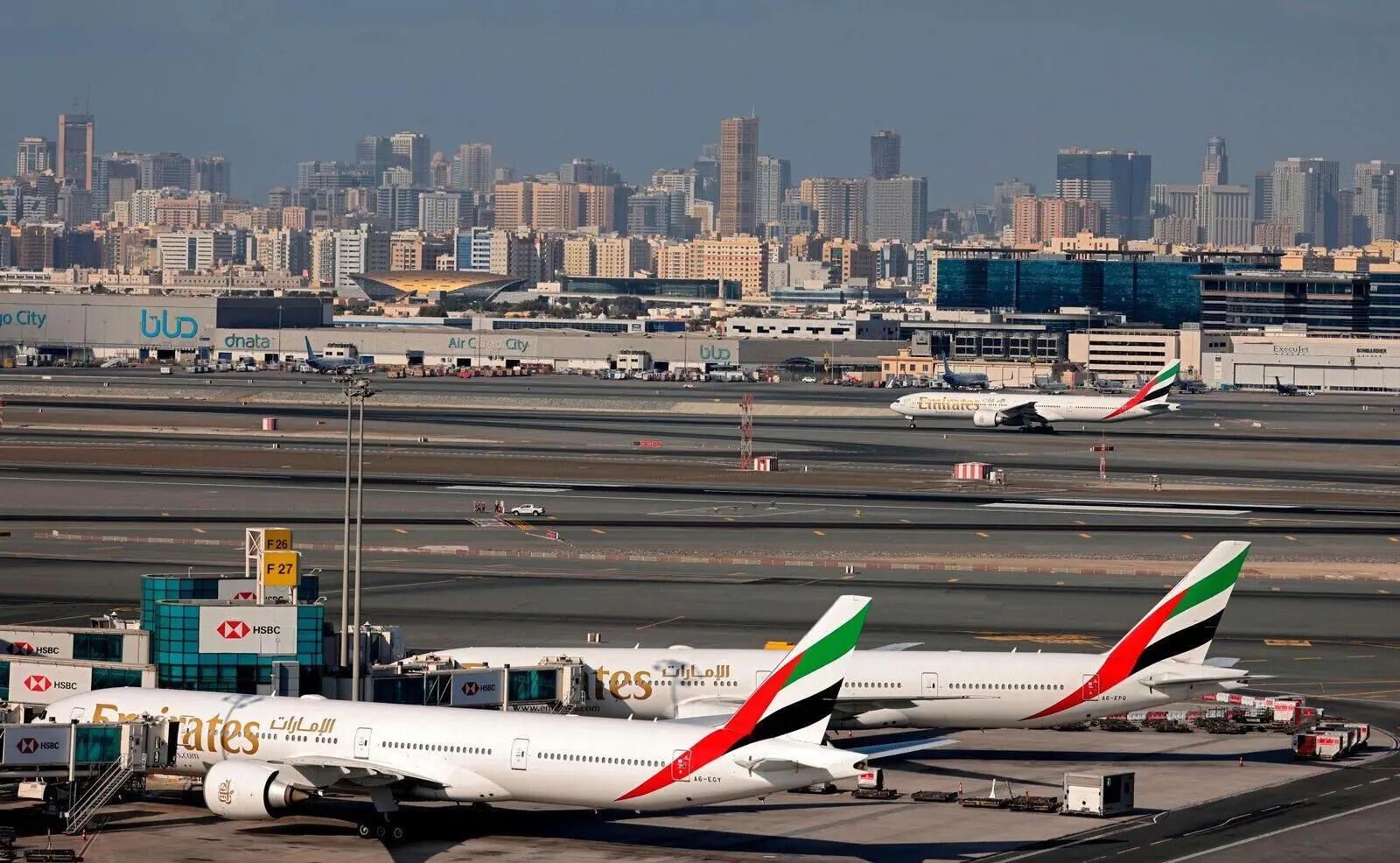
The air inside an international airport terminal has its own specific weight. It smells of expensive perfume, stale coffee, and the quiet, collective anxiety of hundreds of strangers trying to get somewhere else. At Terminal 3 in Dubai, that weight multiplied by a factor of ten overnight.
You can see it in the eyes of the gate agents. They are no longer just scanning barcodes on digital boarding passes; they are scanning faces. They are looking for the telltale sheen of sweat on a forehead that the air conditioning should have cooled. They are watching for the slight stumble, the heavy posture of exhaustion, the subtle tremor of a hand reaching for a passport.
When a virus like Ebola breaks containment thousands of miles away, the modern world reacts not with a sudden panic, but with a silent tightening of the gears. The global aviation network, which connects distant continents in a matter of hours, transforms from a miracle of human engineering into a high-speed conveyor belt for pathogens. To halt a crisis, the authorities have to throw sand into those gears.
For the average traveler, these macro-level decisions materialize as a series of sudden, frustrating disruptions. But look closer, and you see the immense friction between public safety and human freedom.
The Friction at the Gate
Consider a hypothetical traveler named David. He has been working on an infrastructure project in West Africa for six months. His daughter’s wedding is in Toronto in forty-eight hours. He has a slight headache—likely from the brutal traffic on the way to the airport, or perhaps from the mild dehydration that haunts every long-term expat.
Under the new directives issued by Emirates, David's journey is no longer a simple matter of compliance. It is a gauntlet.
The airline's mandate is absolute. Passengers originating from or transiting through affected regions face rigorous non-contact thermal scanning before they are even allowed to board the aircraft. If the digital thermometer registers a spike, the journey ends right there, on the polished linoleum of a foreign terminal.
The aviation industry operates on razor-thin margins of time. Every minute a widebody jet sits at the gate costs thousands of dollars. Yet, the implementation of these protocols forces a deliberate slowing down. Agents must question passengers about their recent travel history, looking for gaps in their stories, evaluating risk factors that a computer algorithm might miss.
It is a massive logistical headache. But the stakes justify the friction. Ebola is not the flu; it does not drift invisibly through the cabin air conditioning system like a seasonal cold. It requires direct contact with bodily fluids. The danger on an airplane isn't the air you breathe; it is the shared bathroom, the armrest, the person sitting next to you who is silently deteriorating during an eleven-hour flight.
The Border Becomes a Filter
Across the Atlantic, the response hardens. The United States and Canada have stepped up their own domestic defenses, transforming their arrival halls into secondary filters.
If you fly into JFK, Chicago O'Hare, or Toronto Pearson from the designated risk zones, you no longer simply walk through customs. You are funneled into specialized screening areas. Public health officers in high-visibility vests wait with questionnaires and infrared cameras.
This is where the psychological toll of global health security becomes visible.
Imagine standing in a line that isn't moving. You have been flying for fifteen hours. Your children are crying. You are being asked to declare every village you visited, every person you shook hands with, every funeral you might have passed on the road. The atmosphere is thick with suspicion. Every cough from a neighbor causes the entire queue to visibly flinch.
The Canadian and American border agencies are coordinating directly with global health bodies to ensure that no one slips through the cracks. They are tracking itineraries backward, analyzing ticketing data to catch passengers who might have booked separate flights to obscure their point of origin.
It feels invasive. It feels like a violation of the casual mobility we have come to take for granted in the twenty-first century. But the math of epidemiology is unyielding. A single undetected case walking through the arrivals gate at a major hub can spark a secondary cluster that takes months and millions of dollars to contain.
The system relies on a delicate balance of honesty and surveillance. If travelers lie out of fear of being quarantined or missing a life event, the filter fails. Therefore, the screening must be humane enough to encourage compliance, yet strict enough to catch the outliers.
The Thin Line of Defense
We often think of global health security as something managed by scientists in high-containment laboratories, people wearing positive-pressure suits surrounded by stainless steel.
The reality is far more mundane. The front line of defense against a global outbreak is a twenty-two-year-old flight attendant holding a tray of drinks at 35,000 feet.
Air crews are now being trained to spot symptoms mid-flight. They are instructed on how to isolate a passenger in a designated row, how to allocate a specific lavatory for that person's exclusive use, and how to notify the captain so that public health authorities can meet the aircraft upon landing.
This shifts the burden of care onto people who signed up to manage cabin service, not to act as triage nurses for hemorrhagic fevers. The anxiety among crew members is palpable, hidden behind polite smiles and professional efficiency. They know that they are the ones who will spend hours in an enclosed tube with a potential vector.
The Cost of Isolation
When these travel rules tighten, a predictable economic and social phenomenon occurs. Regions affected by the outbreak begin to feel cut off from the rest of the world.
Logistics companies hesitate to fly cargo. Business travelers cancel trips. Supply chains that bring essential medical supplies into the affected zones begin to fray. It is the cruel paradox of international disease control: the measures required to protect the global population can inadvertently strangle the local economy trying to fight the disease at its source.
Airlines like Emirates serve as lifeline corridors. When they adjust their rules rather than canceling flights entirely, they are attempting to keep the channel open while minimizing the risk. It is a high-wire act performed over a safety net made of thermal sensors and health declaration forms.
The line moves forward. David steps up to the desk. The agent raises the thermometer. For a second, everything hangs in the balance—the wedding, the family, the months of isolation, the sheer exhaustion of the road.
The device clicks. A green light flashes.
He is cleared to board. He walks down the jet bridge, stepping into the pressurized tube that will carry him across oceans. Behind him, the queue closes up, and the next passenger steps into the light, waiting for the system to decide where they belong.