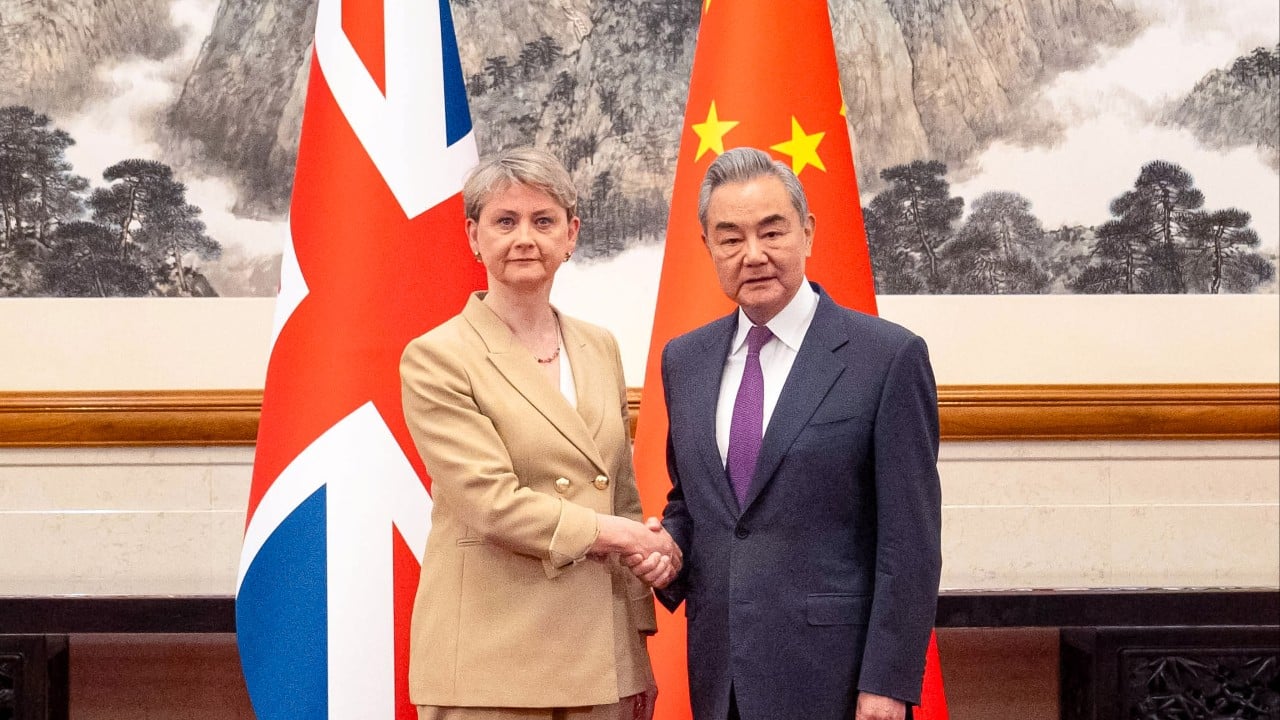
The air inside a diplomatic reception room is never just air. It is a calculated matrix of oxygen, air conditioning, and centuries of collective memory. When Chinese Foreign Minister Wang Yi met with British officials, the room carried the distinct, heavy scent of a long, bitter winter trying to decide if it was finally time to spring.
For years, the relationship between London and Beijing has been stuck in a deep freeze. To the casual observer scanning a news feed, this looks like a series of abstract headlines about trade deficits, security pacts, and geopolitical posturing. But global politics do not happen in the abstract. They happen between people sitting in comfortable chairs, nursing lukewarm water, trying to read the micro-expressions of an interpreter.
When Wang Yi urged the United Kingdom to “further communicate and align our positions,” he wasn't just issuing a standard bureaucratic press release. He was testing the ice. He was asking if two nations, deeply divided by ideology and scarred by recent history, could find a way to talk without shouting.
The Ghost of the Golden Era
To understand why this sudden urge to communicate matters, we have to look back a decade. Imagine a younger British diplomat, let us call him Arthur. In 2015, Arthur was drafting briefing notes for what the British government triumphantly labeled the "Golden Era" of Sino-British relations.
Back then, the mood was intoxicating. There were state banquets. There was a sense that British financial savvy and Chinese manufacturing might could fuse into an unstoppable economic engine. Money flowed. British schools opened branches in Chinese suburbs, and Chinese tech firms laid the literal foundations for the UK’s digital future.
Then, the temperature dropped.
It did not happen all at once. It happened in increments. A policy shift in Hong Kong. Whispers of security vulnerabilities in telecommunications infrastructure. Sudden, sharp rhetoric over human rights. Almost overnight, Arthur’s briefing notes changed from brainstorming joint ventures to assessing national security threats. The Golden Era did not just end; it shattered so loudly that the shards are still being cleaned up.
The average citizen feels this shift not in the grand halls of Westminster or the Great Hall of the People, but at the kitchen table. It is the cost of goods fluctuating because supply chains are being rerouted to avoid geopolitical flashpoints. It is the sudden anxiety of a British university administrator realizing their research budget is terrifyingly dependent on international student visas that could evaporate with a single policy directive.
The Anatomy of a Thaw
When a relationship freezes this deeply, thawing it is a high-stakes gamble. If you heat ice too quickly, it cracks. Move too slowly, and you freeze to death anyway.
Wang Yi’s recent overtures represent a delicate, deliberate application of warmth. By calling for both nations to align their positions, Beijing is acknowledging a simple, uncomfortable truth: isolation is too expensive for everyone involved.
Consider the economic reality. The British economy has spent years searching for its footing in a post-Brexit world. Inflation has pinched wallets from Manchester to Bristol. Meanwhile, China faces its own complex domestic hurdles, from a cooling property sector to a shifting demographic landscape. Neither side can truly afford the luxury of a total ideological blockade.
But alignment does not mean agreement. It is an exercise in managing friction.
Think of it like two massive ships navigating a narrow, fog-dense strait. They do not need to share a destination. They do not even need to like each other. But they absolutely must communicate their coordinates, or they will collide in the dark. That collision would not just destroy the ships; it would send shockwaves through the global economy, destabilizing markets and disrupting lives thousands of miles away.
The Language of the Unsaid
In high-level diplomacy, what is omitted is often far more critical than what is spoken aloud. When Wang Yi speaks of communication, he is also signaling a desire to bypass the performative anger that dominates public discourse.
Publicly, politicians must look strong for their domestic audiences. A British Prime Minister must reassure voters that national security is ironclad. A Chinese official must project unwavering sovereignty and strength. This public theater is loud, aggressive, and inflexible.
But behind the closed doors, the conversation changes. The tone softens out of sheer necessity.
In those quiet rooms, the discussion turns to the pragmatic. How do we keep trading Scotch whisky and automotive parts while simultaneously arguing over cybersecurity? How do we cooperate on global climate targets when our navies are eyeing each other warily in the South China Sea?
It is a dizzying double standard, a psychological tightrope walk that requires diplomats to hold two contradictory truths in their minds at the exact same time. They must view each other as vital economic partners on Tuesday, and potential systemic rivals on Wednesday.
Why the World is Watching
This is not a private dispute between two island nations on opposite sides of the Eurasian landmass. The entire international community has a stake in this temperature check.
Washington watches closely, calculating how a British pivot might affect the broader Western stance on Beijing. European capitals, similarly torn between economic dependence and strategic caution, look to London as a bellwether. Every move is scrutinized, weighed, and dissected.
For the ordinary person, the outcome of these quiet discussions dictates the macro-environment of the next decade. It influences whether the next generation enters a world defined by a new Cold War, or a world that has mastered the difficult, frustrating art of competitive coexistence.
We often want history to be simple. We want clear heroes and obvious villains, clean breaks and total victories. But real history, the kind made by flawed human beings in quiet rooms, is messy. It is a story of compromises made in the shadow of survival.
The ice between London and Beijing is not melting. Not yet. But the surface is growing slick. The coming months will reveal whether the men and women holding the pens have the footing to walk on it, or if the whole apparatus is bound to slip back into the dark.