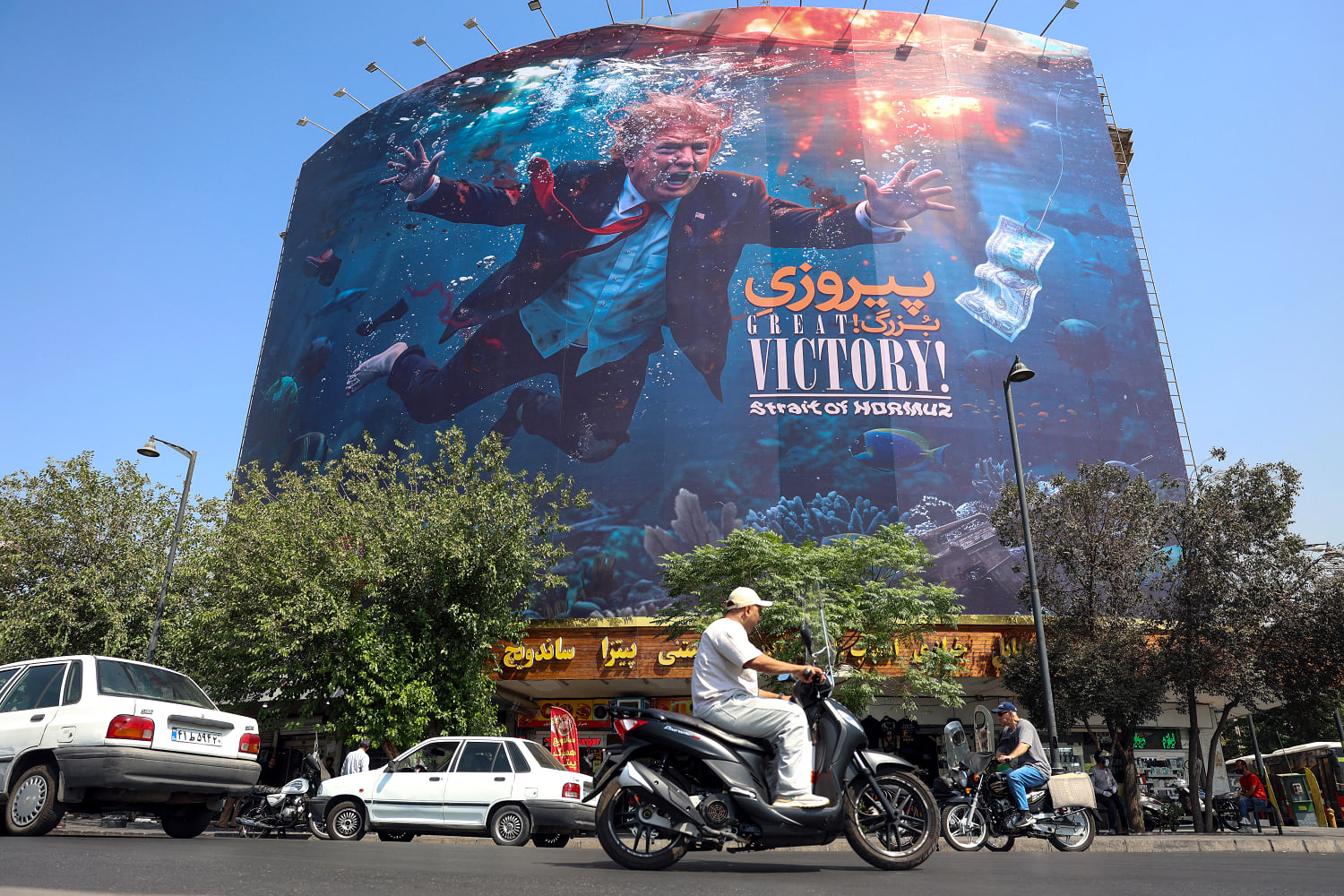
Every major media outlet swallowed the talking point whole. When Tehran dispatches a written message to Gulf capitals urging regional monarchs to confront the real enemy, the Western commentariat treats it as a tactical PR stunt, an act of desperation, or transparent deception. They want you to believe the Islamic Republic is shaking in its boots, scrambling to patch together an alliance because sanctions are biting and proxies are battered.
It is a comfortable narrative for lazy desks in Washington and London. It fits the pre-packaged script of good versus evil, cornered pariah versus resilient status quo.
It is also entirely, dangerously wrong.
The Mirage of Regional Isolation
I have spent decades watching diplomats misread the Middle East because they view statecraft through the narrow lens of western electoral cycles. When Tehran sends emissaries to Riyadh, Abu Dhabi, or Doha, analysts call it a normalization pivot born of weakness. That is the consensus, and the consensus is bankrupt.
Look at the mechanics of the actual power shift. For forty years, the underlying architecture of Gulf security relied on an external guarantor: the United States. Gulf monarchies paid protection money in oil and defense contracts, buying insurance policies denominated in US carrier strike groups. Tehran’s message to these capitals does not ask them to surrender. It points out a glaring structural reality that western capitals refuse to name out loud.
The guarantor is leaving. Or, at the very least, attention spans in Washington have fragmented past the point of reliable commitment.
When a supreme leader tells regional neighbors that external actors are the architects of local instability, he is not spinning a conspiracy theory. He is stating a balance-of-power observation. Tehran understands that stability in the Gulf cannot be outsourced to a power sitting six thousand miles away across an ocean. By proposing a regional security framework run by the region itself, Iran is playing a long strategic game: evicting western military footprints by rendering them entirely redundant.
The Economic Subtext Nobody Mentions
Let us strip away the religious rhetoric and look at the ledger. Sanctions were supposed to crush Iran into permanent submission. Instead, they forced an autarkic restructuring that made the regime surprisingly resilient to external shocks. Trade routes with Russia, China, and Central Asia bypass the dollar entirely.
When Gulf states look north across the water, they do not just see an ideological adversary anymore. They see a massive, industrializing market of ninety million people that is successfully decoupling from western financial plumbing. Riyadh and Abu Dhabi want Vision 2030 transformations, tech hubs, and non-oil diversification. You cannot build a modern regional economy while a permanent powder keg sits in your maritime backyard.
Tehran’s diplomatic overture is an economic carrot wrapped in a geopolitical stick. The message translates cleanly: we can either bleed each other dry funding proxy factions for another decade, or we can integrate logistics, pool energy security, and cut out the middlemen who profit from our perpetual enmity.
To call this a sign of weakness requires a staggering degree of analytical blindness. It is the posture of a regional hegemon confident enough to offer a deal from a position of entrenched endurance.
The Washington Blind Spot
Why do western analysts miss this completely? Because they suffer from historical amnesia. They treat regional actors as junior varsity players waiting for adult supervision from the State Department.
I have sat in briefings where career bureaucrats genuinely believe that airdropped rhetoric and naval patrols can indefinitely freeze geopolitical gravity. They ignore the fact that geography always wins in the end. Iran is not going anywhere. The Gulf monarchies are not going anywhere. They share a coastline, a basin of hydrocarbons, and a demographic future that is increasingly intertwined with Asia rather than the West.
When Tehran urges neighbors to identify the real enemy, it is pointing squarely at the architecture of interventionism that keeps the region fractured. Divide-and-rule has been the western playbook in the Middle East for a century. By inviting regional integration independent of western oversight, Iran is executing the geopolitical equivalent of kicking out the landlord.
The Cost of Miscalculation
Pretending this diplomatic outreach is empty bluster carries a steep price. If western policymakers continue to frame every hand extended across the Persian Gulf as a trick, they will wake up to a completely reorganized security architecture where American bases are tolerated only as expensive, irrelevant relics.
The Gulf rulers are not naive. They know Iran’s ultimate ambitions. But they also know arithmetic. They are hedging their bets because they read the room better than the think-tank experts in Washington. They see an empire overextended, distracted, and structurally incapable of guaranteeing their long-term survival against a permanent, contiguous neighbor.
Stop looking for the hidden trap in every message out of Tehran. Start looking at the map. The empire is packing its bags, and the locals are finally learning how to talk to each other.