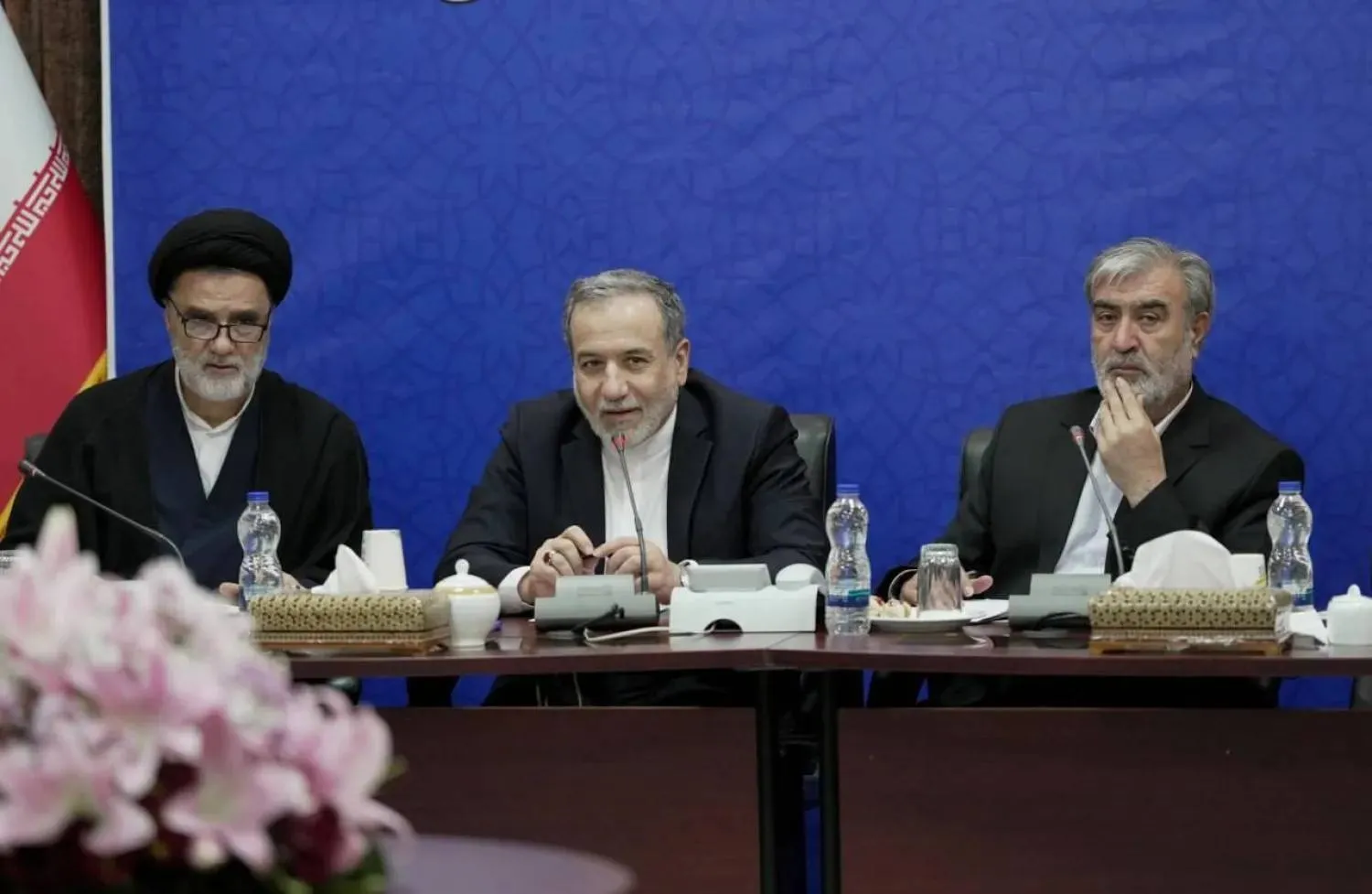
The Iranian government has officially characterized the latest wave of American military strikes across Iraq and Syria as a naked act of aggression, Rejecting Washington's long-standing justification of preemptive self-defence. This diplomatic friction is not merely a dispute over semantics. It represents a fundamental clash between international law and the practical application of military might in a region already pushed to its breaking point. By labeling these actions as criminal violations of national sovereignty, Tehran is attempting to strip away the legal shield the United States uses to justify its presence and its periodic escalations.
The core of the dispute rests on Article 51 of the UN Charter. While the United States maintains it has the inherent right to respond to attacks against its personnel—citing the recent deaths of three soldiers at a base in Jordan—Iran argues that this right does not grant a permanent license to conduct kinetic operations on the soil of third-party nations without their consent. The Iranian Foreign Ministry has been vocal, stating that the strikes serve only to fuel instability and protect the interests of a specific political agenda rather than securing regional peace.
The Strategy of Disruption and Denial
Washington operates on a doctrine of deterrence. When a proxy group strikes, the U.S. responds with overwhelming force to change the cost-benefit analysis of the adversary. However, this strategy is hitting a wall of diminishing returns. Iran has mastered the art of the "grey zone," where it maintains enough distance from its regional affiliates to claim plausible deniability while reaping the rewards of their disruption.
By condemning the strikes as "acts of aggression," Iran is positioning itself as the defender of West Asian sovereignty. This is a calculated move to drive a wedge between the U.S. and its remaining hosts in the region, particularly the Iraqi government. Baghdad finds itself in a precarious position, squeezed between its security partnership with the West and the immense internal pressure from political factions aligned with Tehran. Every American missile that hits an Iraqi warehouse or command center makes it harder for the Iraqi Prime Minister to justify the continued presence of the U.S.-led coalition.
The investigative reality suggests that these strikes are less about stopping individual drone launches and more about a broader geopolitical chess match. The targets are often logistics hubs and command nodes. By hitting these, the U.S. hopes to degrade the capability of the "Axis of Resistance." Yet, history shows that infrastructure is easily replaced. The personnel are the true assets, and they are moving into civilian-adjacent areas faster than the intelligence cycle can track them.
Sovereignty as a Diplomatic Weapon
Iran's rhetoric centers on the idea that the U.S. is an uninvited guest. If a country does not want you there, and you stay and shoot, are you a peacekeeper or an occupier? This is the question Tehran is forcing the international community to answer. They are effectively using the Western-led "rules-based order" against its creators.
- Violations of Airspace: Iran highlights the frequent unauthorized entry of combat aircraft into Syrian and Iraqi skies.
- Lack of Mandate: There is no specific UN Security Council resolution authorizing the current level of kinetic intensity.
- Civilian Risk: The "collateral damage" narrative is a powerful tool for radicalization and recruitment.
While the U.S. argues that the host governments are often "unwilling or unable" to stop the attacks originating from their soil, this legal theory is controversial. It is a gray area that many nations in the Global South view with deep suspicion. Iran is tapping into that resentment. They are not just talking to Washington; they are talking to the rest of the world.
The Jordan Incident and the Escalation Ladder
The catalyst for this current round of tension was the strike on Tower 22, a logistics outpost in Jordan. This was a significant escalation because it resulted in American fatalities on the soil of a key non-NATO ally. The American response had to be visible and violent. Anything less would have been seen as a green light for more lethal attacks.
But visibility is not the same as effectiveness. The U.S. military is essentially playing a high-stakes game of Whac-A-Mole. They hit a site, the militants regroup, and a week later, a new rocket is fired. Iran watches this cycle and sees a superpower bogged down in a perpetual reactive loop. By framing the American response as an "illegal campaign," Iran shifts the focus away from the initial provocation and onto the legality of the retaliation.
The Intelligence Gap and Modern Warfare
The difficulty in this conflict is the sheer opacity of the networks involved. These are not traditional armies with flags and fixed bases. They are fluid organizations that blend into the local social fabric. Investigative reports from the ground indicate that many of the targeted facilities are used for dual purposes. A warehouse might hold humanitarian aid on Tuesday and drone components on Wednesday.
When the U.S. strikes these locations, they often rely on signals intelligence that can be spoofed or human intelligence that may be tainted by local rivalries. Tehran knows this. They use the inevitable errors in targeting to bolster their claim that the U.S. is acting recklessly. It is a war of perception where the drone footage of an explosion is only half the story; the other half is the funeral procession that follows.
Economic Undercurrents of the Military Campaign
War is expensive. Maintaining a carrier strike group and flying constant sorties across the Middle East drains billions from the American treasury. Iran, conversely, operates on a shoestring budget by comparison. A drone that costs $20,000 to manufacture can force the U.S. to fire an interceptor missile that costs $2 million. This is asymmetric warfare at its most basic economic level.
Tehran’s "aggression" narrative also serves to pressure regional neighbors into reconsidering their economic and security ties with the West. If the U.S. is seen as a source of instability rather than a provider of security, the long-term viability of its regional alliances begins to crumble. This is the "how" of the Iranian strategy: use military friction to create political distance.
The Limits of Preemption
The doctrine of "preemptive self-defence" is being stretched to its breaking point. For a strike to be truly defensive, the threat must be "instant, overwhelming, leaving no choice of means, and no moment for deliberation." This is the Caroline test, a cornerstone of international law. The current U.S. campaign, involving planned waves of strikes over several days, looks more like a punitive expedition than an immediate defensive necessity.
Iran’s legal experts are well aware of this distinction. They are flooding international forums with documentation intended to prove that the U.S. has moved beyond defense and into the realm of offensive warfare. This isn't just about winning a debate in the UN; it’s about making the political cost of the mission so high that the American public eventually demands a withdrawal.
The U.S. military presence in the Middle East is increasingly defined by this friction. On one hand, the need to protect personnel and ensure the free flow of commerce. On the other, the reality that every bomb dropped provides fresh ammunition for the Iranian diplomatic machine. There is no simple way out of this trap.
Security is not a static state achieved through a single mission. It is a constant negotiation of power, and right now, the terms of that negotiation are being dictated by who can control the narrative of "legitimate force." Tehran has signaled that it will not back down from its rhetorical offensive, and as long as American missiles continue to fall, the "act of aggression" label will be the primary weapon in Iran's non-kinetic arsenal.
The friction is real, the stakes are rising, and the legal framework that once governed these conflicts is fraying under the pressure of a thousand small-scale strikes. The U.S. claims it is defending its people; Iran claims it is defending the map. Both sides are digging in for a long, ugly war of attrition that will be fought in the shadows, in the courts, and on the desert floor.
Stopping the cycle of violence requires a fundamental shift in how both powers view the sovereignty of the nations caught in between them. Until that happens, the labels of "self-defence" and "aggression" will remain nothing more than tools of a much larger, much more dangerous game.


