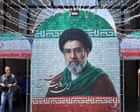
Mainstream foreign policy analysts are currently trapped in a loop of predictable, lazy reporting. The narrative surrounding the latest round of back-channel negotiations between Washington and Tehran follows a tired script: a grand diplomatic breakthrough is imminent, but we must all hold our breath while Iran’s Supreme Leader and the Supreme National Security Council (SNSC) "deliberate" and offer their formal stamp of approval.
This framing is fundamentally flawed. It misreads how power operates in Iran, misunderstands the mechanics of authoritarian survival, and sets Western foreign policy up for perpetual disappointment.
The Western press treats the Iranian regime as if it were a Western democracy with a strange clerical twist—imagining a structured, bureaucratic debate where institutions weigh the pros and cons of a treaty before taking a vote. I have spent years tracking sanction evasion networks and back-channel Middle Eastern diplomacy. If you look at how decisions actually get made in Tehran, you quickly realize that the formal "approval process" is an elaborate piece of political theater.
The idea that the Supreme Leader or the SNSC is currently weighing a peace deal is a misunderstanding. By the time a draft agreement hits the headlines, the decision has already been made.
The Illusion of Bureaucratic Deliberation
Western commentators love focusing on the Supreme National Security Council. They track its members, map out factions between "moderates" and "hardliners," and speculate on who will vote which way. This approach treats the SNSC as a legitimate forum for debate.
In reality, the SNSC is a rubber-stamping mechanism, not a parliament. It exists to distribute accountability, not to manufacture consensus.
Under Article 176 of the Islamic Republic’s constitution, the SNSC is tasked with safeguarding national interests and coordinating security policy. However, every single decision it reaches is completely invalid until it receives the direct signature of the Supreme Leader, Ali Khamenei. The council does not debate options to present to the Leader; the Leader sets the parameters, and the council finds a way to wrap those parameters in the language of state bureaucracy.
To understand why the "waiting for approval" headline is a myth, you have to understand the concept of Nezam—the preservation of the system. In Iranian political theology, preserving the regime is the ultimate religious and political duty, transcending even Islamic jurisprudence. Khamenei does not operate in isolation, nor does he risk his authority on open-ended committee meetings. If a text has reached the stage of a formal review, it means the Revolutionary Guards (IRGC), the intelligence apparatus, and the clerical elite have already fallen into line under explicit, pre-negotiated directives.
The public delay is not a sign of internal indecision. It is a deliberate negotiation tactic designed to extract final, panicked concessions from Western diplomats who are bound by political calendars and election cycles.
The Flawed Premise of a Washington-Tehran Peace Deal
When people search for updates on Middle Eastern diplomacy, they often ask: "When will Iran sign a permanent peace treaty with the US?"
The honest answer is never. The entire premise of the question is wrong because it assumes both sides want the same outcome: stability and normalized relations.
For the United States, an agreement is seen as an endpoint—a way to freeze a nuclear program, establish guardrails, and pivot resources to other theaters. For Tehran, an agreement is not a destination; it is a tactical pause. It is a tool to manage economic pressure while maintaining the core tenets of its revolutionary identity.
Imagine a scenario where Iran actually signs a comprehensive, permanent peace deal that normalizes relations with Washington, opens embassies, and integrates its banking system fully into the Western financial order. The moment that happens, the ideological justification for the Islamic Republic crumbles. The regime requires the specter of the "Arrogant Powers" to justify its domestic repression, its economic monopolies, and its regional proxy network.
Therefore, any deal that undergoes the "approval process" is designed from the outset to be limited, transactional, and reversible. By focusing on whether the leadership will "approve" a deal, mainstream analysis misses the much more important question: how quickly will both sides find a reason to bypass it?
The Risk of Mirror Imaging
The biggest trap in international relations is mirror imaging—assuming your adversary thinks, rationalizes, and values the same things you do. Western diplomats, trained in law and institutional governance, look at Iran and see a state that desperately needs economic relief. They calculate that the rational move for the SNSC is to approve a deal, lift sanctions, and secure the regime's financial future.
But the regime does not measure success by GDP growth. It measures success by survival and ideological consistency.
During my time analyzing regional supply chains, I watched how billions of dollars in sanctioned oil revenue moved through shell companies in the UAE, Malaysia, and Western Europe. The elites running these networks—primarily tied to the IRGC—do not want a fully normalized economy. A normalized economy means transparency, international audits, and compliance with anti-money laundering standards like the Financial Action Task Force (FATF).
A comprehensive deal actually threatens the financial empires of the very people tasked with enforcing it. The hardliners do not oppose a deal because they are blind ideologues; they oppose it because transparency destroys their business model. When the West treats the approval process as a purely geopolitical debate, it ignores the massive, entrenched domestic war economy that profits directly from isolation.
The Real Power Dynamics
To accurately read the situation in Tehran, stop reading the official statements from the Ministry of Foreign Affairs. Stop analyzing the public statements of the president or the council members. Instead, look at three specific indicators that actually signal which way the wind is blowing.
| Indicator | Common Misinterpretation | The Cold Reality |
|---|---|---|
| IRGC Troop Movements & Procurement | Interpreted as a sign of tension or a breakdown in talks when rhetoric heats up. | Signals the true baseline. If the IRGC is actively expanding missile infrastructure during talks, the deal is a tactical smoke screen. |
| Domestic Media Framing | Interpreted as a genuine debate between reformist and conservative newspapers. | A coordinated good-cop/bad-cop routine designed to signal to the West that the Iranian executive branch needs more concessions to beat back the radicals. |
| Bonyad Asset Reallocation | Ignored by political analysts as mere domestic economic activity. | The charitable conglomerates (Bonyads) controlled by the leadership move capital ahead of major policy shifts. If they are liquidating certain assets, they are preparing for a specific economic reality. |
The downside to this contrarian view is obvious: it offers no easy diplomatic victories. It forces policymakers to admit that containment, rather than a grand bargain, is the only realistic strategy. It requires acknowledging that the decades-long effort to bring Iran into the community of nations through legalistic treaties is built on a foundation of sand.
Stop waiting for a white smoke moment from the Supreme National Security Council. The theater of deliberation is designed to keep Western negotiators hooked on the prospect of a breakthrough that will never truly arrive. The regime has already decided how much friction it wants to maintain. The rest is just noise.