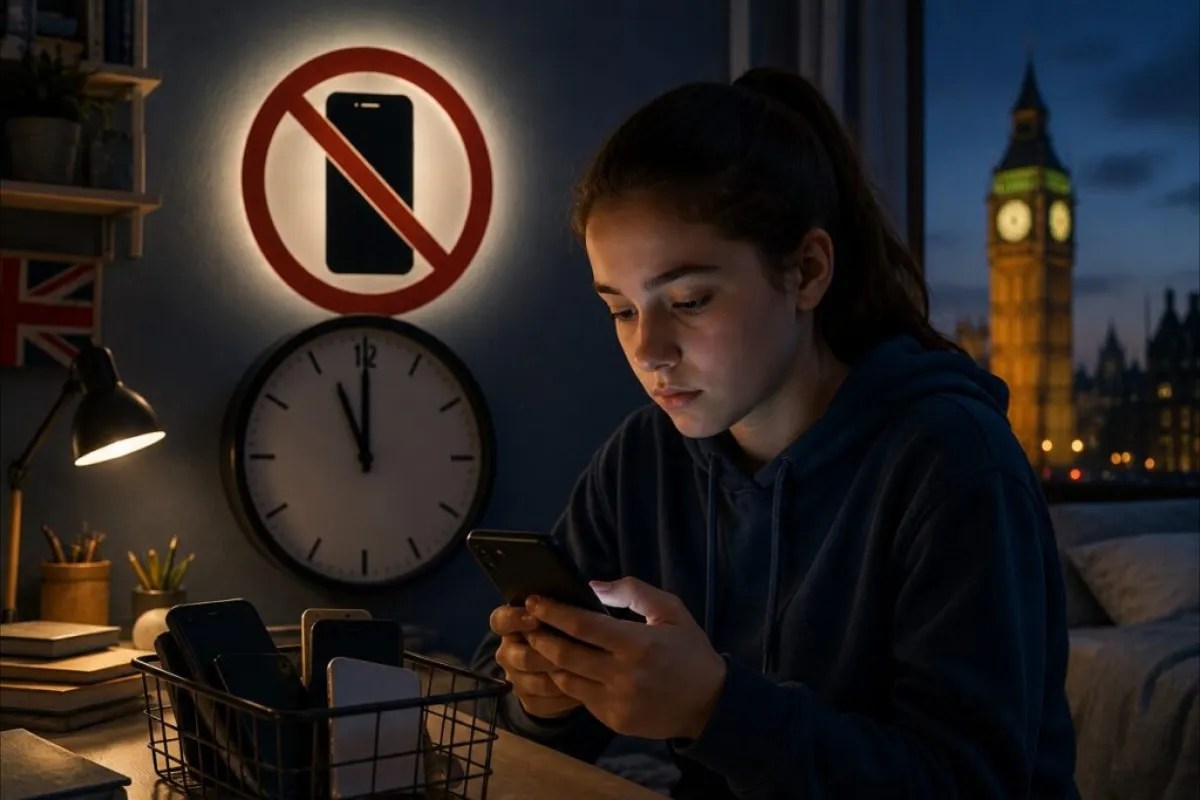
The British government wants to tuck your teenagers into bed by turning off their Wi-Fi.
In a move dripping with performative paternalism, policymakers in the UK are floating a proposal for a voluntary, overnight social media curfew for older teenagers. The premise is simple, comforting, and entirely wrong: if we can just nudge platforms like Instagram and TikTok to lock the digital gates between 11 PM and 6 AM, our youth will suddenly reclaim their lost sleep, mental health crises will evaporate, and parental control will be magically restored. For another look, see: this related article.
It is a beautiful fantasy. It is also an absolute joke.
As someone who has spent fifteen years analyzing digital systems and product architecture, I have watched regulators pull this exact lever time and time again. They identify a genuine, agonizing social pain point—in this case, sleep deprivation and anxiety in Gen Z—and offer a solution that is technically toothless, psychologically counterproductive, and politically convenient. Related insight regarding this has been published by CNET.
The Illusion of the "Voluntary Curfew"
Let us dissect the sheer mechanics of a "voluntary curfew."
When a government "proposes" a voluntary framework to Silicon Valley, it is not issuing a mandate; it is launching a PR campaign. Big Tech platforms do not operate on the honor system. They operate on attention metrics, daily active users, and ad impressions.
If Meta or ByteDance implements a voluntary lock on overnight scrolling, they will build it with more holes than Swiss cheese. Why? Because they have to.
To enforce a curfew, you must first know exactly who is online. This requires robust, invasive age-verification technology. If you have spent five minutes studying the digital identity landscape, you know that reliable age verification without massive privacy violations is a pipe dream.
Teenagers are not passive consumers of technology; they are digital natives who grew up bypass-engineering their school Chromebooks.
- The VPN Escape: Any teenager with a search bar can download a free VPN in thirty seconds, routing their traffic through a different timezone where it is mid-afternoon.
- The Burner Profile: Don't want to get locked out of your main account? Create a secondary account with a birth year of 1995.
- The Peer-to-Peer Pivot: If Instagram goes dark, the conversation simply migrates to unmonitored Discord servers, encrypted Signal chats, or local iMessage groups.
We are trying to build a digital dam out of cardboard while the water is already at our chests.
The Big Lie: Screentime is the Disease, Not the Symptom
The lazy consensus dominating this debate insists that "screentime" is a toxic substance, like lead paint or asbestos. The logic goes: limit exposure, cure the ailment.
This completely misdiagnoses the problem.
Teenagers are not staying up until 2 AM scrolling TikTok because they are hopelessly addicted to the interface—though the algorithms are certainly engineered to keep them there. They are staying up because they are starved for autonomous, unstructured social spaces.
Traditional Teen Spaces             Modern Teen Spaces
-----------------------             ------------------
Malls, Parks, Diners                Disappeared or Policed
After-School Hangouts               Hyper-Structured Academics
Unsupervised Play                   Digital Sandboxes (Discord, TikTok)
We have systematically privatized, policed, and dismantled the physical third spaces where teenagers used to congregate. You cannot kick kids off the street corners, load them up with three hours of homework, schedule every weekend with resume-building extracurriculars, and then act shocked when they seek connection under their bed covers at midnight.
A curfew does not solve their isolation. It just isolates them in the dark.
Why Restricting Tech Actually Makes It More Addictive
There is a well-documented psychological phenomenon known as the reactance theory. When individuals feel their freedom is being restricted, they actively seek to reclaim that freedom, often valuing the restricted behavior far more than they did initially.
When you tell a seventeen-year-old that they are banned from communicating with their peers after 11 PM, you do not inspire them to read a leather-bound copy of Marcus Aurelius. You turn late-night digital access into a high-stakes game.
Imagine a scenario where a platform successfully implements a hard lockout at midnight. What happens at 11:55 PM?
- The Scarcity Spike: Users experience a rush of FOMO (Fear of Missing Out), cramming as much high-stimulation interaction into the final ten minutes as humanly possible.
- The Cortisol Surge: Instead of winding down naturally, the brain is flooded with dopamine and adrenaline as the digital clock ticks down.
- The Sleep Hangover: When the screen finally goes black, the user is left hyper-stimulated, staring at the ceiling, waiting for the system to unlock.
By artificializing scarcity, regulators are making social media validation a premium commodity.
Let's Answer the Real Questions (Brutally)
If you look at public forums, the questions parents and educators are asking show how deeply we have swallowed the establishment narrative. Let's dismantle them.
"Won't a curfew at least help parents establish boundaries?"
No. It actively abdicates parental responsibility. When the government pretends to act as the digital bouncer, parents stop having the hard, necessary conversations about self-regulation. They point to the state-mandated lock and say, "Because the government says so." That is lazy parenting. It fails to teach kids how to manage their own attention—a critical skill they will desperately need the second they move out of the house and go to university, where there are no curfews.
"But shouldn't we do something to stop the mental health crisis?"
Yes, but "doing something" shouldn't mean passing useless, symbolic policy. If you want to address teen mental health, look at academic hyper-competition, the decline of physical freedom, and the absolute lack of economic optimism among youth. Blaming Instagram for teen depression is like blaming the telephone for bad news.
The Heavy Price of Digital Protectionism
Let's be clear about the downside of my position.
If we reject these paternalistic curfews, the alternative is messy. It means accepting that our kids will make mistakes online. It means realizing that some nights they will stay up too late, they will feel tired the next day, and they will have to face the natural consequences of those choices.
But that is how resilience is built.
By wrapping teenagers in digital bubble wrap, we are raising a generation of platform-dependent compliance machines who do not know how to put the phone down unless an authority figure physically turns off the lights.
Stop asking tech companies to parent your children. Stop asking politicians to write bedtime stories.
If you want your teenager to sleep, buy an analog alarm clock, put a basket for phones in the hallway, and have the courage to enforce your own house rules. Anything else is just political theater, and the teenagers are laughing at the performance.