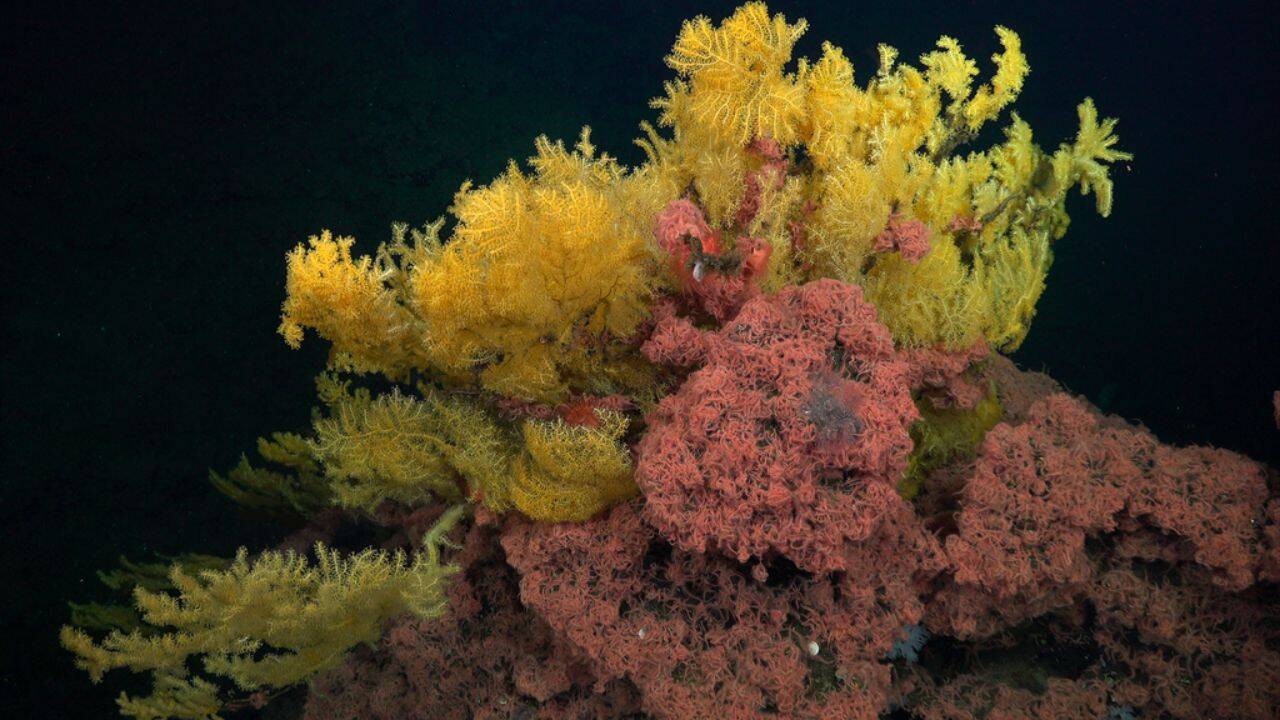
Marine taxonomy relies on predictable genetic markers to map evolutionary trees, but the discovery of a bright yellow octocoral off the coast of Costa Rica exposes the limits of traditional classification systems. Found between 360 and 529 meters deep on volcanic seamounts, specimens of Laurinque elenya defied standard categorization when routine genetic sequencing produced conflicting signals pointing toward entirely unrelated families. Resolving this biological anomaly required moving past basic barcoding to deploy phylogenomics, ultimately forcing researchers to establish an entirely new family, Laurinqueidae. This event underscores a broader structural vulnerability in marine biodiversity mapping: our models are optimized for known taxa, creating systematic blind spots when confronted with deep-sea evolutionary isolates.
The Mechanics of Taxonomic Ambiguity
When marine biologists recover unknown specimens, classification follows a standardized pipeline of morphological inspection followed by Sanger sequencing of conserved marker genes. For Laurinque elenya, this pipeline broke down due to systemic marker divergence.
- Morphological Divergence: Initial gross-anatomy assessments flagged structural mismatches with known octocoral groups, showing physical traits that resisted inclusion in existing genera.
- Marker Contradiction: Traditional barcoding using standard mitochondrial and nuclear genes failed because individual markers mapped the organism to different, mutually exclusive families.
- Phylogenomic Resolution: Overcoming this impasse required scaling the data input from single-gene markers to hundreds of loci, revealing a deep evolutionary lineage.
This analytical failure demonstrates that standard molecular keys used in marine biology possess a high rate of topological error when evaluating isolated deep-sea clades. Single-gene sequencing assumes a neat, linear tree of life, but ancient divergences often leave behind mosaic genomes that baffle reductionist tests.
Environmental Drivers of Deep Seamount Endemism
The physical habitat hosting Laurinque elenya acts as an evolutionary incubator. Operating at depths where sunlight is absent, these seamounts near Isla del Coco experience unique hydrodynamic forces. Nutrient-rich currents accelerate around underwater mountains, providing a steady particulate food supply for filter-feeding organisms while isolating populations from adjacent abyssal plains.
The colonies grow past one meter in height, forming dense vertical thickets that physically alter the local micro-habitat. These golden structures rise directly from substrates heavily blanketed by ophiuroids, or brittle stars, creating a dense biogenic matrix. This spatial configuration changes local fluid dynamics, slowing bottom currents and trapping organic detritus within the understory. The ecological cost function for these organisms involves balancing structural rigidity against high drag coefficients in fast-flowing seamount channels, explaining the robust, tree-like branching morphology that macroscopically mirrors shallow-water gorgonians despite entirely separate genetic roots.
The Cost of Undersampling Bathypelagic Zones
The necessity of erecting a new family for a single genus highlights the vast data gaps in bathypelagic and mesopelagic taxonomy. Oceanographic research remains bottlenecked by vessel time, remote-operating vehicle availability, and the labor-intensive nature of phylogenomic data processing.
| Phase | Operational Action | Primary Bottleneck |
|---|---|---|
| Reconnaissance | ROV deployments on seamounts | High capital cost of deep-sea hardware |
| Extraction | Physical sampling of fragile colonies | Mechanical damage to delicate tissues |
| Analysis | Multiplex gene sequencing and alignment | High marker disagreement in isolated clades |
When expeditions rely on opportunistic sampling rather than systematic grid-based surveys, entire lineages remain invisible until localized disturbances or targeted explorations bring them to light. The discovery sequence off Costa Rica—spanning collections in 2019 and final taxonomic placement published years later—illustrates the protracted temporal lag between field observation and validated biological discovery.
Targeted deep-sea conservation frameworks must transition from protecting known biodiversity hotspots to preserving structurally complex seamount ecosystems a priori. Because morphologically striking organisms like Laurinque elenya serve as structural foundation species that shelter diverse associated fauna, the loss of these uncatalogued habitats risks severing trophic webs before science has mapped their baselines. Funding allocations should prioritize high-throughput environmental DNA mapping combined with automated morphological screening to compress the timeline between deep-sea discovery and formal phylogenetic integration.
A coral among stars: A new octocoral family from seamounts in the tropical eastern Pacific
This video provides a detailed visual breakdown of the expedition footage and the genetic anomalies that led scientists to classify the coral into a brand-new family.