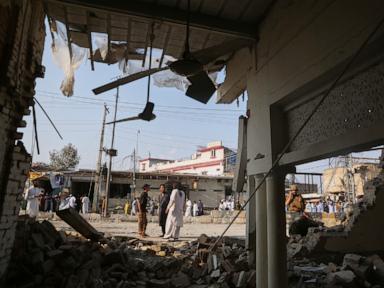
The twenty-hour duration of a militant standoff within a regional installation in northwestern Pakistan is not merely a tactical footnote; it represents a concentrated micro-study in urban counter-insurgency friction, institutional vulnerability, and the harsh economic realities of asymmetric warfare. When state security forces engage holed-up combatants within a fortified or semi-fortified perimeter, the engagement timeline is dictated entirely by structural geometry, ballistic limitations, and the high-stakes calculus of minimizing collateral civilian and personnel casualties. Deconstructing this operational event requires moving past superficial news reporting to evaluate the underlying mechanics of force deployment, intelligence-to-action latency, and the systemic pressures confronting provincial law enforcement in high-threat border regions.
The Structural Mechanics of Compound Besieging
A prolonged siege inside a constrained urban or semi-urban compound introduces distinct operational vectors that differ fundamentally from open-field skirmishes or remote airstrikes. In an enclosed structure, the defender holds an initial asymmetric advantage rooted in architectural familiarity, pre-positioned cover, and vertical control points. Attackers face an immediate tactical deficit known in military science as the threshold entry problem. Every breach point represents a linear funnel where defensive firepower concentrates automatically.
During the reported twenty-hour standoff in the northwest, security planners confronted a classic operational bottleneck. Rushing the compound prematurely guarantees catastrophic casualties among elite assault units due to the high lethality of close-quarters combat against entrenched adversaries equipped with improvised explosive devices and automatic weaponry. Consequently, the operational command must substitute kinetic velocity with methodical siege mechanics.
This involves three distinct operational phases: isolation, exhaustion, and precision reduction. Isolation requires sealing all egress routes to prevent reinforcement or exfiltration, a task complicated by urban population density and complex local terrain. Exhaustion relies on sensory deprivation, psychological pressure, and continuous surveillance to degrade the cognitive and physical stamina of the combatants. Precision reduction entails the systematic dismantling of defensive positions using targeted sniper fire, tear agents, or controlled explosive breaching rather than indiscriminate ordnance deployment.
The twenty-hour timeline reflects the friction inherent in executing this sequence without compromising the perimeter. State forces must balance the imperative of swift neutralization against the risk of structural collapse and friendly fire incidents. Each hour of delay shifts psychological leverage, forcing commanders to manage the external information space while maintaining absolute tactical discipline under observation by both local populations and hostile intelligence watchers.
The Cost Function of Regional Counter-Insurgency
State-level security management operates on a strict economic ledger where resources—human, material, and temporal—are finite. In regions abutting mountainous borderlands, the cost function of counter-insurgency is disproportionately heavy. Local police compounds and regional headquarters often double as administrative hubs and frontline defense posts, making them prime targets for insurgent networks seeking symbolic victories and tactical disruption.
When militants initiate a high-profile attack resulting in a prolonged standoff, the immediate cost to the state extends far beyond the expended ammunition and fuel. The opportunity cost involves the immobilization of specialized rapid-response units, bomb disposal squads, and medical evacuation teams for an entire operational cycle. While these elite assets are tied down managing a localized siege, their absence creates defensive vacuums across adjacent sectors, increasing vulnerability to synchronized secondary strikes or diversionary operations.
Furthermore, the infrastructural footprint of regional law enforcement bears a heavy financial burden. Rebuilding breached walls, replacing encrypted communication gear, repairing ballistic shields, and providing medical compensation for injured personnel strain provincial budgets that are already heavily allocated toward basic operational maintenance rather than advanced capability acquisition. The fiscal drain is compounded by the economic paralysis that grips surrounding commercial districts during an active security lockdown. Transport corridors freeze, local markets close, and economic activity stalls, creating secondary socio-economic friction that insurgent propaganda outfits eagerly exploit to alienate the civilian populace from central governance.
Institutional Vulnerability and Perimeter Hardening Deficiencies
A critical examination of security compound breaches reveals systemic vulnerabilities in baseline infrastructure and standard operating procedures. Many regional police stations and administrative posts across the northwestern corridor were originally designed for civil policing duties rather than hardened military defense against determined insurgent squads armed with military-grade weaponry and suicide vests.
The structural architecture of these facilities frequently suffers from inadequate standoff distance, insufficient blast-wall reinforcement, and weak perimeter surveillance integration. When attackers successfully penetrate the outer gates or scale boundary walls, they exploit the gap between conventional civil policing training and high-intensity tactical defense. Standard police personnel are rarely equipped or conditioned to repel coordinated commando-style infiltration attempts without immediate reinforcement from specialized paramilitary wings.
Intelligence-to-interception latency compounds these structural vulnerabilities. Insurgent cells plan operations with meticulous timing, often selecting periods of shift rotation, low visibility, or degraded communications to initiate their assaults. The interval between initial contact and the arrival of specialized reinforcement units defines the survival window for personnel inside the compound. If this latency window exceeds the time it takes for attackers to secure interior strongpoints, the engagement instantly transitions from an active defense to a complex hostage or siege scenario. Bridging this latency gap requires decentralized command structures, pre-positioned quick-reaction forces, and advanced early-warning sensors that can detect perimeter incursions before physical contact occurs.
Cross-Border Sanctuary and the Regional Security Matrix
Local tactical engagements cannot be evaluated in isolation from broader geopolitical dynamics. The persistence of militant networks operating in Pakistan's northwest is sustained by operational depth derived from cross-border sanctuaries. Insurgent factions routinely execute attacks within Pakistani territory and subsequently seek refuge across porous borders where state writ is contested or absent.
This transnational dimension creates a persistent strategic impasse. State security forces can successfully resolve a twenty-hour standoff and neutralize the immediate combatants within the compound, but this tactical victory does not eradicate the underlying organizational network. The leadership echelons, training camps, and logistical supply chains remain intact outside the direct operational jurisdiction of domestic forces. Consequently, security forces are trapped in a perpetual cycle of reactive containment, repeatedly fighting localized defensive battles without being able to dismantle the external generators of the insurgency.
Diplomatic friction between neighboring states further complicates this matrix. Mutual accusations regarding border management failures, intelligence sharing deficits, and harboring hostile elements paralyze regional counter-terrorism cooperation. Without a synchronized bilateral or multilateral framework to deny cross-border mobility and financial flows, domestic security forces will continue to bear the brunt of an asymmetric war of attrition, absorbing casualties while attempting to plug structural leaks with tactical force.
Information Control and the Modern Siege Narrative
In contemporary security operations, the physical battlefield is permanently coupled with an informational battlefield. The duration of a twenty-hour standoff provides hostile actors with an extended window to project their narrative, amplify fear, and undermine public confidence in state competence through real-time digital media manipulation.
During the initial hours of the engagement, an information vacuum invariably forms. Official state spokespersons move with deliberate caution, verifying casualty reports and assessing tactical situations before issuing statements. In this void, insurgent-affiliated communication channels flood digital platforms with unverified claims, inflated casualty statistics, and dramatized footage designed to project strength and institutional paralysis.
The psychological objective of the attackers is not solely military attrition; it is the erosion of civilian trust in the state's monopoly on legitimate force. By broadcasting a prolonged standoff, militants seek to demonstrate that the security apparatus is vulnerable, slow to react, and incapable of securing its own installations, let alone civilian population centers. State communication strategies must therefore evolve from reactive denial to proactive transparency, providing timely operational updates that preempt hostile propaganda and anchor public perception in verified facts.
Doctrinal Adaptation and Proactive Interception
The recurrence of sophisticated compound attacks underscores the urgent necessity for a fundamental doctrinal shift in regional security management. Relying primarily on reactive containment and siege resolution is an inherently defensive posture that concedes the initiative to the adversary. Transforming counter-terrorism efficacy requires transitioning from a model of response to a model of proactive pre-emption.
This operational realignment rests on three foundational pillars. First, intelligence fusion must be modernized, shifting away from cumbersome bureaucratic silos toward real-time, actionable signals and human intelligence integration capable of intercepting insurgent staging phases before movement begins. Second, infrastructure hardening standards across all frontline regional posts must be upgraded to withstand sustained direct-fire and explosive breaches, ensuring that initial defenders can hold out indefinitely without relying on immediate external relief. Third, tactical mobility must be enhanced through decentralized air-mobile rapid reaction units stationed strategically across high-threat zones to compress response times from hours to minutes.
The twenty-hour standoff serves as a stark empirical reminder of the costs associated with defensive lag. Until the security architecture matches the adaptability and tactical fluidity of insurgent networks, the state will remain bound to a cycle of costly reactive engagements, absorbing blows while searching for decisive structural solutions in an unforgiving operational landscape.