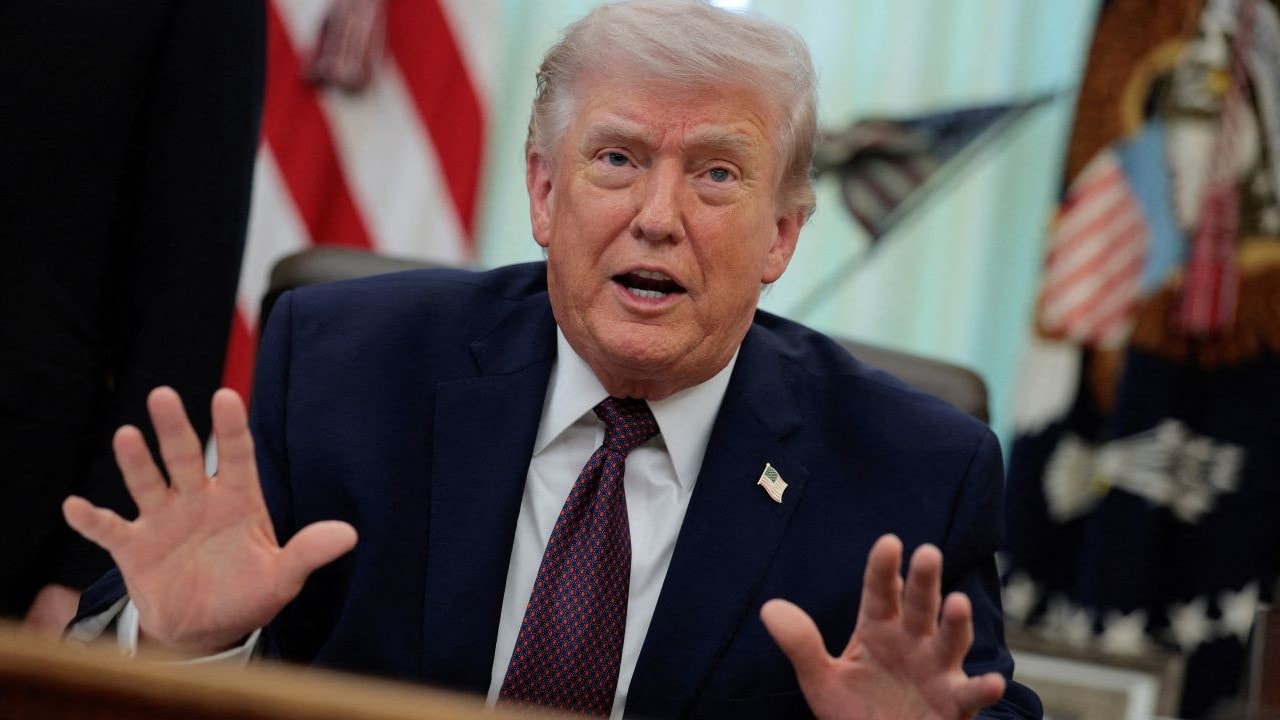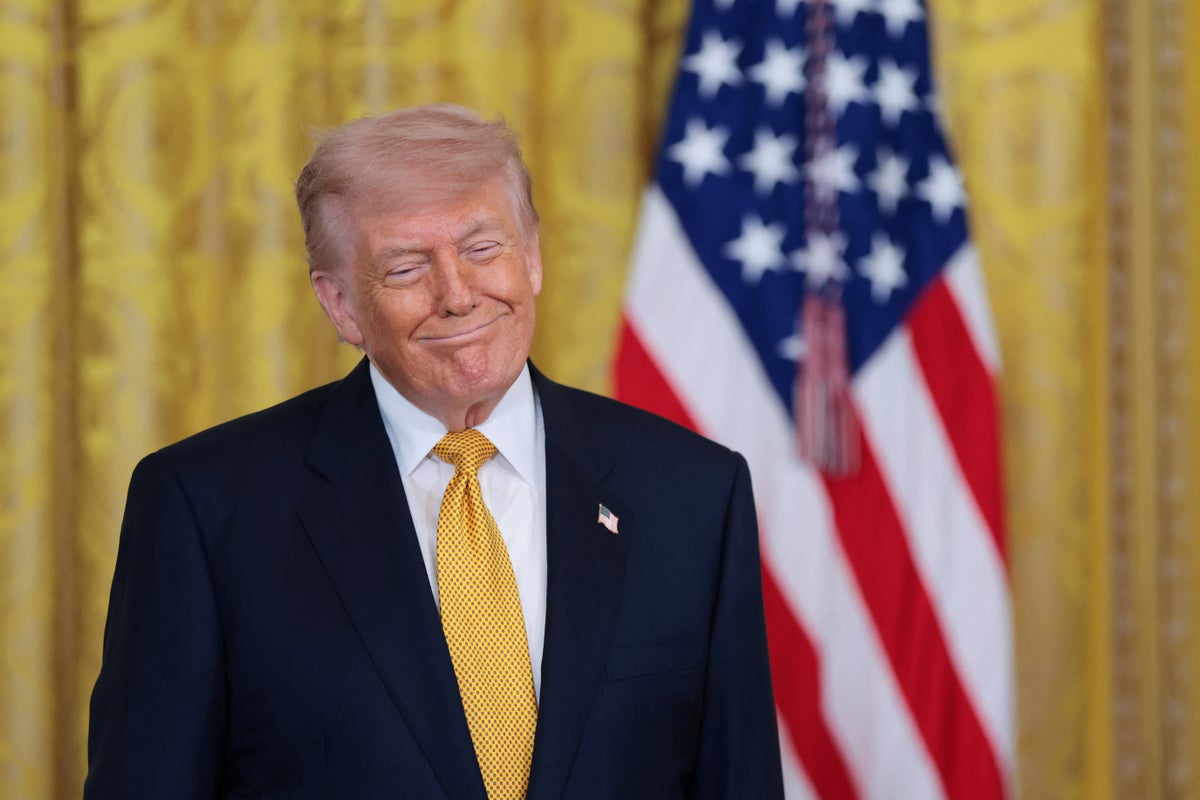
The bullets that tore through the Washington Hilton on April 25 did more than just shatter the glass of the White House Correspondents’ Dinner. They shattered one of the longest-standing rules of American political gravity. In any other era of the Republic, an assassination attempt on a sitting president would trigger a massive, bipartisan surge in public support—a "rally around the flag" effect as predictable as the tides.
But as the dust settles on the DC dinner shooting, the numbers tell a different, colder story. Donald Trump’s approval rating has barely moved. For an alternative look, consider: this related article.
According to the latest Reuters/Ipsos data, the President’s approval sits at a stagnant 34% among all respondents. For a man who has built a career on the optics of strength and the narrative of the persecuted hero, this lack of a "bounce" is not just a statistical anomaly. It is a fundamental shift in how the American electorate processes trauma. The immunity to the "sympathy bump" suggests that the nation has reached a point of terminal polarization, where even a life-threatening event is viewed through a lens of pre-existing tribalism rather than shared national concern.
The Calculus of Indifference
To understand why the needle didn't move, one must look at the mechanics of modern outrage. In 1981, when Ronald Reagan was shot, his approval rating jumped from 59% to 67% almost overnight. Even in the deeply divided 2024 cycle, the Butler, Pennsylvania shooting provided a tangible, if temporary, lift. Further coverage on this matter has been shared by Associated Press.
By 2026, however, the "outrage economy" has reached total saturation. The American public is no longer shocked by political violence; they are exhausted by it. When a gunman—identified as Cole Allen—disrupted the WHCD, the immediate reaction on social media wasn't a unified prayer for the President, but a frantic scramble to assign blame. The "why" behind the lack of a bounce is rooted in three distinct psychological and structural barriers that have fundamentally altered the electoral landscape.
The Desensitization Filter
The first barrier is the sheer frequency of high-stakes conflict. This is the third major attempt on Trump’s life since his 2024 campaign began. When crisis becomes a recurring character in a presidency, it loses its ability to generate fresh sympathy. To a significant portion of the electorate, the DC dinner shooting was just another Tuesday in a term defined by chaos. The public has developed a form of emotional scar tissue that prevents the "surge" of empathy required to move polling numbers.
The Echo Chamber Lock-In
The second factor is the death of the "undecided" voter. In previous decades, a swing of 5% or 10% was possible because a large segment of the population sat in the middle, waiting for a reason to tip one way or the other. Today, that middle has vanished. Voters are locked into their positions with such intensity that a bullet is no longer viewed as a tragedy, but as a data point to be weaponized.
For Trump’s base, the shooting confirmed their "deep state" suspicions, but they were already at a 100% approval level. For his detractors, the event was immediately filtered through a lens of skepticism or, in more extreme corners, a dark belief that the President's own rhetoric had invited the violence. When both sides are already maxed out, there is simply no room for the numbers to grow.
The Economic Anchor
Perhaps most importantly, no amount of personal drama can outweigh the grocery bill. While the media focused on the security failures at the Hilton, the average voter remained focused on the "sagging" economy. With the Reuters/Ipsos poll showing a majority of Americans believe the country is on the wrong track, a moment of personal peril for the leader does little to alleviate the daily pressure of inflation and a struggling automotive industry under the weight of new tariffs.
The Security Paradox
The investigative reality of the April 25 shooting also reveals a terrifying lapse in the very systems designed to prevent this. The shooter, Cole Allen, managed to infiltrate a high-security event attended by the most powerful figures in media and government. This wasn't a lone wolf on a distant rooftop; this was an intruder in the heart of the "Establishment" gala.
The failure of the Secret Service and local law enforcement to secure the perimeter of the Washington Hilton—the same site where Reagan was shot 45 years ago—points to a systemic breakdown. If the state cannot protect the President in a controlled environment, the public's lack of a "bounce" may also reflect a loss of confidence in the administration's basic competence. It is difficult to "rally" around a leader when the primary takeaway from the event is a glaring lack of control.
Algorithms of Division
We cannot ignore the role of the digital infrastructure in suppressing the sympathy bump. In the hours following the shooting, the information environment was not filled with objective reporting, but with algorithmic amplification of the most divisive takes.
- Algorithmic Sorting: Social media platforms prioritized posts that generated "high engagement," which in 2026 means anger and conspiracy.
- The "False Flag" Narrative: Within minutes, hashtags alleging the event was staged began to trend, fueled by AI-generated "analysis" of the shooter’s manifesto.
- Media Fragmentation: Voters did not watch a single news broadcast; they watched the versions of the event curated for them by their specific ideological silos.
This fragmentation ensures that a national event is never truly national. It is a series of local incidents happening in different digital universes simultaneously. In one universe, a hero survived a coordinated hit; in another, a reckless politician faced the consequences of his own firebrand politics. When the narrative is this fractured, a unified polling spike is a mathematical impossibility.
The New Normal of Political Violence
The most chilling takeaway from the post-shooting data is the normalization of the unthinkable. A Manhattan Institute survey found that a growing percentage of voters across the spectrum now view political violence as "unfortunate but inevitable."
When violence is seen as an inevitable byproduct of the system, it loses its power to shock the system into a temporary state of unity. We have moved from a "Rally Around the Flag" model to a "Retreat to the Bunker" model. Trump’s 34% approval rating is a bunker. It is the floor of his support, reinforced by a core group that will never leave him, but it is also a ceiling that no event—no matter how dramatic or dangerous—seems capable of breaking.
The "sympathy deficit" isn't a reflection of Donald Trump alone. It is a reflection of a nation that has lost its capacity for collective mourning. We have traded our shared reality for a series of fortified camps, and as the 2026 midterms approach, the lack of a "shooting bounce" serves as a definitive warning: the old rules of politics are dead, and they aren't coming back.
The path forward for the administration is not through the lens of victimhood or the "hero" narrative that worked in the past. If the President wants to move those numbers, he will have to do it through the grinding, unglamorous work of policy and economic stabilization. The era of the "event-driven" presidency is over. In a world where even a bullet doesn't move the needle, only results will.