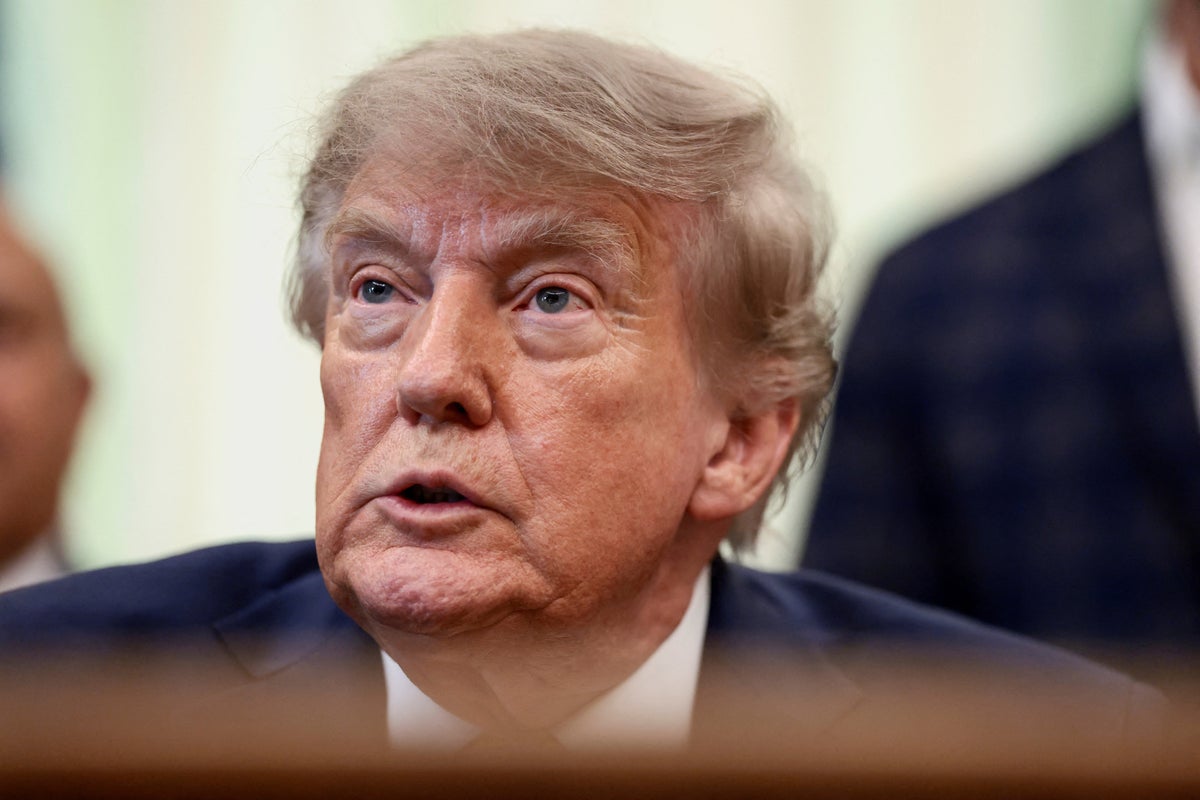
Voters in crucial swing districts are heading to campaign portals, and they're noticing a massive omission. Donald Trump's name and likeness have quietly vanished from several high-stakes Republican candidate websites. It's a calculated gamble happening behind the scenes. Local strategists are looking at district-level polling data and realizing a hard truth. Tying yourself directly to the top of the ticket can tank your chances in suburban congressional seats.
If you're tracking how national politics bleeds into local races, this shift isn't just a minor website redesign. It's an existential survival strategy for candidates trying to thread a very narrow needle. They need core conservative turnout, but they also desperately need independent voters who despise the former president. For a deeper dive into this area, we suggest: this related article.
Let's look at what's actually happening on the ground and why this digital distancing is reshaping the current election cycle.
The Strategy Behind the Digital Disappearance
Websites don't update themselves. Every headshot, policy paper, and endorsement banner is meticulously curated by consultants who test every pixel against focus group data. When a House candidate in a purple district removes a photo with Trump, it's because the metrics demand it. For further details on this development, extensive reporting can also be found at The New York Times.
I've watched political campaigns panic over a single-digit shift in suburban voter sentiment. They spend thousands of dollars on digital tracking to see which imagery triggers a negative response. Right now, heavy association with Trump's ongoing legal battles and polarizing rhetoric turns off moderate women and college-educated independents. These are the exact demographics that decide elections in states like Pennsylvania, Arizona, and Michigan.
Candidates are betting they can have it both ways. They figure core voters won't care about a missing website banner as long as the policy platform sounds conservative. Meanwhile, they can point to their clean digital footprint when courting a skeptical suburbanite who hates drama.
It's a tightrope walk. One misstep triggers an angry tweet from Mar-A-Lago, which immediately turns a local race into a national media circus.
Reading the District Tea Leaves
Not all battleground districts are created equal. A Republican running in a heavily gerrymandered red pocket of a swing state plays a totally different game than someone fighting for a seat in a district Biden narrowly won.
In the competitive districts, the candidate profiles look vanilla on purpose. They emphasize local business ties, community service, and inflation. They talk about fixing roads and keeping neighborhoods safe. Trump becomes the elephant that nobody wants to feed, even though everyone knows he's standing right in the middle of the room.
Data from recent cycles shows a clear trend. House candidates who outperformed the top of the ticket usually did so by carving out an independent brand. They didn't necessarily denounce the party leader, but they certainly didn't invite him over for a digital photo-op.
- Suburban voters prioritize economic pragmatism over national cultural crusades.
- Independent polling shows a measurable fatigue with endless political polarization.
- Local issues still matter, even in an era of nationalized elections.
The Donor Class Pressure Cooker
Money talks, and big-dollar donors are getting exhausted by the chaos. Major political action committees often whisper advice to candidates about keeping things localized. They want a legislative majority, not a daily defense of social media posts.
When bundlers and PAC directors look at campaign expenditures, they want proof that funds are going toward persuasion, not repair work after a national controversy hits. Scrubbing polarizing figures from the main homepage is cheap brand management. It keeps the top-of-funnel conversion clean for undecided voters who click through from a local news ad.
Of course, this strategy carries its own unique danger. Grassroots activists notice everything. If the local county party chair feels betrayed, they might stay home on election day. That grassroots apathy can kill a campaign just as fast as losing independents.
The Reality of Split-Ticket Voting
Split-ticket voting used to be common. Today, it's an endangered species. Hyper-partisanship trained voters to pull the lever for one party straight down the ballot.
Yet, survivalists in purple districts are banking on a small sliver of voters who still split their tickets. These are the folks who might vote for a Democratic senator but prefer a Republican representative to check executive power. To win them over, a candidate has to look reasonable, approachable, and entirely focused on the zip code they want to represent.
You cannot convince a moderate voter you're an independent thinker if your homepage features a giant endorsement from a polarizing national figure. The visual cues matter just as much as the voting record.
Watch the web traffic and the ad buys over the next few months. As the race enters the final stretch, the digital scrub will either pay off with a narrow victory or expose a failed attempt to outrun political gravity. The candidates who master this balancing act will survive the fall, while the rest will learn the hard way that you can't completely hide from your own party.


