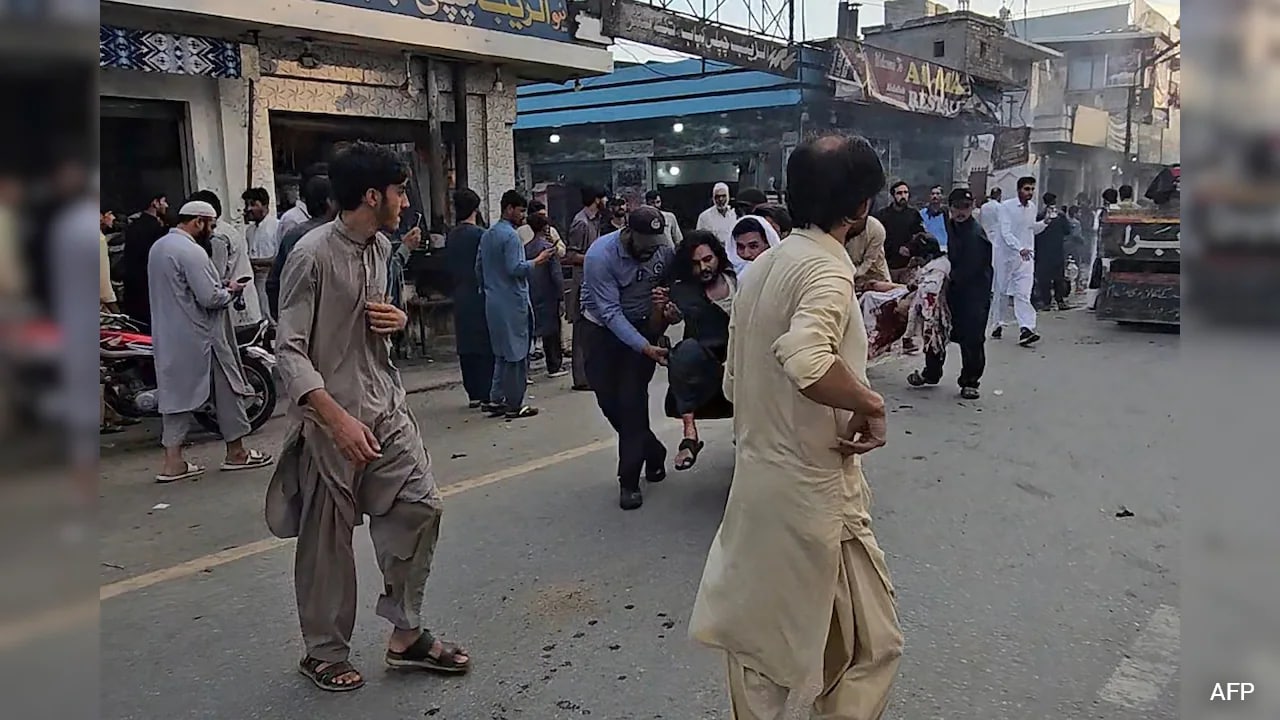
Fourteen people died because they dared to ask for peace.
When a suicide bomber detonated explosives at a crowd gathered in Kabal, a town nestled in Pakistan's scenic Swat Valley, he didn't just target a random assembly. He targeted a direct rejection of extremism. Demonstrators had crowded near a local police station, shouting anti-militant slogans, waving placards, and demanding an end to the violence that has choked Khyber Pakhtunkhwa province.
Footage of the immediate aftermath quickly spread across social media networks, showing shattered glass, bloodstained placards, and frantic rescue workers pulling bodies from the rubble. Local police chief Omar Khan confirmed that the death toll hit fourteen, splitting a grim casualty list between nine civilians and five police officers. More than two dozen others suffered severe injuries, filling local hospital wards to capacity as emergency responders worked through the hours of daylight.
The Grim Reality of Resurgent Militancy in Khyber Pakhtunkhwa
Swat isn't just any region. It carries heavy historical scars. Years ago, this valley fell under the brutal thumb of the Pakistani Taliban before a massive military operation supposedly cleared them out. Seeing citizens march openly against these exact militant factions should have been a sign of local resilience. Instead, it turned into a slaughterhouse.
Why did this happen now?
Militant networks are reorganizing across the rugged borderlands. They are sending a chilling message to anyone brave enough to organize public pushback. When locals step up to protest, they become high-profile targets. The bomber walked right into the heart of the demonstration before triggering his explosive vest, exploiting the open-air nature of a civilian gathering.
Bilal Faizi, a primary spokesperson for the provincial emergency service, noted that paramedics rushed multiple critically wounded victims to larger medical centers in Peshawar as condition updates worsened through the evening.
Accountability and the Fallout for Local Governance
Security forces have cordoned off the entire district. Checkpoints are swarming with armed patrols, and investigators are combing through digital video footage captured by CCTV cameras and cell phones to trace the bomber's exact entry path into Kabal.
Yet, patrols and cordons feel like reactive Band-Aids. Residents are asking hard questions that local politicians struggle to answer. How did a suicide bomber carrying lethal explosives slip past security cordons into a high-visibility public protest directly outside a police facility?
Protesters gathered precisely because they felt abandoned by ongoing security failures. They wanted protection. They wanted their children to grow up without the constant hum of insurgent threats and military lockdowns. This bombing proves that the threat isn't receding into history. It is adapting, striking directly at the civilian baseline of anti-terror resistance.
As provincial authorities launch formal investigations and promise crackdowns, the atmosphere in Khyber Pakhtunkhwa remains tense. Fear has a way of silencing communities faster than any government decree. Whether local populations can summon the courage to march again after such a brutal strike remains the defining question for the region's fragile future.