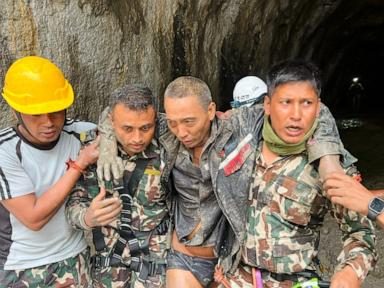
The operational window for human survival following a catastrophic structural collapse or prolonged environmental isolation is governed by strict physiological limits rather than arbitrary timeframes. When rescue teams extract survivors ten days after a natural disaster such as a severe flood, standard probabilistic models of human endurance are disrupted. Understanding how individuals survive extended entrapment requires shifting the analytical focus from mere calendar days to the precise intersection of environmental hydrology, microclimate thermodynamics, and human metabolic conservation.
The Physiological Constraints of Prolonged Entrapment
Human survival past the seventy-two-hour threshold depends on an increasingly narrow set of biological variables. The primary determinant of survivability is not caloric intake, but hydration status, followed closely by ambient thermal regulation. In flood scenarios, victims are frequently trapped in confined structural cavities where air pockets form beneath collapsed roofs or elevated foundations.
Dehydration acts as the primary systemic failure mechanism. The human body can tolerate complete starvation for weeks, provided water is accessible, but unmitigated fluid loss through respiration, insensible perspiration, and potential wound exudate leads to acute kidney injury and cardiovascular collapse within three to five days under optimal conditions. When individuals survive past a week in post-flood debris, specific environmental anomalies must be present. These include the availability of condensation, high localized humidity that reduces evaporative water loss through the skin, and the absence of traumatic crush syndrome.
Crush syndrome represents the second major biological filter. When heavy structural elements or massive water volumes apply sustained pressure to muscle tissue, cellular hypoxia occurs. Upon the release of that pressure during extraction, reperfusion injury floods the systemic circulation with myoglobin, potassium, and intracellular toxins, causing acute renal failure and sudden cardiac arrest. Successful rescue operations after ten days imply that the victims were either not subjected to major sustained mechanical compression or experienced intermittent pressure relief that prevented lethal tissue necrosis and subsequent rhabdomyolysis.
Thermodynamic Regulation in Submerged Environments
Floodwaters introduce aggressive thermal variables. Hypothermia can induce cardiac arrest within hours of immersion, yet victims who survive long-term isolation often find themselves in microclimates protected from direct wind shear and dynamic water currents. The physics of trapped air pockets within debris fields dictate that heat dissipation is slowed if the surrounding mass has high thermal inertia.
Convective cooling is minimized when air movement ceases inside a sealed void. If ambient temperatures remain within the thermoneutral zone—typically between twenty and twenty-four degrees Celsius—metabolic energy expenditure drops significantly. The human organism enters a state of metabolic down-regulation, reducing baseline caloric and oxygen demands. This biological adaptation mirrors forced conservation strategies observed in mammalian hibernation or profound physiological stress responses, where non-essential cellular functions are throttled to preserve core organ perfusion.
The Logistics of Extended Search and Extraction Operations
Transitioning an emergency response operation from a high-tempo rescue phase to a low-probability recovery phase introduces complex logistical trade-offs. Incident command structures face a difficult resource allocation matrix after the initial five-day window closes. The probability of finding live victims drops exponentially along a standard decay curve, causing standard operational frameworks to shift toward structural stabilization and sanitation.
Rescuers operating in post-flood environments must contend with severe infrastructure degradation. Access routes are compromised by silt deposition, bridge structural failures, and unstable mud masses that prevent heavy machinery deployment. Consequently, late-stage survivals are almost exclusively the result of localized acoustic signaling, canine scent tracking, or manual debris clearance driven by local community members who possess hyper-local terrain knowledge.
Acoustic detection systems and thermal imaging play secondary roles when debris is saturated with moisture. Waterlogged organic material and dense sediment attenuate sound waves and mask thermal signatures, rendering technological sensors less effective than physical probing and structural load path analysis. Rescuers must evaluate the vector of the floodwaters to determine where floating debris and residual air pockets likely accumulated, focusing human resources on deposition zones rather than random search grids.
Systemic Vulnerabilities in Disaster Response Architecture
Emergency management systems often fail to account for anomalous survival curves because resource deployment models rely on median statistical outcomes. When disaster planning assumes a hard ceiling for survivability, late-stage search protocols are prematurely terminated or under-resourced. This creates a systemic blind spot in disaster mitigation frameworks.
Optimizing future operational responses requires integrating dynamic survival probability mapping. Rather than applying a blanket time horizon across an entire disaster zone, algorithms must ingest localized variables including building material porosity, pre-flood water velocity profiles, and documented structural void ratios. If a collapsed multi-story structure features reinforced concrete slabs that prevent complete pancaking, the likelihood of long-term air pocket preservation increases exponentially, justifying extended manual extraction efforts well past the standard operational window.
Deploy specialized structural engineering assessment teams alongside initial swift-water rescue units to map high-probability void formations before floodwaters entirely recede, thereby establishing targeted extraction corridors for secondary search phases.