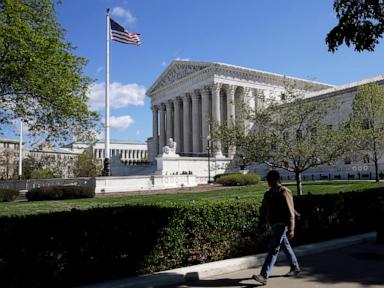
Big Oil just won a significant round in the legal boxing match over Louisiana’s disappearing coastline. The Supreme Court of the United States recently decided not to step into a fight regarding where these massive environmental lawsuits should be heard. It sounds like boring procedural jargon. It isn't. By refusing to hear the case, the High Court let a lower court ruling stand that moves these cases out of state courts and into federal ones.
If you’re a resident of Louisiana or an investor in energy, this matters. The shift from state to federal court is often the difference between a multi-billion dollar settlement and a dismissed case. State courts in Louisiana are often seen as more sympathetic to local parishes claiming their land was swallowed by the Gulf because of oil industry negligence. Federal courts? They’re generally viewed as a much tougher crowd for plaintiffs.
Why the Venue Shift Changes Everything
The heart of the matter lies in "removal." That’s the legal term for when a defendant—in this case, companies like Chevron and ExxonMobil—convinces a judge that a case started in a local courthouse actually belongs in a federal building. The energy companies argue that their work was done under the direction of federal wartime authorities or specific federal programs.
Local parishes like Plaquemines and Cameron disagree. They say the damage to the wetlands is a local issue involving state permits and coastal management laws. They want local juries to decide the fate of their marshes. But the U.S. Fifth Circuit Court of Appeals ruled that the federal government’s historical involvement in oil production—especially during World War II—gives federal judges jurisdiction.
When the Supreme Court declined to review that decision, they essentially gave the industry a green light to keep these cases in a venue that is historically more conservative and strictly follows federal rules of evidence. It's a huge blow to the "legacy" litigation movement that has haunted the Louisiana energy sector for decades.
The History of the Louisiana Coastal Zone Fight
You can’t understand this without looking at the map. Louisiana loses a football field of land every 100 minutes or so. It's a crisis. Decades of dredging canals for oil rigs and pipelines allowed salt water to creep into freshwater marshes. The plants died. The soil washed away.
Since 2013, various coastal parishes have filed dozens of lawsuits against hundreds of companies. They aren't just looking for an apology. They want billions for coastal restoration. The oil companies haven't just sat back. They’ve spent millions on legal fees to argue that they followed the rules of the time and that the land loss is actually due to the leveeing of the Mississippi River by the federal government.
By shifting these cases to federal court, the companies have successfully bypassed the "home court advantage" of the parishes. Federal judges are appointed for life and aren't subject to the same local political pressures as elected state judges.
The Federal Officer Removal Act Explained
The legal tool the companies used is called the Federal Officer Removal Act. It’s an old law. It was originally meant to protect federal employees from being harassed in state courts for doing their jobs. Over time, private companies have used it by arguing they were acting as "subcontractors" or "agents" for the federal government.
In the Louisiana cases, the oil companies pointed to the 1940s. During the war effort, the federal government basically told oil companies where to drill and how much to produce. The companies claim that because they were acting under federal orders to fuel the military, any environmental damage that happened as a result should be handled in federal court.
It's a clever argument. It’s also one that the Fifth Circuit bought into, and now, by omission, the Supreme Court has blessed.
What This Means for Future Environmental Litigation
This isn't just about Louisiana. It sets a precedent for how climate change and environmental damage cases are handled across the country. If a company can find a "federal hook"—some old government contract or a wartime mandate—they can escape state courts.
We’re seeing similar battles in California, Hawaii, and Massachusetts. Those states are suing oil companies for "deceptive marketing" regarding climate change. The companies are trying every trick in the book to move those to federal court too. The Louisiana outcome suggests the tide is turning in favor of the industry on the question of where these battles are fought.
Don't think for a second the parishes are giving up. They'll keep fighting in federal court, but the hill just got a lot steeper. They now have to prove their cases under federal standards, which are often more rigid when it comes to linking specific company actions to specific environmental outcomes.
Real World Economic Impacts
For the energy industry, this is a sigh of relief. Total liability for these coastal suits was estimated in the tens of billions. While the cases aren't dead, the "settlement value" likely dropped the moment the Supreme Court stayed out of it.
Investors like certainty. The threat of a massive, unpredictable state court verdict was a dark cloud over Louisiana’s energy economy. This ruling brings a bit of sunlight, even if the underlying legal questions about who destroyed the wetlands remain unanswered.
On the flip side, the state's coastal restoration fund is the big loser. Without massive settlements from the oil industry, the money to build rock breakwaters and pump sediment to create new land has to come from somewhere else. Usually, that means the taxpayers.
The Strategy for Parishes Moving Forward
If you're a legal strategist for a Louisiana parish, you're currently rewriting your playbook. You can't rely on the "local jury" factor anymore. You have to pivot to a strategy that holds up under the scrutiny of a federal judge.
Expect to see more focus on specific permit violations. Rather than broad claims about "destroying the coast," lawyers will likely zoom in on technical failures to properly plug wells or restore canal banks as required by federal law. It's a more surgical approach. It's also much harder to win.
The companies will likely move for "summary judgment" soon. That's a request for the judge to throw the case out before it even reaches a trial. In federal court, those motions are granted much more frequently than in state court.
Tracking the Next Steps
Keep an eye on the specific cases in Plaquemines Parish. Those are the "bellwether" cases. Whatever happens there will dictate the settlements for the rest of the coast.
If you own property in these areas, don't expect a windfall anytime soon. This legal saga started over a decade ago, and this Supreme Court non-decision just ensured it'll probably drag on for another ten years.
The immediate next step is for the federal district judges in New Orleans and Lafayette to set new schedules. They'll start looking at decades-old documents and testimony from retired engineers. It’s a slow, grinding process. But for the oil companies, a slow grind in federal court is a million times better than a fast loss in a local parish courthouse.
The door is effectively closed on state-court-driven coastal litigation in Louisiana. The industry won the venue. Now they just have to win the merits. Given the shift in landscape, they're feeling better about their chances than they have in years. If you’re following this, stop waiting for a "big win" for the environment in the short term. The legal path just got much more corporate-friendly.