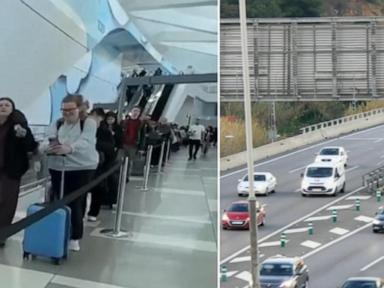
Traditional media outlets want you to look at the massive crowds gathering at the nation's airport security gates this holiday weekend and swallow a single, lazy narrative. They call it a universal travel boom. They point to the long lines over Juneteenth and the record-breaking projections for the Fourth of July, telling you that the American consumer is completely unstoppable, universally flush with cash, and packing their bags in historic numbers.
They are lying to you. Or, at best, they are fundamentally misinterpreting the numbers staring them right in the face.
The reality of summer travel is not a rising tide lifting all boats. What we are witnessing is a fractured, highly stratified market. The headline numbers masking this polarization are leading everyday travelers directly into a brutal logistical trap. If you follow the standard holiday travel playbook, you are setting yourself up to pay peak prices for a severely downgraded experience.
The K-Shaped Flight Manifest
Look beneath the surface of the mainstream summer forecasts and the cheerful narrative collapses. The hard data reveals a deeply split reality. Financial institutions like Bank of America and advisory firms like Deloitte have tracking data that shows American travel has split into a starkly unequal pattern.
Nearly 40% of lower-income households are staying home entirely this summer. They are completely grounded by relentless inflation and an oil shock that has pushed national average gas prices up past $4.50 a gallon. For the bottom half of the economic spectrum, leisure travel has become one of the first discretionary expenses to hit the chopping block.
So who is filling up the terminals? The top earners. Households making $100,000 or more now account for 55% of the entire traveling public, a significant jump from prior years. High-income millennials are spending aggressively, traveling frequently, and refusing to compromise on premium accommodations or international flights.
When you see a record-breaking holiday forecast, you are not looking at a broad economic recovery. You are looking at an affluent minority traveling twice as much, competing fiercely for the exact same premium inventory, and driving up prices for everyone else. The industry is adjusting its entire infrastructure to cater exclusively to this top tier, leaving middle-class travelers to fight over overpriced crumbs.
The Airline Supply-Side Squeeze
The mainstream travel advice ignores the deliberate operational retreat happening behind the scenes at major carriers. Legacy airlines are facing severe financial pressure from fuel repricing. Their response is a stealthy reduction in flight capacity that directly harms the average consumer.
Nineteen of the top twenty global airlines have actively slashed their flight schedules ahead of the summer rush. To manage costs, carriers are aggressively pulling back on what the industry calls edge-of-day flying. These are the early morning departures, late-night arrivals, and red-eye flights that traditionally served as a relief valve for budget-conscious passengers.
[Traditional Air Travel Infrastructure]
    ├── Peak-Hour Slots (Retained for premium corporate/high-yield flyers)
    └── Edge-of-Day Flying (Systematically cut by airlines to save fuel)
            └── Result: Extreme artificial density packed into fewer flights
By cutting these off-peak flights, airlines are forcing the exact same volume of high-yield travelers into a much narrower window of daytime operations. The mathematical result is a massive spike in artificial density. Terminals are more congested not because more total humans are flying, but because fewer planes are moving them throughout the day.
When a flight gets delayed or canceled during a holiday weekend, the system no longer has the slack to absorb the shock. With planes running at near-maximum capacity across fewer total daily routes, a single mid-day thunderstorm can leave you stranded at an intermediate hub for days. There are simply no empty seats on subsequent flights to accommodate displaced passengers.
Dismantling the Mid-June Long Weekend Myth
The belief that holiday three-day weekends are the ideal time to maximize your annual leave is a financial illusion. The premium you pay in both money and stress to travel over a weekend like Juneteenth completely erases any perceived benefit of an extra day off work.
Let's dissect the actual financial mechanics of booking a trip during these specific windows compared to a standard, non-holiday period.
| Metric | Holiday Three-Day Weekend | Mid-Week Alternative |
|---|---|---|
| Domestic Car Rental Rates | 10% premium over base rates | Standard baseline pricing |
| Average TSA Wait Times | 45 minutes or greater | Less than 15 minutes |
| Flight Delay Probability | Exceeds 35% during peak windows | Less than 12% on Tuesdays/Wednesdays |
| Hotel Room Yield Rates | Maximum surge pricing enforced | Significant volume discounts available |
The standard traveler operates on a rigid schedule: fly out Thursday evening or Friday morning, return Sunday night or Monday afternoon. Because this behavior is entirely predictable, airlines and hotels use dynamic pricing algorithms to extract maximum revenue from these exact hours.
You are effectively paying a massive congestion tax. You spend your extra day off standing in a TSA queue that snake outside the terminal doors, sitting on an asphalt taxiway waiting for a gate to open, or fighting for space at a chaotic hotel check-in desk. You are trading hard-earned capital for an experience that resembles a logistical survival challenge rather than a vacation.
How to Exploit the Real Market Inefficiencies
If you want to travel this summer without being exploited by the current system, you must actively run away from the herd. The current market conditions have created distinct operational blind spots that smart consumers can exploit.
Abandon the Traditional Weekend Geometry
Stop thinking of vacations in blocks of Friday to Monday. The lowest-priced, least-congested flights systematically depart on Tuesdays and Wednesdays. By shifting your travel window to the middle of the week, you instantly bypass the surge-pricing algorithms. You also avoid the dense crowds of high-income holiday flyers who are locked into corporate weekend schedules.
Track the Low-Cost Carrier Desperation
While legacy airlines are cutting capacity to protect margins, ultra-low-cost carriers and independent tour operators are facing a terrifying drop-off in conversion rates. Because budget-conscious consumers are staying home, these airlines are struggling to fill seats on specific competitive routes. Watch for sudden, last-minute price drops from discount operators who are forced to slash ticket prices to stimulate demand, even as their own fuel costs rise.
Chase the Cold
The affluent traveling public is currently obsessed with mainstream coastal beaches and crowded European capitals. This has created a massive pricing disparity for inland and northern destinations. Look for regional hubs that offer outdoor recreation without the coastal premium. Choosing a non-traditional location allows you to bypass the infrastructure bottlenecks that clog primary tourist destinations during holiday rushes.
The system is currently optimized to extract maximum revenue from predictable consumer behavior while providing a diminished operational product. Continuing to book standard holiday weekend travel under the guise of a summer boom is a losing game. The only way to win is to refuse to play by their schedule. Just stay home when they tell you to go, and go when the terminals are empty.


