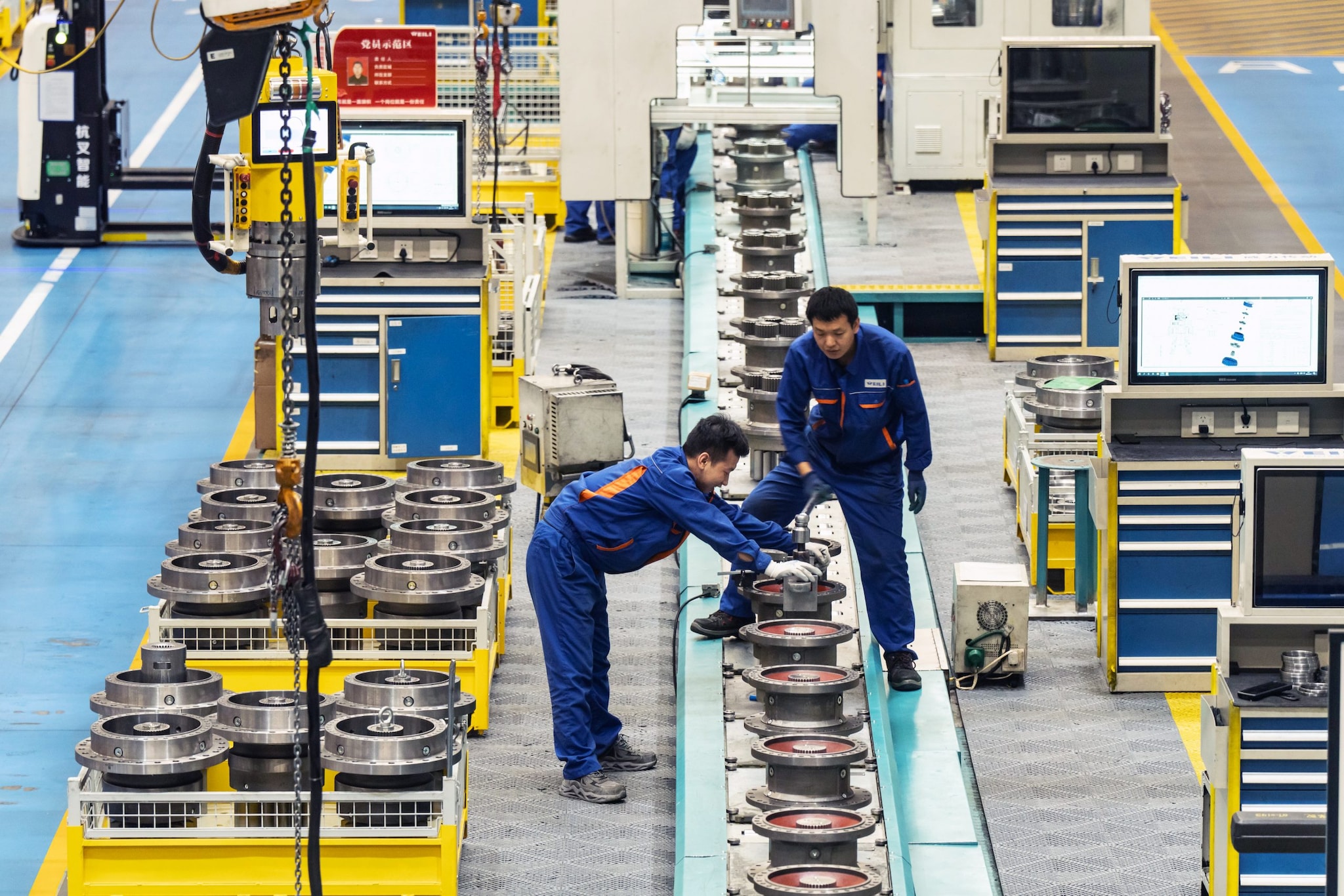
The silence of a stalled factory is a heavy thing. It hangs in the air, thick with the smell of unheated oil and the ghosts of quotas unmet. For months, the industrial parks winding through the outskirts of Shenzhen and Suzhou carried that exact weight. You could walk past the corrugated steel gates and hear nothing but the whistle of the wind.
Then, the metal woke up.
To understand why the latest balance sheets out of Beijing matter, you have to leave the glass towers of the financial districts behind. You have to look at the grease on a worker's overalls. Across China, industrial profits just surged at their fastest pace in over two years. On paper, it looks like a clean, dry spike on a Bloomberg terminal. In reality, it is a chaotic, loud, and deeply human scramble to turn the lights back on.
The Man in the Blue Overalls
Let us look at a hypothetical factory owner named Mr. Zhou. He manages a mid-sized automotive component plant in Zhejiang province. For the past twenty-four months, Zhou’s life was a masterclass in survival. Raw material costs fluctuated wildly. Foreign demand felt like a flickering candle. His primary job was not growth; it was keeping fifty families employed while his profit margins eroded to the thickness of a fingernail.
Every morning, Zhou would sit in his cramped office, staring at spreadsheet rows bleeding red. When a factory loses money, it is not just an accounting problem. It is a psychological weight. It means delayed maintenance. It means cutting back on the canteen budget. It means looking into the eyes of a machinist who has worked for you for a decade and wondering if you will have to tell him to stay home next month.
But three months ago, something shifted.
The orders did not arrive in a grand flood. They trickled in first. A slight uptick in domestic demand for electric vehicle chassis. A sudden, urgent request for components from a logistics firm in Europe. Zhou turned one assembly line back on. Then another.
When the official data dropped, showing a massive rebound in industrial profits, Zhou did not read the report. He did not need to. He could already hear the answer in the steady, rhythmic thrum of the stamping presses vibrating through his office floor.
The Chemistry of a Rebound
Economic indicators often feel abstract, like weather reports for a country you have never visited. When commentators talk about a surge in industrial profits, they tend to focus on macroeconomic policy, central bank liquidity, and export-import ratios. They treat the economy like a massive, automated machine.
It is not. The economy is a massive pile of human decisions.
The recent surge was driven heavily by two sectors: equipment manufacturing and consumer goods. Think about what that actually means. Equipment manufacturing is the creation of tools that make other things. When those profits rise, it means companies are finally brave enough to buy new gear. They are betting on the future again.
Consider the mathematics of a factory turnaround. In a downturn, a factory faces fixed costs that remain brutal no matter how much it produces. Rent, basic electricity, and core staff salaries must be paid. If the factory operates at forty percent capacity, it loses money rapidly. But if demand rises even slightly, pushing capacity to eighty percent, the math flips beautifully. The fixed costs are covered, and every extra widget produced is almost pure profit.
That is the phenomenon we are witnessing right now. It is the sudden acceleration of a massive engine that finally cleared a choked fuel line.
The Fear That Lingers
It is easy to get swept up in the optimism of a sharp upward curve on a chart. The numbers look undeniable. A growth rate unmatched in over twenty-four months suggests a definitive victory.
But talk to anyone actually running these businesses, and the tone is far more cautious. The memory of the lean years is too fresh.
The truth is, this surge is happening against a backdrop of deep structural anxiety. The domestic property market remains on shaky ground. Consumer confidence inside China is not a roaring fire; it is a hearth that requires constant stoking. Many factory owners are pocketing these new profits not to expand, but to pay down the debts they accumulated during the lean years. They are building fortresses, not empires.
There is a vulnerability in this recovery that the raw statistics mask. If global trade tensions flare up tomorrow, these newly revived supply chains could easily tighten again. The profit surge is a breath of fresh air, but the patient is still recovering on the hospital bed.
The Global Ripple
What happens in those noisy, metal-clanged provinces matters far beyond China's borders. We live in an era where an industrial hiccup in Ningbo alters the price of a smartphone in Chicago and changes the shipping schedule of a port in Rotterdam.
When Chinese industrial profits rise, these companies start buying again. They buy iron ore from Australia. They buy specialized precision tools from Germany. They buy semiconductors from across Asia. The surge acts as a giant vacuum cleaner, sucking in raw materials and engineering expertise from every corner of the map.
It also changes the global inflation narrative. For months, the fear was that a slowing Chinese economy would export deflation to the rest of the world, pulling down global prices because of overcapacity. A profitable Chinese industrial sector changes that dynamic completely. It means pricing power is returning. It means the global supply chain is finding its footing, even if that footing feels precarious.
The Sound of the Shift
Walk back onto the factory floor with Mr. Zhou. The shift is ending. The workers are punching out, their faces tired but relaxed in a way they haven't been since the world changed a few years ago. There is overtime pay on the horizon. There is a sense of predictability.
The cold ledger of economics will record this period as a statistical anomaly, a sharp peak in a line graph documenting the post-crisis era. Analysts will debate the exact percentage points in boardroom meetings, assigning credit to various government initiatives and currency adjustments.
But the real story isn't found in the percentage points. It is found in the simple, undeniable reality that after a long, quiet winter, the machines are running hot again, and the people who run them can finally afford to look past next Tuesday.