The death of three children in a roadside improvised explosive device (IED) blast in the North Waziristan district of Khyber Pakhtunkhwa (KP) is not an isolated tragedy but a data point in the escalating failure of localized security architectures. This event serves as a brutal audit of the current counter-insurgency (COIN) model in Pakistan’s borderlands. While conventional reporting focuses on the immediate casualty count, a strategic analysis reveals a decaying security equilibrium where non-state actors utilize low-cost, high-impact kinetic tools to disrupt the state’s claim to a monopoly on violence.
The Triad of Borderland Instability
The persistent violence in the KP region, specifically within the tribal districts, functions through three interlocking variables. These variables dictate the frequency and lethality of attacks, regardless of the specific group claiming responsibility.
- The Geographic Imperative: The porous nature of the Durand Line provides insurgents with tactical depth. The ability to shift assets across a border that remains physically and politically difficult to seal creates a "sanctuary loop."
- Technological Asymmetry: The use of IEDs represents a highly efficient cost-to-effect ratio for insurgent groups. A device costing less than $50 to manufacture can immobilize multi-million dollar military hardware or, as seen in this instance, inflict catastrophic psychological and physical damage on the local population, thereby eroding trust in the state's protective capabilities.
- Governance Vacuums: The merger of the Federally Administered Tribal Areas (FATA) into Khyber Pakhtunkhwa was intended to normalize the region. However, the slow pace of administrative integration has left "gray zones" where traditional tribal law is weakened, yet modern judicial and police presence is insufficient to deter militant ingress.
The Mechanics of the IED Pipeline
The explosion that killed three children highlights the indiscriminate nature of area-denial weapons. To understand why these incidents persist, one must deconstruct the IED lifecycle within the KP context.
The manufacturing process relies on dual-use precursors. Agricultural fertilizers containing ammonium nitrate and commercial explosives used in local mining sectors are easily diverted. Because these materials are essential to the local economy, the state faces a "regulation paradox": tightening control over these chemicals suffocates the legitimate economy, potentially driving more civilians toward the shadow economy of the insurgency.
The deployment phase often utilizes "command-wire" or "pressure-plate" triggers. In the North Waziristan case, the proximity to civilian pathways suggests either a failure in target identification or a deliberate strategy of terror to deter local cooperation with security forces. When children become the primary casualties, the insurgent group faces a momentary loss in social capital, yet the overarching strategic goal—making the territory ungovernable for the state—is still advanced through the resulting atmosphere of fear.
Friction Points in Counter-Insurgency Operations
The Pakistani state’s response to the resurgence of the Tehrik-i-Taliban Pakistan (TTP) and affiliated splinters has been hampered by a shift in the regional geopolitical alignment. The withdrawal of international forces from Afghanistan changed the risk calculus for local militants.
The Intelligence Bottleneck
Human Intelligence (HUMINT) is the primary requirement for preempting IED placement. However, the "trust deficit" between the local population and the centralized security apparatus creates a bottleneck. Residents often find themselves caught between the "daytime state" (military patrols) and the "nighttime state" (insurgent presence). Providing information to the authorities carries a high risk of lethal retribution, which the state has not yet proven it can consistently prevent.
Resource Misallocation
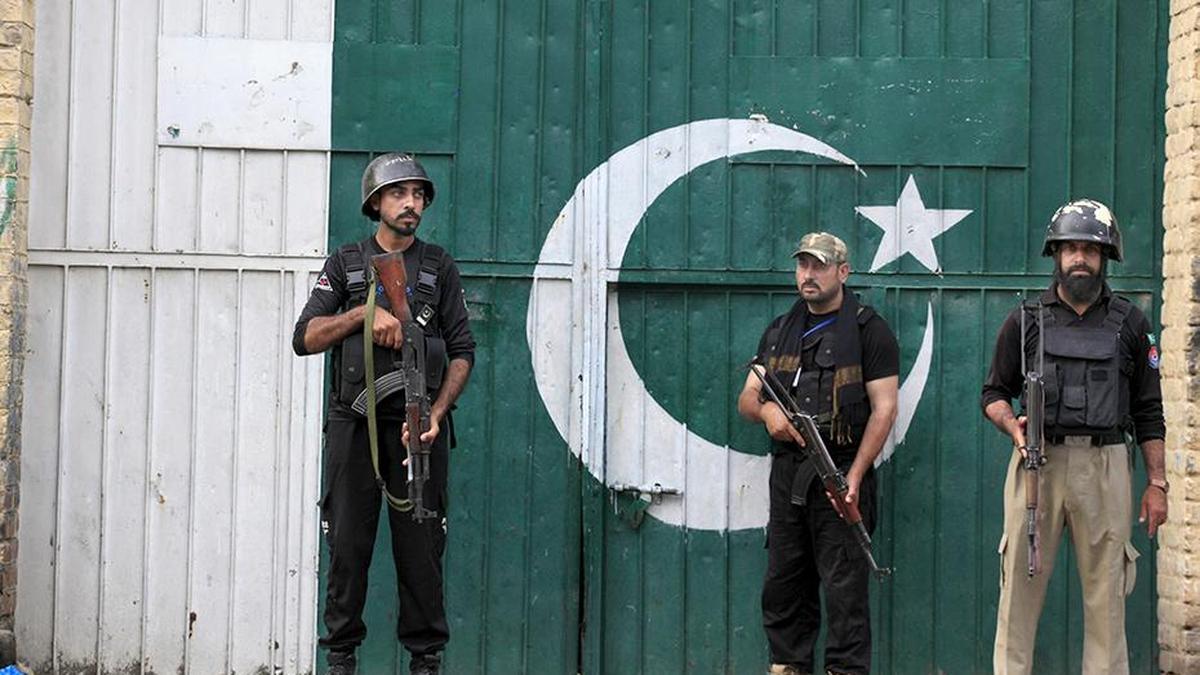
Security operations in KP frequently rely on "cordon and search" maneuvers. While these show visibility, they are reactive rather than predictive. The lack of a robust, localized police force—distinct from the paramilitary Frontier Corps—means that the fine-grained social monitoring required to identify radicalization or the movement of explosives is absent. The military is a blunt instrument attempting to perform a surgical police function.
The Economic Cost Function of Insecurity
Beyond the immediate human loss, the killing of civilians in the tribal belt triggers a specific economic contraction.
- Capital Flight: Local traders and landowners relocate to urban centers like Peshawar or Islamabad, draining the region of its indigenous middle class.
- Infrastructure Degradation: Development projects, from schools to roads, are halted as contractors face extortion or physical threats.
- Opportunity Cost: The federal government’s diverted spending toward security operations in KP reduces the available budget for the "Merger Development Package," creating a self-reinforcing cycle of poverty and radicalization.
The death of these children is a lagging indicator of a systemic failure to secure the "last mile" of the Pakistani state's authority.
Strategic Forecast: The Shift Toward Urban Centers
Data from the last 24 months suggests that while the tribal districts remain the primary kinetic theater, there is a clear "spillover effect" toward the settled districts of KP and northern Balochistan. The tactics refined in North Waziristan—specifically the use of targeted IEDs and sniper fire—are being exported.
The state currently operates on a "containment" logic, attempting to keep the violence localized to the border regions. This strategy is reaching its limit. Without a fundamental shift in how the state manages the Afghan border and a massive acceleration of the civil-administrative presence in the former FATA, the frequency of these "collateral" tragedies will increase.
The immediate requirement is not just increased patrolling, but the deployment of persistent surveillance technology and a reformed witness protection program that allows the local population to assist in dismantling the IED networks without facing certain death. The failure to adapt the security architecture will ensure that the "Three Children" headline remains a recurring feature of the regional landscape, rather than a catalyst for change.
The state must prioritize the hardening of civilian transit corridors and the implementation of a rigorous, technology-backed border management system that distinguishes between legitimate trade and the movement of insurgent materiel. Anything less is a tactical stall in a strategic retreat.