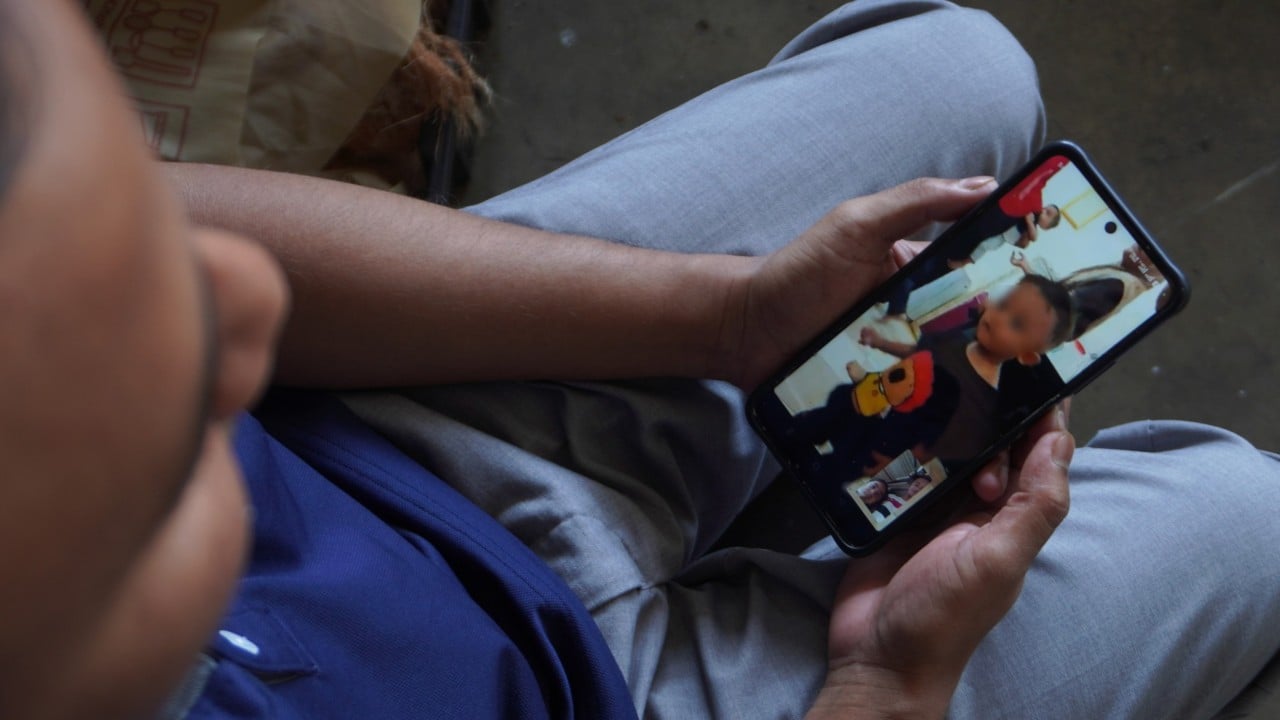
The displacement of the Rohingya population into Malaysia is not a temporary humanitarian friction; it is a stable, self-reinforcing equilibrium of legal exclusion and economic integration. While media narratives focus on the emotional weight of religious holidays like Eid, a rigorous analysis reveals that the "family separation" experienced by these individuals is a direct output of a specific policy architecture designed to extract labor while denying residency. This system operates on a logic of deliberate ambiguity, where the absence of a formal legal framework (Malaysia is not a signatory to the 1951 Refugee Convention) creates a permanent underclass that fulfills specific macroeconomic needs without incurring the long-term social costs of citizenship.
The Three Pillars of Persistent Liminality
The status of the Rohingya in Malaysia is defined by three intersecting structural constraints that prevent social integration and force prolonged familial separation. These are not accidental outcomes but are the systemic results of how the Malaysian state manages non-citizen labor.
1. The Legal Vacuum and the Informalization of Survival
Because Malaysia lacks a domestic legal framework to distinguish between "undocumented migrants" and "refugees," the Rohingya are categorized under the Immigration Act 1959/63. This creates a high-risk environment where the threat of detention is constant. The psychological and physical separation from family is codified here: without legal status, the right to family reunification is non-existent. The mechanism at work is the Externalization of Risk, where the state avoids the cost of welfare, education, and healthcare by keeping the population in a state of legal "non-existence."
2. The Economic Dependency Ratio
The Malaysian economy, particularly in the construction, agriculture, and low-end service sectors, relies on a "shadow workforce." The Rohingya provide a pool of flexible, low-cost labor. However, this economic utility is decoupled from social rights. This creates a Labor-Rights Asymmetry: the market demands their presence, but the legal system demands their invisibility. Family separation persists because the economic model only values the individual laborer, not the family unit. Bringing family members into Malaysia increases the "risk profile" for the laborer, as larger groups are more visible to enforcement agencies.
3. The Transnational Remittance Trap
For the Rohingya in Malaysia, the "Eid torn from families" is a function of the Remittance-Survival Loop. Most individuals are the primary breadwinners for family members remaining in camps in Cox’s Bazar, Bangladesh, or those still in Rakhine State, Myanmar. A significant portion of their informal earnings is funneled through "Hundi" or "Hawala" systems—informal money transfer networks.
The cost of this capital flight is two-fold:
- Reduced Domestic Mobility: High remittance requirements prevent the accumulation of capital needed to move out of the informal sector.
- Permanent Transience: The worker never settles because their primary financial obligation is external.
The Cost Function of Statelessness
The inability to celebrate Eid with family is the visible symptom of a broader "Cost Function." Every action a Rohingya takes in Malaysia carries a hidden tax—a surcharge for lack of status.
- The Safety Surcharge: Paying higher-than-market rates for housing to landlords willing to overlook the lack of documentation.
- The Healthcare Penalty: Accessing private clinics or paying "foreigner rates" at government hospitals, which are often prohibitively expensive.
- The Education Deficit: The exclusion of Rohingya children from the national school system creates a multi-generational poverty trap.
When these costs are aggregated, the probability of family reunification through legal or safe channels approaches zero. The "separation" mentioned in the original text is actually a state of forced balkanization of the family unit, where members are scattered across geographies to hedge against the total loss of the family's earning potential. If one member is detained in Malaysia, the members in Bangladesh must rely on another relative elsewhere.
The Geopolitical Stasis and ASEAN Non-Interference
The persistence of the Rohingya crisis within Malaysia is also a byproduct of the ASEAN "Non-Interference" principle. This diplomatic bottleneck prevents a regional solution to the root cause (the disenfranchisement in Myanmar) and the secondary symptoms (the secondary movement to Malaysia).
The Malaysian government's strategy has been one of Fluctuating Tolerance. During periods of regional diplomatic tension or humanitarian peaks, the state may signal compassion. However, during periods of economic downturn or domestic political pressure, this shifts toward "crackdowns" and increased enforcement. This volatility is a primary driver of family separation; the risk of bringing family members across borders increases during these enforcement spikes, leading to the "staying apart to stay safe" strategy.
Structural Bottlenecks in Resettlement
Resettlement to third countries (such as the US, Canada, or Australia) is often presented as the ultimate solution. However, the data suggests this is a statistical improbability for the vast majority. The bottleneck is the Global Resettlement Quota vs. Growth Rate. The number of refugees globally far outpaces the available spots in resettlement programs. For a Rohingya individual in Kuala Lumpur, the wait time for UNHCR processing and subsequent third-country acceptance can exceed a decade.
This creates a "Waiting Room Effect." Individuals spend their most productive years in a state of suspended animation—not quite integrated into Malaysia, yet unable to leave. The emotional toll during religious festivals is the realization that the "temporary" displacement has become a permanent reality.
Operational Realities of the Informal Labor Market
To understand why this population remains despite the hardships, one must look at the Migration Incentive Structure. Even with the risk of detention, the wage differential between informal work in Malaysia and the total lack of opportunity in the camps of Bangladesh remains high enough to drive "push" and "pull" factors.
- Average monthly earnings in informal Malaysian sectors: 1,200 - 1,800 MYR.
- Cost of living for a single laborer: 600 - 800 MYR.
- Remittance potential: 400 - 800 MYR.
This math sustains the migration, but it does not sustain a family. The economic reality is that a single person can survive and send money home, but a family unit of five cannot survive on those same informal wages given the "Safety Surcharge" mentioned earlier.
The Strategic Path Forward: Formalizing the Informal
The current policy of "ignore and enforce" is failing both the Malaysian state and the Rohingya population. A shift toward a Managed Regularization Model would provide a pathway to stability. This does not require granting citizenship, but it does require moving the population from a state of "illegal" to "authorized."
- Work Authorization Cards: Issuing sectoral work permits to UNHCR cardholders would bring the Rohingya into the formal tax base and allow for better monitoring of labor standards. This would eliminate the "Labor-Rights Asymmetry" and reduce the power of predatory middlemen.
- Access to Basic Services: By allowing Rohingya children into the national education system on a fee-paying basis (offset by international aid), Malaysia would mitigate the long-term risk of a disenfranchised, uneducated underclass.
- Regional Responsibility Sharing: Moving beyond the "Non-Interference" policy to a "Constructive Engagement" model within ASEAN, specifically pressuring for the safe, voluntary, and dignified return of Rohingya to Myanmar with guaranteed rights.
The strategic play is not found in humanitarian sentiment but in the recognition that a permanent, undocumented underclass is an economic and security liability. Formalizing their presence—even through a temporary, renewable "Guest Worker" status specifically for refugees—would stabilize the labor market, increase public safety through better registration, and finally allow the family unit to function as a stabilizing social force rather than a fragmented economic casualty.
The cycle of "celebrating alone" will only break when the economic utility of the Rohingya is matched by a regulated legal status that recognizes their presence as a permanent, rather than a transient, feature of the Southeast Asian landscape.