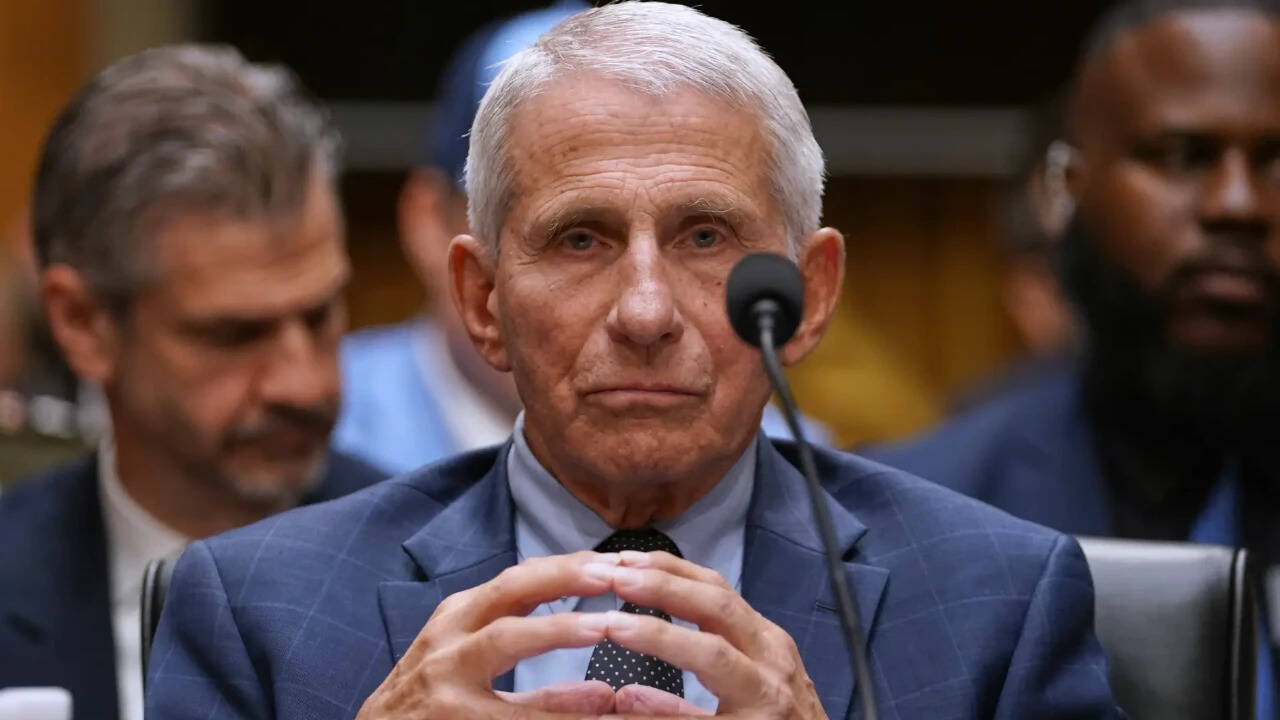
Legislative oversight functions through institutional leverage, transforming information requests into compliance mandates backed by the threat of penalization. When a congressional panel votes to hold a former executive official in contempt for declining to answer specific inquiries, the event represents a breakdown of cooperative information exchange and an escalation into formal procedural conflict. Understanding this mechanism requires deconstructing the jurisdictional boundaries of congressional committees, the legal doctrines governing executive branch testimony, and the systemic incentives driving high-stakes political friction.
The Jurisdictional Framework of Congressional Subpoenas
Congressional oversight derives its authority from the legislative function itself. Lawmakers cannot draft effective statutes or allocate budgets rationally without gathering facts. This investigative power, while not explicitly enumerated in the text of the United States Constitution, has been repeatedly affirmed by the Supreme Court as an essential ancillary to the legislative power.
Committees possess the statutory authority to issue subpoenas compelling the production of documents and testimony. When an individual refuses to comply, the issuing body initiates a multi-stage enforcement protocol:
- Issuance and Deposition: A committee issues a subpoena specifying the scope of required testimony or records. The witness appears, accompanied by legal counsel, to answer questions under oath.
- The Assertion of Privilege: Witnesses frequently counter subpoenas by invoking executive privilege, attorney-client privilege, or statutory protections, creating a legal threshold where executive secrecy clashes with legislative inquiry.
- The Contempt Citation: If a witness refuses to answer without a legally recognized privilege, the committee may vote to recommend a citation for contempt of Congress to the full chamber.
- Referral to the Executive Branch: A full chamber vote finding an individual in contempt results in a referral to the Department of Justice for potential grand jury indictment and criminal prosecution under federal statute.
This architecture creates a structural paradox. The legislative branch relies on the executive branch—specifically the Department of Justice—to prosecute individuals who defy congressional mandates. When political alignment or executive policy dictates non-prosecution, the criminal contempt mechanism stalls, rendering the legislative penalty largely symbolic unless enforced through civil litigation or internal disciplinary procedures.
The Information Asymmetry Deficit
Congressional hearings involving high-profile scientific or administrative leaders often function as rhetorical arenas rather than investigative fact-finding missions. This dynamic creates a distinct information deficit that alters the incentives for both parties.
Lawmakers operate under short-horizon electoral pressures. Their primary objective during televised sessions is often the generation of soundbites that resonate with constituent bases or media outlets. Consequently, questions are structured not to elicit nuanced operational data, but to corner the witness into binary admissions.
Conversely, career administrators and scientific advisors operate within bureaucratic risk frameworks designed to mitigate liability, protect agency institutional capital, and maintain policy consistency. When questioned about past internal deliberations, policy formulations, or informal communications, witnesses face severe downside risks if their statements diverge from established agency positions or leave room for selective public misinterpretation.
This structural mismatch generates a defensive posture. Witnesses rely on precise legal definitions, narrow interpretations of their former job descriptions, and claims of faded memory or lack of direct jurisdiction over contested decisions. The resulting dialogue is characterized by strategic evasion on one side and performative interrogation on the other, yielding minimal net increase in verified operational knowledge.
The Limits of Criminal Contempt as a Coercive Instrument
Holding an individual in contempt of Congress carries significant reputational weight, but its practical efficacy as a coercive tool depends entirely on downstream enforcement variables.
Under Title 2, Section 192 of the United States Code, refusal to answer questions pertinent to a congressional inquiry constitutes a misdemeanor punishable by a fine and imprisonment. However, historical precedent demonstrates that the Department of Justice exercises independent prosecutorial discretion when evaluating referrals from Congress.
[Congressional Committee]
       │
       ▼ (Issues Subpoena)
[Executive Official]
       │
       ▼ (Refuses to Answer)
[Contempt Vote]
       │
       ▼ (Refers to DOJ)
[Executive Prosecution Decision] ──► [Indictment] OR [Declination]
When the target of a contempt citation is a former official whose actions aligned with or were insulated by executive branch policy, the likelihood of federal prosecution diminishes significantly if the current administration views the precedent as threatening to its own executive prerogatives. This structural interdependence neutralizes the legislative branch's primary punitive lever, forcing committees to seek alternative remedies such as civil enforcement suits in federal district court. Civil suits bypass the executive branch's criminal prosecution monopoly, but they introduce prolonged judicial delays that often outlast the legislative term of the committee members involved.
Strategic Implications for Future Oversight Cycles
The recurring deployment of contempt citations in high-profile legislative investigations signals a permanent shift in how inter-branch disputes are managed. As political polarization deepens, oversight is increasingly utilized as a mechanism for political positioning rather than consensus-driven fact-finding.
To alter this trajectory, structural reforms would be required at the procedural level. These include automating civil enforcement mechanisms to bypass Department of Justice discretion, establishing specialized legislative courts to adjudicate privilege disputes expeditiously, or codifying explicit timelines for executive branch compliance. Absent such institutional modifications, contempt votes will remain protracted political signals rather than effective instruments of administrative correction.