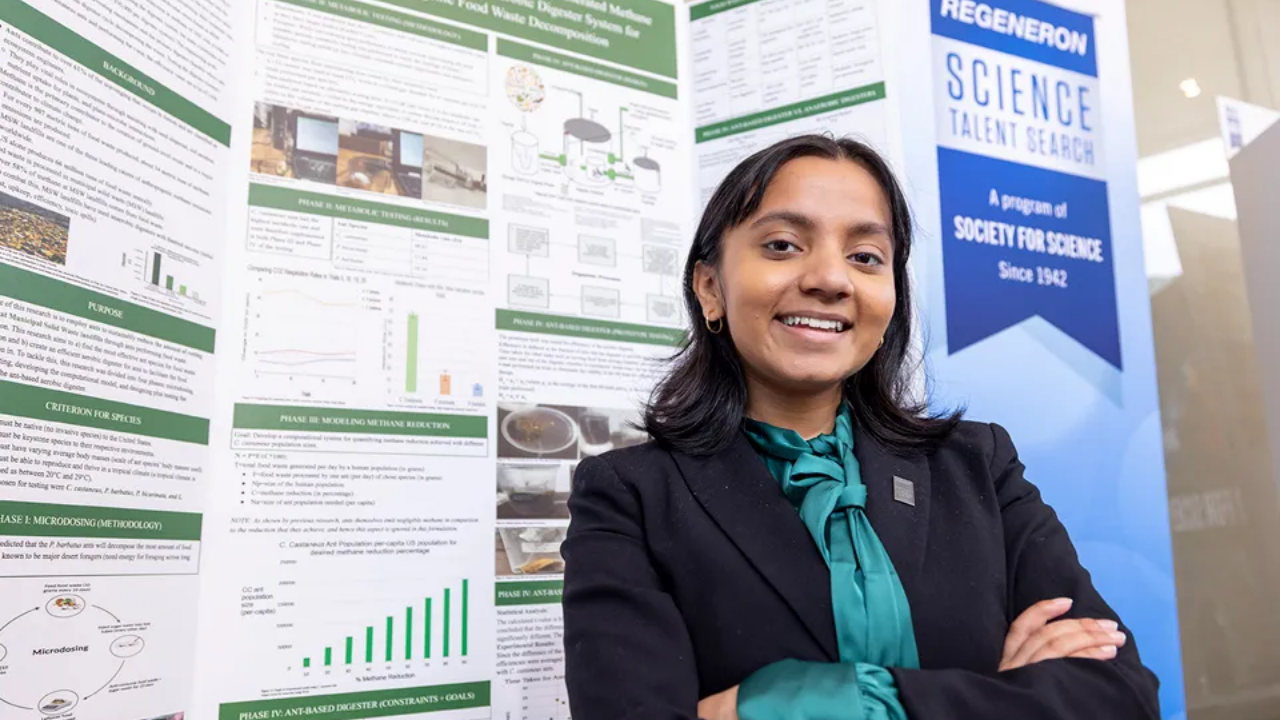
Organic waste decomposition efficiency is fundamentally bound by surface area constraints, enzymatic kinetic limits, and residence time distributions within closed reactors. When an eighteen-year-old Texas student engineered an ant-based organic waste digester achieving an eighty-three percent degradation efficiency metric, popular reporting framed the achievement through the lens of youthful ingenuity. This narrative obscures the underlying engineering constraints and thermodynamic realities governing insect-mediated bioconversion. Evaluating the prototype requires stripping away media hyperbole to analyze the kinetic rates, microbial symbiosis, and metabolic throughput driving the system.
The Stoichiometry of Insect-Mediated Biodegradation
Biological degradation of complex polysaccharides such as cellulose, hemicellulose, and lignin depends on the mechanical comminution of feedstock coupled with enzymatic hydrolysis. Traditional mechanical shredders consume high electrical energy inputs and frequently clog when processing variable-moisture municipal solid waste. Insect-mediated systems bypass traditional mechanical preprocessing stages by utilizing biological mandibles for initial particle size reduction.
In an ant-based digester, the biological unit operates as a continuous stirred-tank reactor analog where incoming lignocellulosic material undergoes a two-step reduction phase:
- Physical Comminution: Formicines and related eusocial insects utilize mouthparts to fracture cell walls, exponentially increasing the exposed surface area available for subsequent microbial colonization.
- Enzymatic Secretion and Symbiosis: Gut microbiomes secrete specialized cellulases and xylanases that cleave $\beta$-1,4-glycosidic bonds in cellulose chains without requiring harsh chemical catalysts or thermal pretreatment.
The reported eighty-three percent efficiency metric measures mass loss of the input substrate over a defined temporal window. However, mass loss alone fails to account for moisture evaporation, respiration losses, and the accumulation of recalcitrant lignin fractions that resist biological assimilation. True system efficiency requires calculating the ratio of chemically liberated carbon converted into microbial biomass or targeted volatile fatty acids versus unreacted input mass.
[Raw Feedstock]
       │
       ▼
[Physical Comminution (Mandibular Action)] ──► Surface Area Expansion
       │
       ▼
[Enzymatic Hydrolysis (Gut Microbiome)] ─────► Cleavage of Beta-1,4-Glycosidic Bonds
       │
       ├─────────────────────────┬─────────────────────────┐
       ▼                         ▼                         ▼
[Microbial Biomass]    [Volatile Fatty Acids]    [Recalcitrant Lignin]
Thermodynamic and Kinetic Bottlenecks
Scaling biological reactors from laboratory prototypes to industrial throughput capacities exposes severe operational constraints. Temperature regulation represents the primary thermodynamic constraint. Eusocial insects maintain narrow metabolic stability windows, typically functioning between twenty-two and thirty-five degrees Celsius. Deviations outside this narrow band cause enzymatic denaturation or metabolic dormancy, stalling the digestion cycle entirely.
Oxygen transfer rates impose a second physical limit. As population density within the digester increases to maximize waste processing velocity, metabolic oxygen consumption spikes. Without active aeration or engineered micro-ventilation channels, localized anaerobic pockets form, shifting the metabolic pathway from efficient aerobic respiration to slower, odor-intensive anaerobic fermentation. This shift alters the final output profile, introducing volatile organic acids that can prove toxic to the insect colony at high concentrations.
Residence time distribution compounds these operational variables. Continuous-flow reactors demand uniform particle size distribution to prevent short-circuiting, where unreacted feedstock channels through the reactor faster than the biological degradation rate. Because organic waste streams feature heterogeneous moisture content and variable structural integrity, maintaining a predictable residence time requires aggressive mechanical sorting and pretreatment that offsets the energy advantages of utilizing biological agents.
Economic Feasibility and Unit Economics
Assessing the viability of insect-based digestion requires comparing capital expenditure and operational expenditure against established baseline technologies like anaerobic digestion and mechanical composting.
Capital costs for high-density insect bioreactors center on containment integrity, automated climate control systems, and continuous monitoring arrays designed to track humidity, temperature, and carbon dioxide accumulation. Unlike traditional anaerobic digesters constructed from heavy-gauge carbon steel designed to withstand internal pressures, insect-based systems operate at atmospheric pressure, lowering initial structural material costs.
Operational expenditures, however, introduce persistent cost drivers. Feedstock toxicity presents an ongoing economic risk. Municipal waste streams frequently contain heavy metals, cleaning agents, or synthetic pesticides that act as neurotoxins or metabolic inhibitors to insect populations. Batch mortality events require complete reactor sterilization and colony restocking, introducing catastrophic downtime risks that institutional investors model as high operational variance.
Labor requirements scale non-linearly with facility size. While automated feeding mechanisms handle bulk material delivery, monitoring colony health across millions of individual biological units demands continuous sensor telemetry and exception-handling protocols that require specialized biochemical oversight.
System Integration and Strategic Deployment
Deploying biological digesters into existing waste management infrastructure demands a modular architectural approach rather than attempting municipal-scale centralization. Decentralized point-of-source processing—such as deployment within university campuses, corporate cafeterias, or closed-loop agricultural facilities—minimizes transportation logistics and guarantees a homogenous feedstock profile.
By constraining the input stream to pre-sorted, low-lignin organic waste, operators eliminate the toxicity variables that destabilize biological colonies. Integrating inline near-infrared spectroscopy sensors allows real-time monitoring of carbon-to-nitrogen ratios, enabling automated adjustment of moisture inputs and feeding rates before metabolic stress occurs within the reactor core.
To transition from conceptual prototypes to reliable industrial assets, engineering teams must abandon single-metric performance claims like mass-loss percentages in favor of volumetric productivity rates measured in kilograms of waste processed per cubic meter of reactor volume per day, adjusted for energy input and mortality variance.


