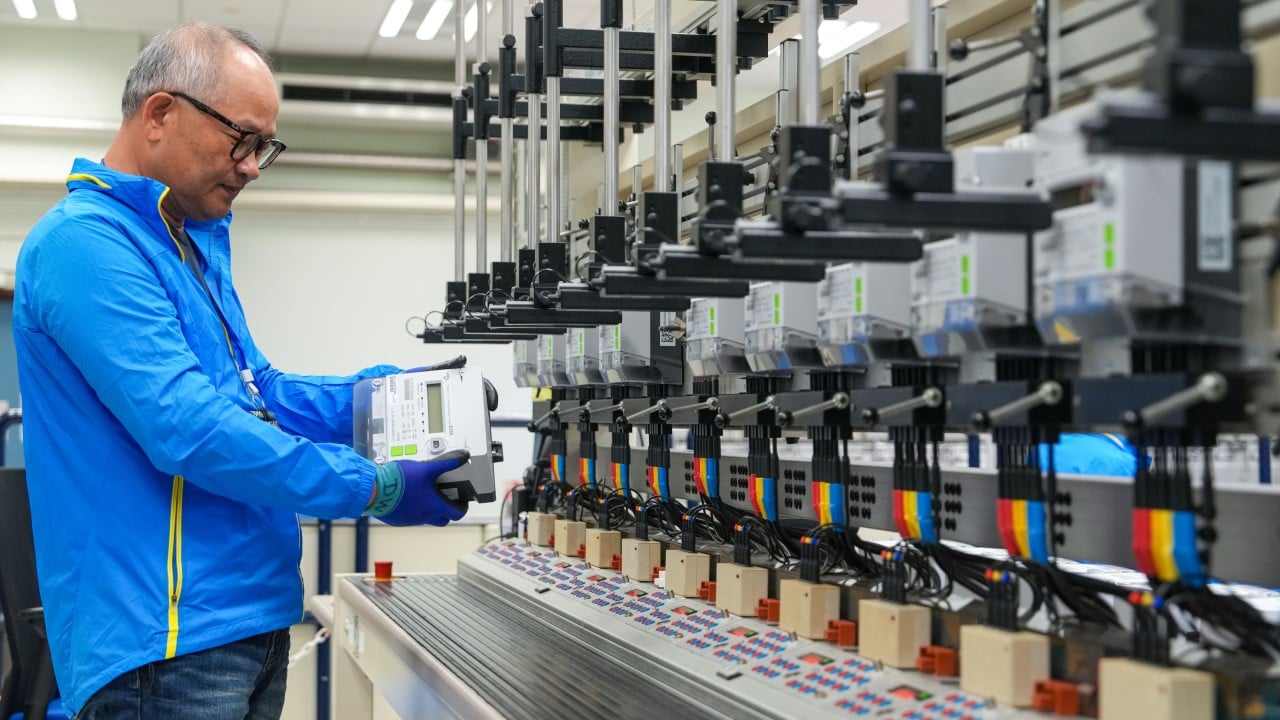
The provision of smart meters to Hong Kong’s subdivided units (SDUs) is not merely a utility upgrade; it is a surgical intervention into a distorted micro-economy. For decades, the SDU market has operated on a predatory resale model where landlords act as unregulated middle-men, charging tenants electricity rates that significantly exceed the tariffs set by CLP Power or HK Electric. The introduction of direct metering via smart technology seeks to collapse this arbitrage by aligning consumption with regulated pricing. However, the success of this rollout depends on overcoming three specific structural bottlenecks: technical compliance with the Buildings Ordinance, the capital expenditure (CapEx) hurdle for landlords, and the spatial constraints of aging tenement architecture.
The Arbitrage Mechanics of SDU Energy Resale
In a standard residential setting, the relationship between the utility provider and the consumer is linear. In the SDU ecosystem, this relationship is fractured. A single flat, originally designed for one meter, is partitioned into four or five units. Because the internal wiring is rarely updated to meet utility-grade standards, the landlord receives one master bill and "sub-meters" the units using uncalibrated, private hardware.
This creates a significant data opacity. Landlords often charge a flat rate—sometimes as high as $1.5 or $2.0 per unit—well above the tiered blocks or fuel adjustment charges set by the power companies. This overcharging is technically illegal under the Waterworks Ordinance (for water) and heavily discouraged under the Landlord and Tenant (Consolidation) Ordinance, yet it persists due to the lack of individual accounts. The smart meter initiative aims to formalize this shadow market by providing each tenant with a direct contractual relationship with the power company.
The Triad of Installation Requirements
The transition from a master meter to individual smart meters is not a plug-and-play operation. It requires a rigorous tripartite alignment between the tenant, the landlord, and the utility provider. To qualify for the streamlined installation programs currently being promoted by CLP and HK Electric, an SDU must satisfy three primary criteria:
- Legal Consent and Entry: The landlord must provide written consent for the rewiring of the internal mains. Since many SDUs exist in a legal grey area regarding building codes, landlords are often hesitant to invite utility inspectors into the premises.
- Fire Safety and Partitioning: The unit must meet basic fire safety standards. This includes the use of fire-retardant materials in partitions and the maintenance of clear escape routes. Smart meters require a centralized or accessible "meter room" or board, which is often non-existent in subdivided layouts.
- Electrical Loading Capacity: The building’s rising mains must be capable of handling the cumulative load of five or six individual meters where there was once one. If the building's total capacity is exceeded, a massive infrastructure overhaul is required before a single smart meter can be hung.
The Capital Expenditure Dilemma
The primary friction point in the electrification of SDUs is the "Split Incentive." Tenants reap the benefit of lower bills (OPEX), while landlords bear the burden of rewiring costs (CAPEX). Even with subsidies provided by the power companies’ community energy funds—which can cover several thousand dollars per unit—the total cost of upgrading a 50-year-old flat to meet modern safety codes often exceeds the grant.
This creates a market failure. Without mandatory enforcement, a rational landlord will avoid the upgrade to maintain their resale profit margin and avoid the scrutiny of building inspectors. The current strategy relies on "volunteering" via NGOs, which acts as a filter, capturing only the most cooperative landlords while leaving the most exploited tenants in the most dangerous, un-metered conditions.
Smart Meters as Data Catalysts
Beyond billing accuracy, smart meters introduce high-frequency telemetry into the SDU environment. This data serves two critical functions that were previously impossible:
- Load Balancing and Fire Mitigation: SDUs are notorious for electrical fires caused by overloaded circuits (e.g., simultaneous use of induction cookers and air conditioners). Smart meters can provide real-time alerts for unusual load spikes, allowing for preemptive safety interventions.
- Targeted Subsidy Distribution: During periods of high fuel volatility, the Hong Kong government often issues electricity subsidies. In an SDU without a smart meter, this subsidy often flows to the landlord’s master account and is rarely passed down to the tenant in full. Direct metering ensures that social safety nets reach the intended recipient.
Operational Bottlenecks in "Tong Lau" Architecture
The physical reality of Hong Kong’s "Tong Lau" (tenement buildings) presents a significant engineering challenge. Most SDU-dense buildings were constructed between 1950 and 1970. Their electrical infrastructure was designed for a post-war load profile—essentially lighting and a few small appliances.
The "Rising Main" is the vertical conduit that carries electricity from the ground floor to the top floor. When a building is subdivided, the density of residents per floor increases by 300% to 500%. If ten flats on a floor are each subdivided into five units, the riser must now support 50 accounts. The physical space required for 50 smart meters in a cramped corridor is often unavailable, leading to a "spatial bottleneck" that no amount of digital technology can solve without structural renovation.
The Social Logic of Energy Poverty
Energy poverty in Hong Kong is not defined by a lack of access to the grid, but by a lack of "fair access." SDU tenants often practice extreme energy rationing, such as forgoing air conditioning during heatwaves, because they cannot predict their end-of-month costs under a landlord’s arbitrary pricing.
The installation of a smart meter provides a "Price Signal." When tenants see their actual consumption via a mobile app or a digital display, they can optimize their behavior. More importantly, it removes the psychological stress of the "black box" bill. However, we must distinguish between "efficiency" and "sufficiency." A smart meter makes the billing efficient, but it does not make the cramped, poorly insulated SDU any cooler. It is a financial tool, not a thermodynamic one.
Implementation Framework for Scaled Adoption
To move beyond the current pilot-phase inertia, a more aggressive regulatory and technical framework is required:
- Tiered Certification: Instead of demanding a full building overhaul, the government could implement a "Safe-to-Meter" certification specifically for SDUs, focusing on the critical path of electrical safety rather than total cosmetic compliance.
- Mandatory Disclosure: Future tenancy agreements should require the disclosure of the meter type. Units with direct utility billing should be marketed as "Certified Direct-Bill," creating a market-driven premium that encourages landlords to upgrade.
- Aggregated Upgrades: Rather than upgrading unit-by-unit, the strategy must shift to "Vertical Upgrades," where an entire building's rising main is replaced via a public-private partnership involving the power companies and the Urban Renewal Authority.
The move toward smart meters in SDUs is a necessary step in the professionalization of the low-income housing market. It shifts the power dynamic from a feudal resale model to a transparent, regulated utility model. The limiting factor is no longer the technology of the meter itself, but the decaying skeletal remains of the buildings they are meant to serve. Without a parallel investment in the physical risers and wiring of Hong Kong’s aging housing stock, the smart meter remains a high-tech solution stranded by low-tech infrastructure.
The strategic priority must shift from "subsidizing the meter" to "standardizing the circuit." This requires a move away from voluntary NGO-led schemes toward a mandatory inspection and upgrade cycle for any unit classified as a "subdivided flat" under the current licensing regime. Only by mandating the physical infrastructure can the digital billing benefits be realized at scale.
Would you like me to analyze the specific ROI for a landlord participating in the CLP Smart Meter subsidy program versus the long-term maintenance costs of uncertified wiring?