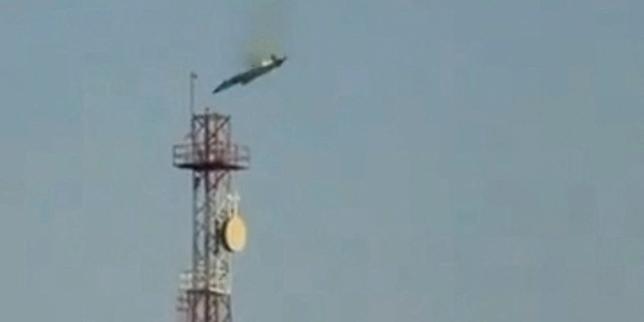
The recent kinetic strikes on Amazon fulfillment infrastructure in the United Arab Emirates and Bahrain represent a transition from cyber-risk to physical-asset vulnerability in the global supply chain. While drone-based delivery has long been analyzed through the lens of regulatory hurdles and "last-mile" battery density, these events shift the focus toward the Concentration of Risk inherent in highly automated, centralized hubs. When a $1.8 trillion entity integrates its logistics into a few mission-critical nodes in geopolitically volatile regions, the ROI on a $500 off-the-shelf weaponized drone becomes asymmetrical and devastating.
The Triad of Vulnerability in Automated Fulfillment
To understand why these three specific facilities were targeted, one must look at the Functional Density of an Amazon warehouse. Unlike traditional storage, an Amazon Robotics Sortable (ARS) facility functions as a high-velocity throughput engine. A disruption at these nodes does not merely delay a local shipment; it creates a "bullwhip effect" across the entire regional network.
The vulnerability of these facilities can be deconstructed into three primary vectors:
- Optical and Sensor Dependency: Modern automated facilities rely on sophisticated LiDAR, computer vision, and IoT sensors to manage internal robotic fleets (Kiva/Hercules systems). Kinetic damage to the external shell or the power grid of these facilities triggers a "Safe State" shutdown. In a manual warehouse, humans can work by flashlight. In an automated hub, a 5% loss of sensor connectivity can lead to a 100% halt in operations.
- Energy Point-Failures: High-capacity charging stations for the delivery drones themselves and the internal floor robots create a localized thermal and electrical load that is difficult to shield. A strike on the primary electrical transformer or the battery storage arrays creates a secondary fire hazard that the facility's internal suppression systems—designed for cardboard fires—may not be equipped to handle.
- The Geographic Chokepoint: By placing facilities in the UAE and Bahrain, Amazon optimized for the "Middle East North Africa" (MENA) logistics corridor. However, these locations are within the flight envelopes of low-cost Unmanned Aerial Vehicles (UAVs) launched from non-state actors or neighboring adversaries. The geographical proximity that makes these hubs efficient also makes them accessible.
Analyzing the Asymmetric Cost Function
The primary strategic concern is the cost-to-damage ratio. This is not a contest of equals; it is a contest of Economic Friction.
- The Attacker's Variable Cost: A fixed-wing or quadcopter drone equipped with GPS-guided navigation and a small payload (2-5kg of explosives) costs between $1,500 and $10,000.
- The Defender's Fixed Cost: Repairing a specialized automated sorting mezzanine, replacing proprietary robotics, and the opportunity cost of downtime can exceed $50 million per facility.
This creates a Negative Security Equilibrium. Amazon cannot spend $50 million per site on C-UAS (Counter-Unmanned Aircraft Systems) like electronic warfare jammers or kinetic interceptors without eroding the very margins that the automation was supposed to provide.
The Architecture of Kinetic Disruption
The attacks in the UAE and Bahrain likely targeted the "Soft Underbelly" of the facilities: the loading docks and the drone launch pads.
The Loading Dock Bottleneck
Loading docks are the only part of a fulfillment center where the hardened exterior is consistently breached to allow for the flow of goods. Because these areas require high visibility and human/machine coordination, they are difficult to fortify with physical barriers like anti-drone netting or reinforced steel without slowing down the "takt time" (the rate at which a product must be finished to meet customer demand).
The Signal Interference Factor
One hypothesis for the success of these strikes involves the use of Electronic Spectrum Saturation. If an attacking drone uses the same frequency bands as the internal facility Wi-Fi or the drone-delivery command-and-control (C2) links, it can cause "Inadvertent Denial of Service." The facility’s own communication infrastructure becomes a liability, masking the approach of an intruder within the noise of daily operations.
Reassessing the "Prime" Security Model
The standard security model for global enterprises focuses on "perimeter defense." In the age of loitering munitions and small-scale UAVs, the perimeter is no longer a fence line; it is a three-dimensional sphere.
Amazon’s reliance on the "Centralized Hub and Spoke" model is now under scrutiny. This model prioritizes:
- Consolidated inventory (lower storage costs).
- High-speed automation (lower labor costs).
- Predictable shipping lanes (lower transport costs).
However, this consolidation creates Single Points of Failure (SPOF). If three facilities represent 60-70% of the regional throughput, the loss of all three simultaneously is not a linear problem; it is a systemic collapse of the regional brand promise.
The Intelligence Gap in Corporate Defense
A recurring failure in private sector logistics is the lack of Real-Time Signal Intelligence (SIGINT). Amazon likely relied on local state actors for physical security. However, state-level air defense systems (like Patriot batteries or THAAD) are tuned to detect large ballistic missiles or high-altitude aircraft. They are notoriously poor at detecting "low, slow, and small" (LSS) targets—the exact profile of the drones that hit the facilities.
This creates a Security Blind Spot:
- Detection: Radar cross-sections of small drones are similar to large birds.
- Identification: Distinguishing a hostile drone from a legitimate Amazon delivery drone in a crowded airspace is a complex "Friend or Foe" (IFF) problem that the private sector has not solved.
- Neutralization: Using kinetic force in an urban or industrial environment risks collateral damage, making electronic jamming the only viable option. But jamming interferes with the very automation that keeps the warehouse running.
The Transition to Distributed Resiliency
To mitigate future kinetic risks, the strategy must pivot from Optimization to Resiliency. This involves a shift toward a "Logistics Mesh" rather than a "Logistics Hub."
1. Micro-Fulfillment Decentralization
Instead of three massive facilities in the UAE and Bahrain, the logic dictates thirty smaller, "dark" warehouses (fully automated, low-human-presence) distributed across a wider geography. While this increases the overhead of inventory management and reduces the efficiency of bulk shipping, it ensures that a strike on any three nodes only degrades the network by 10% rather than 100%.
2. Physical Hardening of "Apertures"
Future facility designs must incorporate Passive Defense Geometry. This includes:
- Angled Roof Slatting: To deflect small impactors away from critical HVAC and power systems.
- Signal-Shielded Cradles: Ensuring that internal robotic communications are isolated from external radio frequency (RF) interference through Faraday-style cage integration in the building's skin.
- Rapid-Reconstitution Kits: Pre-staged, modular robotic components and server racks housed in hardened, off-site bunkers that can be deployed within 24 hours of a strike.
The Geopolitical Cost of Automation
The attacks signal that the "Amazon Effect" is now a geopolitical target. For adversaries of the host nations (UAE and Bahrain), hitting an Amazon facility is a high-visibility, low-risk way to signal the inability of the state to protect foreign investment.
The Economic Displacement Effect: If Amazon is forced to increase its security spend to military-grade levels, the cost of "free" or "fast" shipping in the MENA region will inevitably rise. This is a form of Indirect Economic Warfare. The attacker does not need to destroy the company; they only need to make the cost of doing business in a specific region higher than the potential profit.
Structural Imperatives for the 2026 Supply Chain
The immediate requirement for Amazon and its contemporaries is the integration of Autonomous Countermeasures within the facility's own operating system. This is no longer a matter of "guards and gates."
- Integrated C-UAS: Deploying localized, low-power microwave emitters that can disable incoming drones without tripping the facility’s internal sensors.
- Dynamic Rerouting: Developing the software capability to instantly "re-home" thousands of incoming delivery drones to secondary landing sites when a "Code Red" is triggered at a primary hub.
- Adversarial Red-Teaming: Moving beyond digital penetration testing to physical "Kinetic Red-Teaming," where security consultants attempt to breach the facility using commercially available drone technology to identify unforeseen structural weaknesses.
The era of the "Transparent Supply Chain"—where every hub and spoke is mapped and optimized for the shortest path—is ending. In its place, we will see the rise of the "Obfuscated Supply Chain," where the location and function of critical infrastructure are masked, hardened, and distributed to survive in an increasingly hostile physical environment.
Amazon’s next strategic move must be a total audit of its "Mission Critical" nodes in any region where the cost of an attack is lower than the cost of a delivery. If the company continues to prioritize efficiency over survivability, these three facilities will merely be the first data points in a long-term trend of industrial attrition. The pivot must be toward Elastic Infrastructure: systems that do not just resist impact, but reorganize themselves in real-time to maintain functionality during and after a kinetic event.
Would you like me to develop a risk-assessment framework for evaluating the "Kinetic Vulnerability Score" of other global logistics hubs?